

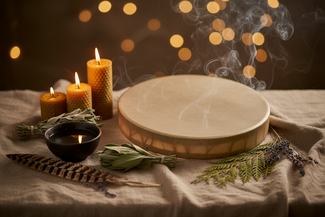
A meaningful altar does not need a carved table, a large collection of crystals or a room devoted to ritual. It may be a small tray on a bookshelf, a windowsill cleared before meditation, or a corner of a desk that reminds you to pause. If you are wondering how to create a simple altar, begin with the purpose rather than the objects. What do you want this space to hold: calm, reflection, remembrance, prayer, gratitude, creativity or a regular spiritual practice?
An altar is not a performance, and there is no single correct design. Some people create one within a Pagan, Wiccan, Druid or Buddhist path; others use it to support Reiki, yoga, meditation, tarot, ancestral remembrance or everyday wellbeing. Its value often comes from the attention you bring to it. A few well-chosen items can feel far more supportive than a crowded surface.
Start with the intention behind your altar
Before choosing a candle or crystal, take a quiet moment to name what you need from the space. An altar for morning meditation may be light and uncluttered, perhaps with a candle, a small bowl and a grounding stone. An altar for tarot or oracle work may need room for a deck, a journal and a cloth on which to lay cards. A seasonal altar might change through the year, reflecting the natural rhythms outside your home.
This intention does not have to be grand. “A place to breathe before work” is enough. So is “somewhere to remember someone I love” or “a reminder to stay present.” When the purpose is clear, it becomes easier to choose what belongs there and what does not.
For those working within a particular tradition, an altar may include symbols that are personally or spiritually significant. Many practitioners represent the elements with a candle for fire, a bowl of water, incense for air and a stone, salt or soil for earth. These associations vary between traditions, so use them as an invitation to explore rather than a rulebook.
Choose a place that works in real life
The best location is one you can use comfortably. A quiet bedroom corner can be ideal, but it is not essential. A living-room shelf, a bedside table or a portable box may suit a busy household better. If you share your home, have children or pets, or simply prefer privacy, a small altar that can be put away is every bit as valid as a permanent one.
Think practically about safety and upkeep. Keep candles away from curtains, books and dried flowers, and never leave a flame unattended. If open flame is not suitable, an LED candle, battery-powered tealight or a soft lamp can create a similar sense of focus. Incense, resins and smudge sticks should only be used with suitable ventilation and a heatproof holder. A sacred spray, essential oil diffuser or meditation chime can be a gentler alternative where smoke is unsuitable.
There is also a useful distinction between a sacred space and a perfect-looking space. Your altar does not need to match your décor or look like an image online. It needs to feel respectful, accessible and right for you.
How to create a simple altar with a few meaningful items
Begin with a clean surface or a base such as a small cloth, wooden tray, slate tile or altar cloth. Creating a boundary, however modest, helps the area feel separate from daily clutter. You might wipe the surface down, open a window or pause for a few breaths as you arrange it. This can be your first small ritual.
Then add one central item. This could be a candle, a crystal, a statue, a piece of natural wood, a photograph, a meaningful symbol or a small bowl. Choose something that gives the altar its heart. A clear quartz point is often chosen to bring focus to a space; amethyst may appeal to those seeking quiet reflection; black tourmaline is commonly included in grounding or energy-cleansing practices. These are traditional associations, not guarantees, and your own connection matters most.
Add only what supports your intention. A simple starter altar might include a candle, one crystal and a small dish for offerings or found natural objects. You may prefer a tarot deck in its box, a bell for opening and closing a practice, or a journal for recording dreams and reflections. If an item has no role, it may be better stored elsewhere. Empty space is useful too - it gives the mind somewhere to settle.
Natural objects can bring a grounded quality to an altar: a fallen leaf, a pebble from a meaningful walk, a shell, a feather found respectfully or a small posy from the garden. Avoid taking materials from protected places or disturbing wildlife. In the Lake District and other treasured landscapes, appreciation does not need to become collecting.
A note on cleansing and preparation
Some people like to cleanse new altar items before use. This may involve passing an object through incense smoke, ringing a bell, placing it in moonlight, using a sacred spray or simply holding it with a clear intention. Others prefer to clean items physically, then place them thoughtfully. Either approach can be meaningful.
Be mindful of the material. Water may damage selenite, salt can affect metals and some crystals, and strong sunlight can fade stones such as amethyst. Gentle physical cleaning is often the safest starting point, particularly if you are unsure.
Build a practice, not a display
An altar becomes part of your life through use. You do not need to spend an hour there each day. Lighting a candle before meditation, touching a worry stone while setting an intention, pulling one oracle card or ringing a meditation chime can create a clear transition from rush to reflection.
Try a practice that fits the time you actually have. In the morning, stand at the altar for three slow breaths and choose a word for the day. In the evening, place a hand on your heart and name one thing you are grateful for. Before divination, clear the surface, take a few grounding breaths and ask a focused question rather than searching for a fixed answer.
For experienced practitioners, an altar can also hold the structure of deeper work. It may support Reiki self-treatment, seasonal observance, sound healing, spellcraft, shamanic journeying or ceremonial practice. Even then, simplicity can be helpful. Keep the tools needed for the work at hand, rather than allowing the altar to become a permanent storage area.
Let your altar change with you
A fixed altar can be reassuring, but it does not have to remain unchanged. You may refresh it at the new moon, with the seasons, after a difficult period or whenever the space begins to feel neglected. Remove dust, replace spent candles, return items that no longer feel relevant and make room for what matters now.
This is especially helpful if you are new to spiritual practice. Rather than feeling pressure to choose the “right” crystal, deity symbol or ritual tool immediately, allow your altar to develop gradually. Read, reflect and notice which practices genuinely help you feel more present, steady or connected. Your understanding may deepen over time, and your altar can reflect that without needing to prove anything to anyone.
A simple altar is ultimately a quiet agreement with yourself: this moment deserves care. Whether it holds a single tealight and a stone or a fuller collection of ritual tools, return to it in a way that feels honest, safe and sustaining.