
A set of carved stones can look simple beside a candle or incense burner, yet its purpose may be far deeper than decoration. So, what are chumpi stones? They are ceremonial stones associated with Andean spiritual practice, often kept as part of a mesa - a personal bundle or collection of sacred objects used in prayer, healing work, ceremony and relationship with the natural world.
For many people encountering them in a spiritual shop, the appeal is immediate: each stone is tactile, symbolic and made to be held. But chumpi stones are not simply another type of crystal to collect for a particular intention. They belong to living cultural and ceremonial traditions, and approaching them with curiosity, care and context matters.
What are chumpi stones in Andean practice?
Chumpi stones are commonly linked with Andean medicine traditions in Peru and neighbouring regions, including teachings shared by paqos, or Andean ceremonial practitioners. They may be carved from stone, often in a set, with forms that represent animal allies, forces of nature, mountains, ancestors or spiritual principles.
The exact appearance and use of a set varies. Some include recognisable animal forms such as the serpent, jaguar, hummingbird and condor. These are widely known within contemporary Andean teachings as symbols of transformation, courage, clarity and expanded perspective. Other stones may represent the Earth, the Sun, the Moon, sacred mountains known as apus, or particular aspects of a practitioner’s relationship with life.
A chumpi is traditionally more than an object with a fixed meaning printed on a label. Its significance develops through ceremony, teaching, prayer and the relationship a person builds with it. A stone may be placed on the body in a healing rite, held during prayer, used to mark a direction, or included in a despacho offering.
A word about names, sets and traditions
It is tempting to look for one definitive list of chumpi stones and what each one does. In practice, it is not that neat. Andean traditions are diverse, and contemporary teachers may use different names, carvings, numbers of stones and ceremonial methods. Sets sold for personal use can also be inspired by these traditions rather than being made, blessed or used within a specific lineage.
That distinction is worth holding with honesty. A carved condor stone may be meaningful for meditation and personal reflection, but it does not automatically make someone an Andean healer or give them authority to lead traditional ceremony. Respect is not about being afraid to use sacred objects. It is about avoiding assumptions, learning from credible sources where possible, and being clear about the boundaries of your own practice.
For beginners, that can be reassuring. You do not need to reproduce a complex ritual to sit quietly with a stone and reflect on the qualities it brings to mind. For experienced practitioners, it is a reminder that lineage, permission and lived experience carry as much weight as symbolism.
How chumpi stones are traditionally used
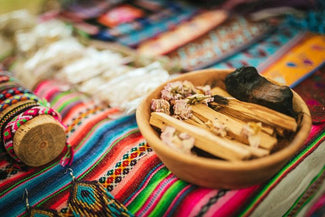
Within Andean ceremonial work, chumpi stones may be part of a mesa. A mesa is sometimes described as an altar bundle, although it is more personal and mobile than the word altar suggests. It can hold sacred objects gathered over time, including stones, feathers, shells, textiles, seeds and other items that carry personal or ceremonial significance.
A practitioner may arrange chumpi stones during prayer or healing work, using their placement to create a meaningful pattern. They can be used to honour the four directions, the upper, middle and lower worlds found in some Andean cosmologies, or the connection between human life and the wider living landscape.
They may also appear in a despacho. A despacho is a ceremonial offering, traditionally made with carefully chosen natural materials and prayers of gratitude, reciprocity and intention. Rather than treating the natural world as something to control, this practice centres ayni - a principle often translated as sacred reciprocity or right relationship. Chumpi stones may be placed beside an offering, used to focus prayer, or included in the preparation of ceremonial space.
Some practitioners use stones in energy work by placing them near the body, passing them around the energy field, or working with them alongside breath, sound and spoken intention. These practices should be understood as spiritual and reflective, not as a substitute for medical diagnosis, treatment or mental health support.
The symbolism of animal chumpi stones
Animal imagery is one reason chumpi stones speak to people so strongly. In many modern presentations of Andean-inspired practice, four animals are especially prominent.
The serpent is often associated with shedding what is no longer needed, grounding and renewal. The jaguar may be chosen when someone is working with personal courage, boundaries or moving through fear with steadiness. The hummingbird can suggest joy, perseverance and a lightness of heart, while the condor is linked with vision, prayer and seeing a situation from a wider perspective.
These associations can be useful doors into reflection, but they are not rules. If you are drawn to a condor stone because you are facing a difficult decision, you might simply sit with the question: what would it mean to look at this from a little further away? The value lies in the attention you bring, not in expecting the stone to solve the decision for you.
Using chumpi stones in a personal practice
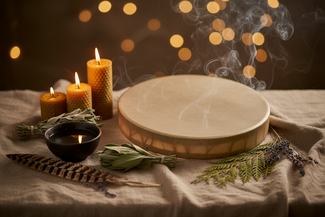
If you do not have formal training in Andean ceremony, a simple and respectful approach is usually best. You might place one or two stones on a small sacred space with a candle, a bowl of water or a piece of natural fabric. Take a moment to acknowledge the land you are on, your own ancestors or the people who have cared for spiritual traditions before you.
From there, use the stone as a focus for meditation. Hold it in your hand, notice its weight and shape, and let its image prompt a grounded intention. A serpent carving might accompany a journal entry about a habit you are ready to release. A hummingbird could sit beside you while you make space for a small pleasure after a demanding week.
You can also use chumpi stones to create a simple directional practice at home. Place four stones around a candle or central object, then pause at each one with a word such as gratitude, clarity, courage or rest. This is not a replacement for a traditional directional ceremony. It is a quiet personal ritual, shaped by appreciation rather than imitation.
Choosing and caring for chumpi stones
When choosing chumpi stones, look beyond whether the carving is visually appealing. Ask what you know about their material, maker and origin. Are they described as ceremonial tools, artisan carvings or Andean-inspired stones? Clear, modest information is usually more trustworthy than dramatic claims about secret powers or guaranteed transformation.
Stone type can affect care. Softer or porous stones should not be soaked, and painted or dyed carvings may be damaged by water, salt or prolonged sunlight. A dry, soft cloth is often enough for cleaning. If you like to energetically refresh your sacred objects, gentle methods such as placing them in moonlight, using the sound of a bell or singing bowl, or passing them through incense smoke may feel appropriate. Always consider the material first, especially around smoke, heat and moisture.
It can help to keep them in a cloth bag, on a shelf or within a personal mesa rather than leaving them scattered among everyday clutter. This is not because a stone will lose its power if it is moved. It is because caring for spiritual tools can encourage us to care for the attention we give to our practice.
Respectful use matters more than perfect ritual
There is a quiet challenge in working with chumpi stones. Modern spiritual culture can encourage us to collect symbols quickly, often before we understand where they come from. Chumpi stones invite a slower approach. Their value may be less about adding another object to a collection and more about learning to meet the natural world, personal change and spiritual practice with reciprocity.
If they call to you, begin with one question, one stone and one honest moment of attention. That is often a more meaningful foundation than trying to recreate a ceremony you have only seen online.