



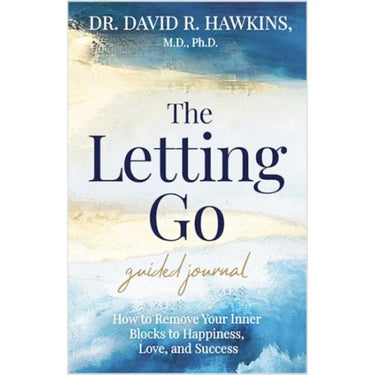
Das Loslassen – Geführtes Journal

Inspiriert von den Lehren von Dr. David R. Hawkins

Das Loslassen – Geführtes Journal ist ein wunderschön gestaltetes Achtsamkeitsjournal, inspiriert vom klassischen Bestseller „Die Macht des Loslassens“ des weltbekannten Psychiaters, spirituellen Lehrers und Bewusstseinsforschers David R. Hawkins, M.D., Ph.D.

Als praktischer Begleiter zu den Prinzipien der emotionalen Hingabe und Heilung hilft dieses geführte Journal Ihnen, Negativität loszulassen, Emotionen zu verarbeiten und ein größeres Selbstbewusstsein zu entwickeln. Durch strukturierte Anregungen und reflektierende Übungen unterstützt es Sie auf Ihrem Weg zu emotionaler Freiheit, Klarheit und innerem Frieden.

Wenn Sie ein Angstjournal, ein Positivitätsjournal, ein Dankbarkeitsjournal oder ein bedeutungsvolles Motivationsgeschenk suchen, bietet dieses Journal einen unterstützenden und strukturierten Weg zu persönlichem Wachstum und Transformation.

Produktdetails:

Sie werden durch einen kraftvollen Journaling-Prozess geführt, um:

  • Das Unterdrücken von Emotionen und wahren Gefühlen zu beenden

  • Groll loszulassen

  • Widerstand zu überwinden

  • Das Ego loszulassen

  • Ihr Selbstbewusstsein zu vertiefen

  • Achtsamkeit und Dankbarkeit zu kultivieren

Format & Spezifikationen:

  • 128 Seiten

  • Softcover-Journal

  • Enthält geführte Anregungen, reflektierende Zitate und Übungen

  • Konzipiert für emotionale Heilung und tägliche Reflexion

Über den Autor

Sir David R. Hawkins, M.D., Ph.D., war ein weltbekannter Autor, spiritueller Lehrer und Bewusstseinsforscher. Sein Werk repräsentiert die Speerspitze der Bewusstseinsforschung und die Verifizierung spiritueller Realitäten, einschließlich der tiefgreifenden subjektiven Erkenntnisse und Transformationen des Autors selbst.

Mit seinem sowohl wissenschaftlichen als auch klinischen Hintergrund war Dr. Hawkins in einzigartiger Weise in der Lage, fortgeschrittene Zustände spirituellen Bewusstseins klar und verständlich zu formulieren. Seine veröffentlichten Werke und aufgezeichneten Vorträge beschreiben tiefe spirituelle Einsichten, bleiben dabei aber in psychologischem und klinischem Verständnis verwurzelt.

Seine Lehren erforschen emotionale Heilung und Genesung, Mitgefühl für uns selbst und andere, spirituelles Bewusstsein und die Akzeptanz von Leben, Tod und Transformation. Sein Werk inspiriert weiterhin Leser weltweit, die Klarheit, Hingabe und inneren Frieden suchen.

A Practical Companion to Letting Go

The journal takes ideas associated with Letting Go and translates them into prompts that can be worked through slowly.

Rather than simply reading about surrender, acceptance or emotional awareness, you are invited to write.

That shift from reading to reflection can make the material feel more personal.

You may find yourself noticing what you avoid, what you keep replaying, what still carries emotional weight or where you are resisting something you cannot control.

What Does “Letting Go” Mean?

Within Hawkins’ framework, letting go is connected with allowing emotions to be acknowledged rather than suppressed or fought against.

In practical journalling terms, that might mean recognising what you feel, naming it more clearly and exploring what sits underneath it.

The process is not about pretending difficult experiences do not matter.

It is about creating a little more space between the experience itself and the story you continue to carry around it.

Mindfulness, Gratitude & Self-Awareness

The journal also incorporates themes of mindfulness and gratitude.

Mindfulness can help bring attention back to what is happening now, while gratitude practices may encourage you to notice supportive or meaningful aspects of daily life.

These ideas fit naturally into reflective journalling, especially when the aim is to become more aware of habits, reactions and emotional patterns.

The journal should not be presented as a treatment for anxiety, depression or trauma, but it may sit comfortably alongside a broader personal wellbeing routine.

Working with Resentment & Resistance

Some prompts focus on resentment, resistance and emotional suppression.

These can be difficult themes, which is why a slower pace may be more useful than trying to complete the journal quickly.

You might spend time with questions such as:

“What am I still holding onto?”

“What am I resisting?”

“What changes when I stop trying to force this situation to be different?”

The purpose is not to reach one perfect answer, but to create space for more honest self-observation.

A Journal for Daily Reflection

The 128-page format makes this easy to use as part of a regular routine.

You may prefer to work through one prompt at a time, write for ten minutes in the evening or return to the journal whenever a particular theme feels relevant.

Because the prompts are structured, it can also suit people who like the idea of journalling but do not always know what to write.

Gratitude Without Forced Positivity

The journal includes gratitude as one of its themes, but gratitude does not have to mean ignoring difficulty.

A balanced practice might involve recognising something supportive or meaningful while still acknowledging grief, frustration or uncertainty.

That makes the journal more useful as a reflective tool than as a simple positivity exercise.

Emotional Healing Language

The original description refers to emotional healing, emotional freedom and releasing negativity.

I would keep those ideas aspirational rather than guaranteed.

A guided journal may support reflection, awareness and a sense of perspective, but it should not be presented as proven to heal trauma, resolve mental-health conditions or produce emotional freedom.

For significant or persistent distress, professional psychological or medical support may be appropriate alongside journalling.

A Simple Way to Begin

Choose one prompt and give yourself a few uninterrupted minutes.

Write without trying to make the response polished.

If a question feels difficult, begin with:

“What am I noticing right now?”

You can return to the same prompt more than once.

The value is often in what changes between one reflection and the next.

Ideal For

The Letting Go Guided Journal may especially appeal to readers interested in mindfulness journals, gratitude journals, self-reflection, spiritual development and the teachings of David R. Hawkins.

It may also make a thoughtful gift for someone who enjoys guided journalling and personal-development books.

Quick FAQs

What is The Letting Go Guided Journal?
It is a 128-page paperback guided journal inspired by the teachings of Dr David R. Hawkins.

Does it contain writing prompts?
Yes. The journal includes guided prompts, reflective quotes and exercises.

Is this the same as the book Letting Go?
No. It is a guided journal inspired by the ideas associated with Letting Go.

What themes does it cover?
Themes include emotional awareness, surrender, resentment, resistance, mindfulness, gratitude and self-reflection.

Can I use it as a gratitude journal?
Yes. Gratitude is one of the themes, although the journal covers much more than gratitude alone.

Is it an anxiety journal?
It may appeal to people looking for reflective journalling around difficult emotions, but it should not be presented as a treatment for anxiety.

How many pages are there?
The supplied product information lists 128 pages.

Is it suitable for daily use?
Yes. The guided format lends itself well to regular reflection.

Please Note

The Letting Go Guided Journal explores spiritual and personal-development ideas associated with surrender, emotional release, consciousness and self-awareness.

These concepts reflect the teachings and framework associated with Dr David R. Hawkins and should not be treated as established medical or psychological treatment.

The journal is intended for personal reflection and spiritual development and should not replace professional medical or psychological care.

Bestellungen & Versand
Bestellungen, die vor 15:00 Uhr eingehen, werden noch am selben Tag bearbeitet und versandt. Wir versenden weltweit.

Sendungsverfolgung
Bitte verfolgen Sie Ihr Paket anhand der Sendungsdetails, die Sie in Ihrer Versandbestätigungs-E-Mail erhalten haben. Die Sendungsverfolgung wird in der Regel innerhalb von 24 Stunden nach dem Versand aktualisiert und fortgesetzt, bis die Lieferung bestätigt ist.

Zölle & Steuern
EU- und internationale Zölle und Steuern liegen in der Verantwortung des Kunden und müssen, falls zutreffend, vor Ort entrichtet werden. Für Kunden außerhalb Großbritanniens wird die britische Steuer automatisch beim Checkout entfernt, sobald das Versandziel ausgewählt wurde.

Verzögerungen durch den Zoll
Einige internationale Bestellungen können sich aufgrund von Zollkontrollen verzögern, die außerhalb unserer Kontrolle liegen. In Stoßzeiten können die Verzögerungen länger sein.

Rücksendungen
Bei Bestellungen, für die eine kostenlose Lieferung galt, können für zurückgesandte Artikel die ursprünglichen Versandkosten und eventuelle Abholkosten anfallen.

Abgelehnte oder stornierte internationale Bestellungen
Internationale Bestellungen, die abgelehnt, zurückgesandt und dann storniert werden, können mit einem Aufschlag von 10 % belegt werden. Pakete können auf Anfrage erneut versandt werden, wobei jedoch eine zusätzliche Gebühr anfallen kann.