What Is Kunzite?
Kunzite is the pink to violet variety of Spodumene, a naturally occurring mineral known for its delicate pastel colour and attractive translucency.
It was named after the gemologist George Frederick Kunz after being described as a gemstone variety in the early twentieth century.
Kunzite's colour is typically associated with trace manganese within the mineral.
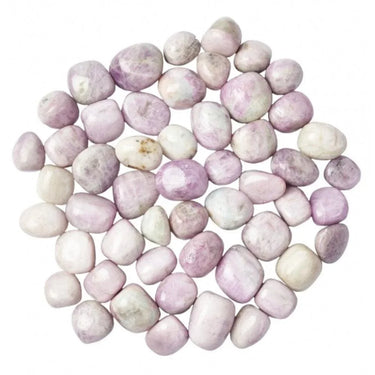
Natural pieces can range from barely-there blush pink through stronger lilac and violet tones.
Some stones are more translucent, while others contain cloudy sections, internal lines or visible mineral inclusions.
These natural features are part of Kunzite's character rather than faults.
Kunzite Meaning
Kunzite meaning centres strongly around love, compassion, emotional balance and calm.
Within contemporary crystal traditions, it is often described as a heart-centred stone because of its gentle pink colouring and strong Heart Chakra association.
It is sometimes known symbolically as a Stone of Love or Stone of Emotion.
These names reflect themes of openness, tenderness and compassionate awareness rather than a guarantee that the crystal will change emotional states.
Kunzite may be used as a physical focus during meditation, journalling or reflective practice where kindness, self-acceptance and emotional perspective are important themes.
Love & Compassion
Love is one of Kunzite's strongest symbolic associations.
Its pale pink and lilac tones naturally connect it with tenderness, care and emotional openness.
Within crystal practice, Kunzite is often chosen when the focus is on approaching yourself or others with greater compassion.
This can include self-love, relationship reflection or simply creating a quieter space in which to consider emotions without immediate judgement.
Rather than promising relationship healing, Kunzite can act as a symbolic reminder of gentleness and thoughtful connection.
Emotional Balance & Calm
Kunzite is also closely associated with emotional balance.
Its softer appearance has encouraged a contemporary metaphysical reputation as a peaceful and soothing stone.
Within reflective practice, it may represent slowing down before reacting, recognising difficult feelings without becoming completely defined by them and creating space for a calmer perspective.
The crystal does not medically treat emotional distress, stress or anxiety, but it can form part of a personal meditation or self-reflection routine.
Self-Love & Acceptance
Kunzite's Heart Chakra symbolism also makes it particularly connected with self-acceptance.
Rather than framing self-love as constant positivity, its symbolism can represent treating yourself with the same understanding you might offer someone else.
A polished Kunzite tumblestone may be kept beside a journal, held during meditation or carried as a physical reminder to approach personal difficulties with more patience.
Kunzite & the Heart Chakra
The Heart Chakra is Kunzite's strongest chakra association.
Within contemporary chakra traditions, the Heart Chakra represents compassion, connection, love, emotional openness and balance.
Kunzite's pink colouring makes this correspondence particularly natural.
A polished Kunzite tumblestone can be held during meditation, placed within a Heart Chakra crystal layout or incorporated into practices centred on compassion and reflective awareness.
These associations are metaphysical rather than claims that the stone physically alters the body's energy system.
Kunzite & the Crown Chakra
Some contemporary crystal traditions also associate Kunzite with the Crown Chakra.
The Crown Chakra represents contemplation, spiritual awareness, meaning and connection with something beyond everyday thought.
Kunzite's pale lilac and violet tones create a natural visual connection with this chakra.
Together, its Heart and Crown associations create symbolism around bringing compassion and spiritual reflection together.
Relationships & Heart-Centred Reflection
Kunzite is often used symbolically in relationship-focused crystal practice.
This does not mean that it repairs relationships or changes another person's behaviour.
Instead, its symbolism can support reflective questions around communication, empathy, boundaries and compassion.
For this reason, it may be especially meaningful during journalling, meditation or quiet personal reflection where relationships are the focus.
Astrology, Zodiac & Birth Sign Associations
Kunzite is commonly associated with Taurus, Leo and Scorpio in contemporary crystal astrology.
Taurus symbolism centres around affection, loyalty, comfort and emotional steadiness, which fits naturally with Kunzite's softer heart-centred qualities.
Leo brings warmth, generosity and open-hearted personal expression.
Scorpio contributes themes of emotional depth, trust and transformation.
These correspondences vary between crystal traditions and should not be treated as fixed astrological rules.
Kunzite is not generally recognised as a traditional calendar birthstone.
Kunzite & the Water Element
Water is Kunzite's strongest elemental correspondence in many contemporary metaphysical systems.
Water represents emotion, intuition, sensitivity, receptivity and flow.
These themes align closely with Kunzite's symbolism around compassion, emotional openness and Heart Chakra reflection.
Its soft pink and lilac appearance reinforces its gentler, more fluid character.
For Kunzite, Water is the clearest overall elemental match.
Kunzite Healing Crystal
Kunzite is frequently described as a healing crystal within contemporary spiritual and wellbeing traditions.
Its strongest symbolic themes include love, compassion, emotional balance, calm and self-acceptance.
These associations belong to metaphysical and reflective practice rather than established medical or psychological treatment.
Kunzite can therefore be enjoyed during meditation, chakra work, crystal grids, altar practice or simply as a beautiful polished natural gemstone.
Meditation, Crystal Grids & Everyday Use
At approximately 2–3cm, this Kunzite tumblestone is a practical size for meditation and personal spiritual practice.
It can be held during Heart Chakra meditation, placed beside a journal or incorporated into a crystal grid centred on compassion, love or emotional balance.
Its smooth polished finish also makes it suitable for a crystal pouch or personal altar.
Because Kunzite can be more delicate than its hardness might suggest, it is best carried in a protected pouch rather than loose alongside harder stones or metal objects.
Natural Kunzite Character
Every Kunzite tumblestone is individual.
Some pieces may be extremely pale pink, while others show stronger lilac or violet tones.
Translucency can also vary considerably.
Internal lines, cloudy areas, fine inclusions and subtle differences in polish are all possible.
These natural features are part of genuine Kunzite's character and are not considered faults.
Care
Kunzite should be treated with care.
Although the mineral has reasonable surface hardness, Spodumene has pronounced cleavage and can chip or fracture if knocked against a hard surface.
Clean gently with a soft dry or slightly damp cloth and dry afterwards.
Avoid harsh chemicals, abrasive cleaners and prolonged soaking.
Kunzite is also known for being light-sensitive, and extended exposure to strong sunlight can gradually fade its pink or lilac colour.
Store away from direct sunlight and separately from harder stones or jewellery.
Quick FAQs
What is Kunzite traditionally used for?
Within crystal practice, Kunzite is associated with love, compassion, emotional balance, calm and heart-centred reflection.
What is Kunzite meaning?
Its strongest symbolic meanings centre around love, compassion, self-acceptance and emotional openness.
What chakra is Kunzite associated with?
Kunzite is most strongly associated with the Heart Chakra and is also linked with the Crown Chakra in some traditions.
What zodiac signs are associated with Kunzite?
Taurus, Leo and Scorpio are common contemporary crystal-astrology associations.
Is Kunzite a birthstone?
No. Kunzite is not generally recognised as a traditional calendar birthstone.
What element is associated with Kunzite?
Water is its strongest elemental association because of its links with emotion, intuition and compassion.
What mineral is Kunzite?
Kunzite is the pink to violet variety of the mineral Spodumene.
How large is this tumblestone?
Approximately 2–3cm.
How much does it weigh?
Approximately 25–35g.
Can Kunzite fade in sunlight?
Yes. Prolonged exposure to strong direct sunlight can gradually fade Kunzite's pink and lilac colour, so it is best stored away from intense light.
Is Kunzite suitable for everyday carrying?
Yes, but it is best protected in a soft pouch because Kunzite can chip if struck against harder surfaces.
Will every Kunzite stone look the same?
No. Colour, translucency, internal lines, mineral markings, shape and polish naturally vary between individual pieces.
NB
As this item is made from natural Kunzite and individually polished, variations in pink and lilac colour, translucency, internal lines, mineral inclusions, shape, size and finish are to be expected.
These natural differences give each tumblestone its own individual character and are not considered faults.
Please Note / Disclaimer
Crystal meanings, chakra associations, zodiac correspondences, elemental associations and references to healing, love, emotional balance, calm or spiritual awareness describe traditional and contemporary metaphysical beliefs.
Astrological and elemental crystal correspondences can vary between different metaphysical traditions.
Kunzite should not be used to diagnose, treat or manage anxiety, depression, trauma, relationship difficulties or any other medical or psychological condition.
Small object. Not suitable for children. Keep out of reach of children and pets.






 Kunzit Trommelstein 2–3cm – Herzchakra Heilkristall Stein
£3.98
/
Kunzit Trommelstein 2–3cm – Herzchakra Heilkristall Stein
£3.98
/