


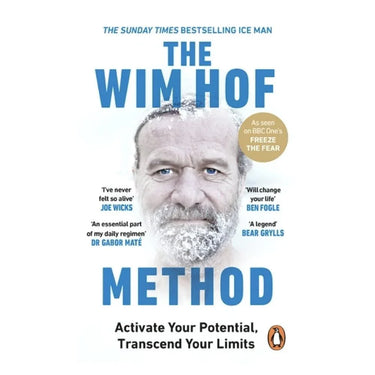
STAR DER BBC ONE-SENDUNG FREEZE THE FEAR „Ich habe mich noch nie so lebendig gefühlt“ JOE WICKS „Ein faszinierender Einblick in Wims unglaubliches Leben und seine Methode“ FEARNE COTTON Meine Hoffnung ist es, Sie zu inspirieren, die Kontrolle über Ihren Körper und Ihr Leben zurückzugewinnen, indem Sie die immense Kraft des Geistes entfesseln.

„Der Iceman“ Wim Hof teilt seine bemerkenswerte Lebensgeschichte und kraftvolle Methode, um Ihre Gesundheit und Ihr Glück zu steigern. Über vierzig Jahre verfeinert und von Wissenschaftlern auf der ganzen Welt unterstützt, erfahren Sie, wie Sie die drei Schlüsselelemente Kälte, Atmung und Denkweise nutzen können, um die Kontrolle über Ihren eigenen Geist und Ihr Wohlbefinden zu übernehmen.


  • Penguin Hay House Publications – Der weltweit führende Verlag für Geist, Körper, Seele
  •  Der #1 Sunday Times Bestseller
  • Führende Autoren

Zitat:

  • „Das Buch wird Ihr Leben verändern“ BEN FOGLE „Wim ist eine Legende der Kraft, die Eis zur Heilung und Stärkung besitzt“
  • BEAR GRYLLS Sunday Times Bestseller, Juli 2022


Über den Autor:

Wim Hof Wim Hof, auch bekannt als „Der Iceman“, hält mehrere Weltrekorde für seine Ausdauerleistungen und Kälteexpositionen, vom Besteigen des Kilimandscharo nur in Shorts und Schuhen über das Laufen eines Barfuß-Halbmarathons im Polarkreis bis zum Stehen in einem eisgefüllten Behälter für mehr als 112 Minuten. Von der majestätischen Naturkraft der Kälte gelehrt, hat Wim die Mission, seine Philosophie mit der Welt zu teilen. Er war unter anderem in der BBC, VICE Media, im Discovery Channel zu sehen und ist der Autor des Sunday Times Bestsellers Die Wim Hof Methode. ERFAHREN SIE MEHR

More About The Wim Hof Method

The book combines Wim Hof's personal history with an explanation of the techniques and philosophy behind his method.

Rather than concentrating on only one practice, Hof presents cold, breathing and mindset as interconnected elements.

The central idea is that deliberately working with physical discomfort, breathing patterns and concentration may help people explore their own response to stress and challenge.

The supplied description uses strong language around “supercharging” health and happiness. These are promotional claims rather than guaranteed outcomes, and individual responses to breathwork or cold exposure can vary considerably.

Cold Exposure

Cold exposure is one of the most recognisable elements of the Wim Hof Method.

The practice may begin with something as simple as introducing colder water at the end of a shower and can extend, for experienced practitioners, to more demanding forms of cold-water exposure.

Within the method, cold is treated as a deliberate physical challenge that requires focus and controlled response.

Cold exposure is not appropriate in every situation. Sudden immersion can cause rapid changes in breathing, heart rate and blood pressure, and open-water cold exposure carries additional risks.

It should therefore be approached progressively rather than by attempting to copy Wim Hof's extreme endurance feats.

Breathing

Controlled breathing forms the second major part of the method.

The Wim Hof breathing technique involves deliberate cycles of deep breathing followed by periods of breath retention.

Readers interested in breathwork may find this section particularly relevant because it explores how changing breathing patterns can alter physical sensations and attention.

However, deliberate hyperventilation and breath retention can cause light-headedness or loss of consciousness.

Wim Hof-style breathing should never be practised in water, while driving, standing in an unsafe location or anywhere that fainting could lead to injury.

Practise seated or lying down in a safe environment.

Mindset & Commitment

The third element is mindset.

Hof places considerable emphasis on concentration, commitment and learning to remain present when faced with discomfort.

In the context of the book, mindset is not simply positive thinking. It is presented as part of the process of approaching cold and breathing practices deliberately rather than reactively.

This makes the book relevant not only to readers interested in cold exposure, but also to those interested in resilience, discipline and personal challenge.

Wim Hof's Endurance Story

A large part of Wim Hof's public profile comes from feats involving extreme cold.

The supplied biography describes achievements such as climbing Mount Kilimanjaro wearing shorts and shoes, running barefoot within the Arctic Circle and remaining inside an ice-filled container for more than 112 minutes.

These examples help explain how his method developed, but they should not be treated as goals for inexperienced readers.

The practical value of the book lies in understanding the underlying method rather than attempting to reproduce extreme demonstrations.

Science & the Wim Hof Method

The supplied description states that the method has attracted scientific interest and has been studied by researchers.

That is an important distinction from saying that every health claim associated with the method has been scientifically proven.

Research has examined aspects of controlled breathing, cold exposure and physiological response, but the strength of evidence varies depending on the specific claim.

The book is therefore best read as a combination of personal experience, practical method and discussion of emerging research rather than as a medical textbook.

Who May Enjoy This Book?

The Wim Hof Method may appeal to readers interested in:

  • breathwork
  • cold showers and cold-water practice
  • resilience and mental discipline
  • physical challenge
  • mindfulness and concentration
  • popular science and human physiology
  • Wim Hof's life and endurance achievements

It may also suit readers who enjoyed books exploring how breathing, stress and physical conditioning interact.

Beginning Safely

The safest approach to the ideas in this book is gradual.

Do not begin with extreme cold exposure or prolonged breath retention.

If experimenting with the breathing method, practise seated or lying down in a safe place.

If exploring cold exposure, begin conservatively and stop if you experience pain, confusion, severe shivering, dizziness, numbness or other concerning symptoms.

Anyone with cardiovascular disease, uncontrolled blood pressure, fainting history, epilepsy, respiratory illness or another significant medical condition should seek appropriate professional advice before beginning intensive breathwork or cold exposure.

Quick FAQs

What is The Wim Hof Method about?
It is a book by Wim Hof explaining his approach to cold exposure, breathing and mindset alongside his personal story.

What are the three parts of the Wim Hof Method?
Cold, Breathing and Mindset.

Who is Wim Hof?
Wim Hof, known as “The Iceman”, is an endurance athlete and teacher known for extreme cold-exposure achievements and for developing the Wim Hof Method.

Does the book include breathwork?
Yes. Controlled breathing is one of the three central elements of the method.

Does it discuss cold-water exposure?
Yes. Cold exposure is a major part of the book and the wider Wim Hof Method.

Is the Wim Hof Method scientifically proven?
Parts of the method have been studied scientifically, but that does not mean every health claim associated with it has been established. Evidence varies by outcome and technique.

Is Wim Hof breathing safe to practise anywhere?
No. Breath retention can cause fainting. It should never be practised in water, while driving or anywhere loss of consciousness could cause injury.

Should beginners attempt Wim Hof's extreme cold challenges?
No. His endurance feats are exceptional demonstrations and should not be treated as beginner exercises.

Is this a medical treatment programme?
No. The book explores a personal method for breathing, cold exposure and mindset and should not replace medical care.

Care & Storage

Store the book in a dry place away from excessive moisture and prolonged direct sunlight.

Avoid heavily bending the spine if you want to preserve the book in good condition.

Disclaimer

This book discusses deliberate breathing, breath retention and cold exposure, all of which can affect heart rate, blood pressure, consciousness and body temperature. Breathwork should never be practised in water, while driving or in another unsafe environment. Cold exposure should be introduced gradually and responsibly.

The book is educational and should not replace personalised medical advice, diagnosis or treatment. Anyone with an existing medical condition or concerns about breathing, circulation or cardiovascular health should seek appropriate professional guidance before beginning intensive practice.

Bestellungen & Versand
Bestellungen, die vor 15:00 Uhr eingehen, werden noch am selben Tag bearbeitet und versandt. Wir versenden weltweit.

Sendungsverfolgung
Bitte verfolgen Sie Ihr Paket anhand der Sendungsdetails, die Sie in Ihrer Versandbestätigungs-E-Mail erhalten haben. Die Sendungsverfolgung wird in der Regel innerhalb von 24 Stunden nach dem Versand aktualisiert und fortgesetzt, bis die Lieferung bestätigt ist.

Zölle & Steuern
EU- und internationale Zölle und Steuern liegen in der Verantwortung des Kunden und müssen, falls zutreffend, vor Ort entrichtet werden. Für Kunden außerhalb Großbritanniens wird die britische Steuer automatisch beim Checkout entfernt, sobald das Versandziel ausgewählt wurde.

Verzögerungen durch den Zoll
Einige internationale Bestellungen können sich aufgrund von Zollkontrollen verzögern, die außerhalb unserer Kontrolle liegen. In Stoßzeiten können die Verzögerungen länger sein.

Rücksendungen
Bei Bestellungen, für die eine kostenlose Lieferung galt, können für zurückgesandte Artikel die ursprünglichen Versandkosten und eventuelle Abholkosten anfallen.

Abgelehnte oder stornierte internationale Bestellungen
Internationale Bestellungen, die abgelehnt, zurückgesandt und dann storniert werden, können mit einem Aufschlag von 10 % belegt werden. Pakete können auf Anfrage erneut versandt werden, wobei jedoch eine zusätzliche Gebühr anfallen kann.