
Three Autumn Traditions, Their Origins, Meanings and Why They Are Not the Same

A pumpkin in the window, a candle on an ancestor altar and a family grave decorated with marigolds can all appear around the start of November. It is easy to assume they belong to one shared tradition. Yet when people ask, “halloween, samhain & day of the dead: the difference?”, the most useful answer is that these observances may overlap in season and theme, but they come from very different histories, cultures and purposes.
All three can invite reflection on death, remembrance and the turning of the year. That does not make them interchangeable. Understanding the distinctions allows us to enjoy Halloween, honour Samhain meaningfully and speak about Día de Muertos - Day of the Dead - with the respect it deserves.
The difference at a glance
| Halloween | Samhain | Día de Muertos | |
|---|---|---|---|
| When | 31 October | Around 31 October–1 November in modern observance | Primarily 1–2 November |
| Roots | Christian, European folk and later popular traditions | Gaelic seasonal tradition | Mexican tradition shaped by Indigenous and Catholic influences |
| Main focus | Celebration, costumes, folklore and seasonal fun | Seasonal transition, harvest, winter and, for many modern practitioners, remembrance | Remembering and welcoming deceased loved ones |
| Typical mood | Playful, spooky or social | Reflective, seasonal or spiritual | Loving, colourful, familial and commemorative |
| The same tradition? | No | No | No |
Halloween is the evening of 31 October, widely recognised in Britain for costumes, carved pumpkins, ghost stories and trick-or-treating. Samhain is a Celtic seasonal festival, especially connected with Gaelic traditions, marking the end of harvest and the beginning of winter. Day of the Dead is a living Mexican tradition, generally observed on 1 and 2 November, centred on welcoming and remembering deceased family members and loved ones.
They sit close together on the calendar for historical reasons, including the Christian feasts of All Saints’ Day and All Souls’ Day. But shared dates do not mean a shared origin. Nor does an interest in ancestors make every autumn ritual a version of Samhain.
This distinction can feel subtle, particularly if you are drawn to seasonal spirituality rather than a formal religious path. A good starting point is to ask what you are actually marking: a social celebration, a change in the natural year, or a specific cultural tradition of family remembrance.

Halloween: a changing folk celebration
Halloween, also called All Hallows’ Eve, is the night before All Saints’ Day. Its customs have developed over centuries through Christian observance, local folklore, seasonal festivities and, more recently, popular culture. In the UK, guising, apple bobbing, bonfires, lanterns and tales of spirits all have their place in the wider history of the season.
People often say that Halloween came directly from Samhain. There is certainly a relationship: older Gaelic seasonal customs influenced local practices in Ireland and Scotland, and the timing is close. However, the history is not a simple straight line. Halloween as we know it has also been shaped by All Hallows’ Eve, migration, commercial celebrations and many regional traditions.
For many households, Halloween is simply playful. Children dress up, neighbours share sweets and adults may enjoy a themed gathering. It can also be a gentle opportunity to acknowledge the darker half of the year: drawing the curtains earlier, noticing the colder air and making home feel warm and welcoming.
A lantern, seasonal candle or a few moments of quiet can bring intention to Halloween without turning it into a ritual it is not. There is nothing less spiritual about keeping it light-hearted if that is what suits your home.

Samhain: the threshold into winter
Samhain, often pronounced “sow-in”, is a Gaelic seasonal festival traditionally associated with the end of harvest and the beginning of winter. Historically associated with the beginning of November, Samhain is now commonly observed from the evening of 31 October into 1 November, although customs and observance have varied across places and communities.
For modern Pagans, Druids, Wiccans and those following an earth-centred spiritual practice, Samhain is often a time for reflection, gratitude and honouring ancestors. It may be observed as a point of transition - a chance to recognise what has ended, what needs releasing and what will be carried carefully into the quieter months.
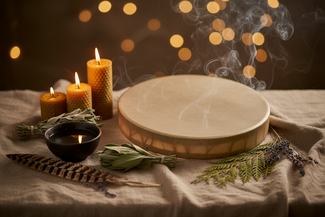
The idea that the boundary between worlds is thinner at Samhain is common in modern Pagan spirituality and is meaningful for many practitioners. It should not, however, be treated as a reason for fear. A simple Samhain practice can be calm, contained and deeply personal: light a candle for someone remembered, place a photograph or meaningful object on an altar, or sit with a journal and consider the year’s harvest beyond the literal one.
Those who work with tarot or oracle cards may choose a reflective spread focused on memory, endings and wise next steps. Others prefer incense, a sacred spray or a meditation chime to create a quiet, grounded atmosphere. The tool matters less than the care behind it.
Samhain is not a costume theme, and it does not require elaborate ceremony. If you do not belong to a Pagan path, you can still take inspiration from the season respectfully by practising gratitude, spending time outdoors or creating space to remember those you miss.

Day of the Dead: remembrance with colour and connection
Day of the Dead, or Día de Muertos, is a Mexican cultural and religious tradition that honours the dead with love, memory and celebration. It is commonly observed on 1 November, often associated with children who have died, and 2 November, often associated with adults. Family customs differ between regions, communities and households.
Central to many observances is the ofrenda, an altar prepared to welcome and remember loved ones. It may include photographs, candles, water, food, favourite belongings, flowers and other meaningful items. Marigolds, known for their vivid colour and scent, are widely associated with the celebration. Families may visit graves, clean and decorate them, share stories and gather together.
It is not a Mexican Halloween. While skeleton imagery appears in both, its meaning is very different. In Día de Muertos, skulls and skeleton figures can express the continuity of life, affection for those who have died and the fact that death is part of the human experience. They are not necessarily intended to be frightening.
The tradition reflects a rich blend of Indigenous Mexican practices and Catholic influences, developed over a long period rather than belonging to one single ancient source. Because it remains an important living tradition for Mexican people and communities around the world, it is best approached with curiosity, accuracy and respect rather than borrowed as generic “spooky” décor.
If Day of the Dead has personal cultural meaning for you or your family, an ofrenda may be a powerful act of remembrance. If it does not, you can still learn from its generosity of spirit without copying sacred or culturally specific elements. Remembering your own loved ones in a way that is true to your background is more meaningful than trying to recreate someone else’s tradition.
What these observances share - and what they do not
Halloween, Samhain and Day of the Dead all meet us at a season when the natural world is visibly changing. In Britain, bare branches, misty mornings and fading gardens can make the idea of endings feel close. They may each open a conversation about mortality, grief, ancestry and the value of remembering.
Their differences lie in context. Halloween is a broad, evolving festival with social and commercial forms. Samhain is a seasonal sacred festival rooted in Celtic and Gaelic tradition and interpreted in varied ways by contemporary Pagan communities. Day of the Dead is a distinct Mexican tradition of family remembrance, shaped by specific cultural, Indigenous and Catholic histories.
There is also a difference in mood. Halloween often plays with fear. Samhain tends towards contemplation and transition. Day of the Dead is frequently vivid, affectionate and communal. Of course, no individual experience fits perfectly into those descriptions. A Pagan may celebrate Samhain joyfully; a Halloween party may include heartfelt remembrance; a Día de Muertos observance may hold profound grief alongside celebration.

Creating a respectful autumn remembrance practice
You do not need to claim a tradition that is not yours to make space for remembrance. A small, personal practice can be enough. You might light an unscented or softly fragranced candle, place a photograph somewhere safe, make a favourite meal once shared with a loved one, or take a quiet walk in the autumn landscape.
If you create an ancestor altar, keep it simple and personal. A clean cloth, a candle, a bowl of water and one or two meaningful objects can be more powerful than filling a surface with things. Many practitioners use cleansing incense or a gentle room mist beforehand, not to chase away anything frightening, but to mark a change of pace and create a settled space for reflection.
Be mindful, too, that ancestor work is not always easy. Family histories can be complicated, and not everyone feels safe or comforted by the idea of honouring blood relatives. You may instead remember chosen family, teachers, elders, beloved friends, cultural ancestors or people whose courage has helped shape your life.
The season asks no one to perform grief or spirituality in a particular way. Whether you are handing out sweets on Halloween, observing Samhain with intention or learning about Day of the Dead, the most grounded approach is to let remembrance be honest, respectful and close to your own life.

Explore Further with Sacred Essence
Continue Your Journey
- How to Build a Samhain Altar
- How to Create an Altar – A Complete Guide
- A Candle Fire Ceremony for Release and Renewal Blog
Explore Seasonal Practice
“Different traditions can meet beside the same season without becoming the same story. Understanding where they come from helps us approach each one with greater meaning and respect.”
Sacred Essence 🌈