


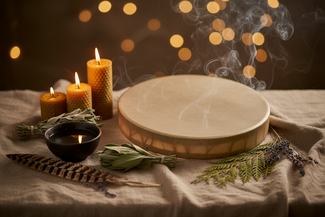
A Simple Guide to Creating a Seasonal and Ancestor Altar for Samhain

A Samhain altar does not need to look dramatic to feel meaningful. A small shelf, windowsill or corner of a table can become a place to pause as autumn deepens. If you are wondering how to build a Samhain altar, begin with the purpose behind it: honouring the season, reflecting on change, and perhaps remembering those who came before you.
Samhain, commonly pronounced ‘sow-in’, is a Celtic seasonal festival traditionally observed from sunset on 31 October into 1 November. It marks the end of the harvest and the beginning of winter in the old Gaelic calendar. Many modern Pagans, Wiccans, Druids and spiritually minded people observe it as a time for ancestor remembrance, gratitude, release and quiet preparation for the darker half of the year.
There is no single correct altar. Your practice may be religious, earth-centred, ancestral, reflective, or simply a way to bring more intention to your home. The most effective altar is one you can approach honestly and safely, rather than one filled with objects that do not mean anything to you.
How to build a Samhain altar with intention
Before choosing candles, crystals or seasonal decorations, decide what you want this space to hold. Samhain is often linked with the thinning of the boundary between the living and the dead, but that idea is understood differently across traditions. You might use your altar to remember loved ones, acknowledge life transitions, give thanks for what has sustained you, or sit with what needs to be released.
A simple intention can help you choose what belongs there. You may write it on a small piece of paper, speak it aloud as you arrange the altar, or hold it quietly in mind. Something as straightforward as, ‘I make space to remember, rest and welcome the turning season,’ is enough.
Choose a spot that feels calm and will not be disturbed. A dedicated altar table is lovely, but not essential. A tray is particularly useful if you need to put the altar away between rituals, share your home with others, or have curious children or pets nearby. Place a cloth beneath your items if you wish. Black, deep purple, burgundy, rust, forest green and warm gold are all often chosen for Samhain, though a plain natural cloth can feel equally appropriate.
Begin with the seasonal foundations
Think of an altar as a visual gathering of relationships: your relationship with the season, the natural world, your memories and your intentions. Start with a few natural autumnal elements rather than trying to include every traditional symbol at once.
Fallen leaves, acorns, seed heads, pinecones, small branches and dried grasses can represent the harvest’s completion and nature’s gradual withdrawal into winter. Apples are strongly associated with the season in many traditions, while pumpkins, gourds and root vegetables evoke abundance and the practical nourishment of autumn. If you gather from outdoors, take only what has already fallen or is plentiful, and avoid protected sites and private land without permission.
A small bowl of soil, dried beans, oats or grain can also be a humble reminder of the land and harvest. These materials are not decorations alone. They invite a useful question: what have you grown, gathered or learned this year, even if it has been difficult?
Create an ancestor space with care
For many people, ancestor remembrance is at the heart of Samhain. This can mean close family members, beloved friends, spiritual forebears, cultural ancestors, or the people whose work and courage made your present life possible. It does not have to mean idealising family history. Some people have complicated, painful or unknown ancestral connections, and that deserves gentleness.
You might place a photograph, written name, inherited object or piece of jewellery on the altar. A simple candle set apart for remembrance can be just as powerful. If photographs feel too personal, use a white flower, a bowl of water, or a note expressing gratitude for supportive ancestors and guides known or unknown.
Be mindful when displaying the belongings or image of someone who has died. Choose items you can look at with respect and emotional steadiness. An ancestor altar should not pressure you into opening wounds before you are ready. If grief feels overwhelming, keep your ritual very small: light a candle, take three slow breaths, and let that be enough.
Add a simple seasonal offering
An offering does not need to be elaborate. A little fresh water, seasonal fruit, bread, flowers or a small portion of something prepared with care can represent gratitude, hospitality and remembrance.
If you are remembering someone in particular, you might choose something connected with them — a favourite flower, a familiar food or simply a cup of tea placed nearby while you sit and remember them.
Offerings can also be directed towards the season rather than an individual. An apple, a few oats or a small bowl of water can become a simple acknowledgement of harvest, land and everything that has sustained you through the year.
Remove food and drink before they spoil, and dispose of or compost suitable offerings responsibly. The meaning lies in the act of giving and remembering, not in how long the offering remains on the altar.

Choose candles, incense and cleansing tools
Candlelight is a natural fit for Samhain because it brings warmth and presence to a darker season. Black candles are often used for protection, release and the mystery of the unknown. White candles may represent peace, remembrance and clarity, while orange, red or gold can honour the final warmth of harvest. The colour matters less than the intention you bring to it.
Never leave a burning candle unattended, especially on an altar with dry leaves, paper, fabric or incense. Use a heatproof holder, keep flames well clear of decorations, and consider an LED candle if open flame is unsuitable. A flame-free altar can still feel deeply sacred.
Incense may help signal the beginning and end of your practice. Frankincense and myrrh have long ceremonial associations, while sandalwood, cedar, cinnamon and warming autumnal blends are often chosen for seasonal ritual. Some people prefer a sacred spray, essential oil diffuser or a meditation chime, particularly in smaller homes or where smoke is not practical.
If you use smoke for energy cleansing, open a window where possible and keep the practice grounded. Cleansing is not about creating fear around your home or belongings. It can simply be a sensory way to clear the atmosphere, mark a transition and return your attention to the present.
Add crystals and divination tools thoughtfully
Crystals can bring focus to a Samhain altar, but a handful is more useful than a crowded display. Obsidian is often chosen for grounding, protection and honest self-reflection. Smoky quartz may support a sense of steadiness during periods of change, while amethyst is traditionally associated with spiritual reflection and restful calm. Carnelian, garnet and red jasper can bring an earthy, vital quality to an altar centred on courage and life force.
Clean your crystals in a way that suits the stone and your usual practice. Some people use sound from a bell or singing bowl, a sacred spray, gentle smoke, or a few moments of clear intention. Avoid placing water-sensitive crystals in water, and do not assume every crystal is safe in direct sunlight or around heat.
Tarot or oracle cards can also have a place here. You might draw one card for the lesson of the year so far and one for the quality you wish to carry into winter. Keep the question open rather than asking a deck to make decisions for you. ‘What deserves my attention as the season turns?’ often creates more room for reflection than a demand for certainty.

Make a simple Samhain altar ritual
Once your altar is arranged, give yourself ten quiet minutes with it. Begin by tidying the immediate space and silencing distractions. Light your candle or switch on your LED light, then take a moment to notice the objects before you.
You could name three things you are grateful for from the year’s harvest, whether literal or personal. Then write down one habit, expectation or old story you are ready to lay down. Fold the paper and place it beneath a stone, in a fire-safe bowl, or somewhere private until you are ready to revisit it. Burning paper can be meaningful for some, but it is never necessary and requires proper fire safety.
Finish by offering thanks in your own words. You may speak to ancestors, honour the land and season, say a prayer from your tradition, or simply acknowledge yourself for stopping. Ringing a bell, clapping once, or taking a final breath can help close the ritual and make the transition back into everyday life feel clear.
Let the altar change with the season
A Samhain altar can remain in place for one evening, several days or through to the winter solstice. Fresh food should be removed before it spoils, and natural materials can be composted or returned responsibly to the garden where suitable. You may wish to keep a candle, a meaningful photograph and one grounding stone as the more elaborate autumn elements are cleared away.
At Sacred Essence, we often see that the altars people return to most are not the most elaborate. They are the ones built gradually, with a few carefully chosen ritual tools and a genuine willingness to pause. Let your Samhain altar be a quiet meeting place: between the harvest and the winter ahead, between memory and possibility, and between your spiritual practice and the life you are living now.

Explore Further with Sacred Essence
Shop Samhain & Altar Essentials
- Samhain Resin Incense mix
- Candles
- Altar & Ritual Tools
- Crystals
- Tumblestones
- Incense & Sacred Herbs
- Tarot & Oracle Cards
Continue Your Journey
- Samhain Explained: Meaning, Traditions and Rituals Blog
- How to Create an Altar – A Complete Guide
- A Candle Fire Ceremony for Release and Renewal
Then a very small closing quote before the signature:
“An altar does not need to hold many things. It only needs to hold enough meaning to bring us back to what matters.”
Sacred Essence 🌈