

Palo Santo – Benefits, Uses & How to Burn Palo Santo
There is something about Palo Santo that is difficult to describe without having encountered it. The moment you light a stick and the first thread of smoke rises — warm, sweet, gently citrus, with a depth and softness that feels immediately like an exhale — you understand why this wood has been considered sacred for centuries. It does not demand the room the way White Sage does. It does not announce itself. It simply arrives, quietly and warmly, and the atmosphere changes. Something settles. Something opens. It is one of the most universally loved cleansing tools in the world. Browse all Palo Santo →
How to Choose Your Palo Santo – A Quick Guide
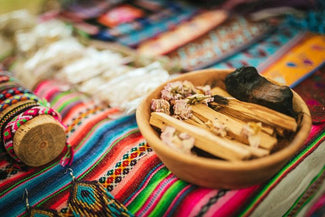
- Raw Palo Santo wood sticks — the traditional format; richest scent and smoke; ceremonial feel; relight multiple times; best for space clearing and ritual
- Palo Santo incense sticks — convenient and consistent; burn tip to base without relighting; better for background use during meditation or work
- After White Sage — Palo Santo’s most powerful use; burns sage clears, Palo Santo welcomes — together they create a complete energetic reset
- For daily ritual — Palo Santo is gentle enough for everyday use; a single stick each morning settles the energy of a home beautifully
- Smoke-free alternative — sacred sprays carry Palo Santo’s energetic signature without any smoke; ideal for offices, travel, or where burning is not possible
Palo Santo Formats – Comparison
| Format | Burn Time | Smoke | Best For |
|---|---|---|---|
| Raw wood sticks | 2–5 min per lighting; relit many times | Medium, rich and resinous | Ceremony, space clearing, traditional use |
| Palo Santo incense sticks | 20–40 min continuous | Light–medium | Meditation, daily background fragrance |
| Palo Santo sacred spray | Instant; no burn time | None | Smoke-free cleansing, travel, offices, pets |
What Is Palo Santo?
Palo Santo — Bursera graveolens — means “Holy Wood” in Spanish. It is a wild tree native to the dry tropical forests of the Pacific Coast of South America — Ecuador, Peru, and the wider region — where it grows slowly in difficult terrain, producing aromatic resins of extraordinary quality precisely because of the conditions it endures.
What makes Palo Santo genuinely remarkable — and what separates ethically sourced wood from exploitative harvesting — is the way it must be collected. The aromatic oils that give Palo Santo its scent and healing properties only develop fully in wood that has died naturally and lain on the forest floor for a minimum of four to ten years. Living trees cannot be cut. The wood is gathered only from those that have completed their life cycle naturally. This is not simply an ethical position; it is the traditional indigenous understanding of how the medicine works. Cut wood carries no medicine. Shop ethically sourced Palo Santo →
Palo Santo in Andean & Amazonian Tradition
Palo Santo has been used in ceremony and healing across the indigenous cultures of South America for generations. The Q’ero of Peru — high-mountain Quechua communities widely regarded as living descendants of the Inca — burn Palo Santo to open ceremony, clear energy before healing work, and invite the presence of helping spirits. In Andean cosmology it is associated with sami: refined, light, positive life energy. To burn it is to invite that quality into your space and into yourself.
In the Amazon, traditional plant medicine healers burn Palo Santo alongside other sacred plants to prepare ceremonial space and call in protective energies. It is considered a plant spirit in its own right — not simply a fragrant wood, but a living intelligence that responds to intention and respect. Approaching it with awareness of its origins, with genuine intention, is what transforms a fragrant ritual into something real. See our Smudging Guide → and Shamanic Tools Guide →
The Scent & Its Effects
The scent of Palo Santo is warm, sweet, and gently citrus — with a resinous depth that opens slowly and lingers long after the stick has finished burning. It diffuses gently, creating a quality of warmth and calm that most people find immediately comforting. The active compounds — including limonene (found in citrus fruits), terpineol, and carvone — have documented calming and mood-supporting properties. The science supports what indigenous practitioners have always known: this is a plant with genuine effects on human wellbeing.
Uses of Palo Santo
Energy Cleansing – The Warming Counterpart to Sage
Where White Sage removes and clears, Palo Santo uplifts and welcomes. It raises the quality of energy in a space rather than stripping it back. Burned after sage, it fills the cleared space with warmth, positivity, and protection. Burned alone for daily maintenance, it gently refreshes the energy of a room without the intensity of a full sage clearing.
After Sage – The Complete Reset
The most powerful use of Palo Santo is as the second half of a full energetic reset: burn White Sage first to clear and purify, then move through the space again with Palo Santo to invite in what you want to replace what was cleared. Sage removes; Palo Santo welcomes. Together they create a complete two-movement cleansing. See our Sage vs Palo Santo guide →
Meditation & Spiritual Practice
Light Palo Santo 5–10 minutes before you sit, and allow the smoke to settle before you begin. The scent creates a powerful olfactory cue — over time, simply smelling it begins to shift the mind toward stillness and focus. Pair with Clear Quartz or Labradorite on your altar or meditation space. See our Meditation Guide →
Personal Cleansing
Waft the smoke gently around your body from feet to head, holding the intention of releasing whatever you are carrying and inviting in clarity and lightness. Particularly useful after difficult conversations, crowded environments, or any situation where you feel you have taken on energy that is not yours. Follow with a sacred spray to seal your energy field.
Crystals & Sacred Objects
Pass crystals slowly through Palo Santo smoke for 30–60 seconds to gently cleanse and recharge them. A particularly good choice for lighter-coloured or more delicate crystals, and for those associated with love, creativity, and joy. See our How to Cleanse Crystals guide →
Ceremony & Ritual
Burn Palo Santo to open sacred space before any ceremony, ritual, or intentional practice — fire ceremony, moon ritual, altar work, shamanic journeying. Its presence marks the threshold between ordinary time and sacred time. See our Creating a Sacred Space guide → and Fire Ceremony Guide →
Natural Insect Repellent
The aromatic compounds that make Palo Santo so pleasant to humans are distinctly unwelcome to mosquitoes and other insects — making it a beautiful and effective alternative to chemical repellents in warmer months.
How to Burn Palo Santo
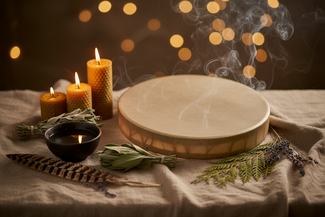
- Hold your Palo Santo stick over a fireproof bowl or abalone shell
- Hold the tip at a 45-degree angle and apply a flame — allow it to burn for 30–60 seconds, longer than you might expect
- Blow out gently — the wood should smoulder and produce a steady, fragrant smoke
- If it goes out quickly, relight — Palo Santo is resinous and sometimes needs two or three lights before it holds the burn
- Move through your space directing smoke with intention — or simply rest the stick in your bowl and allow the fragrance to fill the room naturally
- Palo Santo will naturally extinguish itself after a few minutes: this is normal and correct. The stick can be relit many times.
- Rest in your fireproof bowl when not actively using; never leave unattended while smouldering
When to Burn Palo Santo
- Every morning as a gentle daily ritual to set the tone of the day
- Before meditation, prayer, or any intentional spiritual practice
- After smudging with White Sage — to fill the cleared space with warmth and welcome
- Before creative work, writing, or any practice that benefits from clarity and openness
- When a space feels flat, tired, or in need of gentle refreshing
- Before or during moon rituals, ceremony, or altar work
- After difficult conversations or returning home from draining environments
- To mark the beginning of something new — a project, a season, an intention
Sourcing & Quality – What to Look For
Ethical harvesting — genuine Palo Santo is harvested only from naturally fallen, aged wood — never cut from living trees. This is both the traditional and the ecologically responsible approach. Be wary of very cheap or unprovenanced wood; the price of ethically harvested Palo Santo reflects the time and care involved.
Colour and resin content — quality Palo Santo wood is pale, creamy-tan in colour with visible resin streaks running through the grain. The resin is where the medicine and the scent live. Wood that is uniformly pale with no visible resin streaks is likely young, poorly aged, or a different species.
Scent before lighting — good Palo Santo is fragrant even when cold. Run your thumbnail lightly along the wood — it should release a clear, sweet, citrus-resin scent. If there is little or no scent before lighting, the wood is either too young or has been stored poorly.
Origin — Ecuador and Peru are the primary sources of Bursera graveolens, the true Palo Santo. Other species are sometimes sold under the same name; while not necessarily inferior, provenance transparency matters.
Shop by Type
- Palo Santo Wood Sticks
- Palo Santo Incense Sticks
- Californian White Sage – Perfect Companion
- Abalone Shells & Smudge Bowls
- Sacred Sprays – Smoke-Free Alternative
- Selenite
Crystal Pairings
- Citrine — abundance, joy, and positive energy; burn Palo Santo to amplify Citrine’s warm, solar quality
- Rose Quartz — love, self-compassion, and heart opening; Palo Santo’s warmth pairs naturally with Rose Quartz’s gentle energy
- Selenite — clarity and energetic protection; use together to cleanse and hold a space
- Clear Quartz — amplification and clarity; Palo Santo before meditation with Clear Quartz deepens focus and intention
- Labradorite — intuition and spiritual connection; burn Palo Santo before any divination or journeying work
See our Crystal Guide →
Safety
Fire Safety
- Always use a fireproof bowl or abalone shell — never rest burning wood on bare surfaces
- Place your bowl on a heat-resistant surface away from flammable materials
- Never leave smouldering Palo Santo unattended — it will self-extinguish but check before leaving the room
- Keep away from children and flammable materials
Smoke & Ventilation
- Burn with at least one window open for good ventilation
- Palo Santo produces less and lighter smoke than White Sage — it is generally very comfortable even in smaller spaces
- People with respiratory sensitivities should still use caution; sacred sprays are a fully smoke-free alternative
- Keep pets — especially birds — out of the room during burning
Storing Your Palo Santo
- Keep dry — moisture degrades the aromatic resins; store in a cool, dry place away from humidity
- Avoid direct sunlight — UV light degrades aromatic compounds over time; a drawer or closed box is ideal
- Store in wood, paper, or cloth — the resins are stable and keep well for years when stored simply; avoid airtight plastic for long-term storage as it can trap humidity
- Partially burned sticks — allow to cool completely and store in your smudge bowl or a small wooden box; they retain their scent and potency through many burns
Frequently Asked Questions
What does Palo Santo smell like?
Warm, sweet, and gently citrus — with a resinous, woody depth that opens slowly. Most people find it immediately comforting and uplifting. It is lighter and softer than White Sage, and its smoke is less intense and more universally pleasant.
How is Palo Santo different from White Sage?
White Sage is the primary clearing tool — strong, decisive, and powerful at removing stagnant or unwanted energy. Palo Santo is warm and uplifting — it fills a cleared space with positive energy rather than stripping it back. They are natural partners: sage first to clear, Palo Santo to welcome. See our Sage vs Palo Santo guide →
Why does my Palo Santo keep going out?
This is completely normal. Palo Santo is a resinous wood that burns intermittently rather than continuously — unlike incense sticks, it self-extinguishes after a few minutes. Simply relight when you want more smoke. It sometimes takes two or three lights to get it going well, particularly with a new stick. Hold the flame to the tip for a full 30–60 seconds before blowing out.
How long does a Palo Santo stick last?
A single raw wood stick can be relit many times — most sticks last through 15–20 individual burns before they become too short to hold comfortably. The ends of short sticks can be burned in a fireproof bowl as they become too small to hold.
Is Palo Santo sustainable?
Ethically sourced Palo Santo — harvested only from naturally fallen, aged wood — is sustainable. The concern is with suppliers who source cut wood or who do not observe the traditional minimum ageing period. Buy from transparent suppliers who can speak to their sourcing. At Sacred Essence, our Palo Santo is ethically and sustainably sourced.
Can I use Palo Santo every day?
Yes — Palo Santo is gentle enough for daily use and many people burn a stick every morning as part of their daily ritual. Unlike White Sage, which is best reserved for periodic deeper clearings, Palo Santo suits regular everyday use beautifully.
Can I use a sacred spray instead of burning Palo Santo?
Yes — sacred sprays carrying Palo Santo essence achieve many of the same energetic effects without any smoke or flame. Ideal for offices, rental properties, around children or pets, or for travel. See our Sacred Sprays Guide →
What crystals go well with Palo Santo?
Citrine, Rose Quartz, Selenite, Clear Quartz, and Labradorite all pair particularly well with Palo Santo’s warm, uplifting energy. See the crystal pairings section above and our Crystal Guide →
Shop All Palo Santo & Smudging Supplies
- Palo Santo Wood Sticks
- Californian White Sage
- Smudge Sticks & Loose Sage
- Smudging Feathers & Fans
- Abalone Shells & Smudge Bowls
- Selenite
- Sacred Sprays & Aura Mists
- All Crystals
- All Incense
Related Guides
- Smudging & Energy Cleansing Guide
- How to Use Sage – A Complete Guide
- Sage vs Palo Santo – Which Should You Use?
- Resin Incense & Charcoal Discs Guide
- Energy Cleansing Explained
- Creating a Sacred Space
- Shamanic Tools Guide
- Meditation Guide
- Crystal Guide
- Sacred Sprays Guide
- How to Cleanse Crystals