

A simple guide to choosing between Sage and Palo Santo for cleansing, grounding, ritual practice and everyday energy clearing.

If you have ever stood in front of your ritual shelf wondering whether to reach for sage or palo santo, you are not alone. When people ask sage vs palo santo: what’s the difference?, they are usually really asking something more personal - which one suits my space, my energy and my way of practising?
Both are widely used in spiritual and holistic settings for cleansing, grounding and creating a more intentional atmosphere. Their materials, fragrances and cultural associations differ. In personal ritual, some people describe sage as a brisk reset and Palo Santo as a warmer, woody accompaniment to reflection. These are subjective experiences, not guaranteed effects.
Explore our White Sage collection and Palo Santo collection to compare the available formats. For a broader reference, read our Sage vs Palo Santo guide, with further practical information in the Palo Santo guide.
Sage vs palo santo: what’s the difference in practice?
The simplest answer is that sage and palo santo are different natural materials with different traditional uses, different aromas and a different energetic feel in ritual practice.
Sage, especially white sage, is commonly burned in bundles or loose leaf form. It is often chosen when someone wants a stronger sense of clearing, purification or energetic reset. The smoke is usually sharper, more herbaceous and more immediate. Many people use it when moving into a new home, after conflict, before meditation, or when a room simply feels heavy.
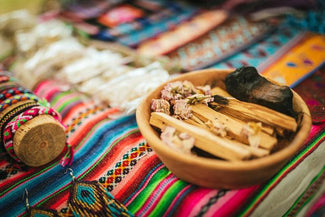
Palo santo is a fragrant wood, traditionally used in stick form. When lit, it gives off a sweeter, resinous, slightly citrus-like aroma with a woody warmth. In personal ritual, palo santo is often associated not only with clearing but also with inviting in calm, blessing, focus and a more comforting energy. Where sage can feel like opening all the windows, palo santo can feel more like lighting a gentle sacred fire.
Neither is better across the board. It depends on what you want your ritual to do.

What sage is typically used for
Sage is most often chosen for symbolic energetic cleansing. In many modern spiritual practices, smudge bundles and loose herbs are used when setting an intention for a room, object or personal practice. That might mean preparing an altar, refreshing a reading space before tarot or marking a fresh beginning after a demanding experience.
Its scent is distinctive and not everyone loves it. Some find it deeply purifying and centring. Others find it quite intense, especially in smaller homes or flats where ventilation is limited. That matters more than people sometimes admit. A cleansing tool is only useful if you actually feel comfortable using it regularly.
Smoke output varies with the product, how it is lit and how much material is smouldering. Rather than choosing by an assumed smoke level, check the product’s directions and consider whether burning anything is suitable for your household.

What palo santo is typically used for
Palo santo is often used when the aim is to create a peaceful, grounded or spiritually connected atmosphere without such a forceful clearing effect. The scent tends to linger in a softer way, and many people find it easier to incorporate into everyday wellbeing rituals.
You might use palo santo before journalling, meditation, breathwork or evening relaxation. It also works well in spaces where you want a sense of warmth and ease rather than a dramatic energetic reset. Some practitioners see it as especially supportive when they want to call in clarity, calm or protection after cleansing has taken place.
Some people prefer Palo Santo’s woody, citrus-like fragrance, but a softer-smelling aroma does not make its smoke safer to breathe. Natural wood may stop smouldering on its own; there is no need to keep relighting it or aim for continuous smoke. Follow the instructions supplied with your wood.
The scent difference matters more than you think
One of the biggest practical differences between sage and palo santo is the fragrance profile, and this often ends up being the deciding factor.
Sage smells dry, green, earthy and strong. It has a clean-but-wild quality that many people associate with deep clearing work. If you are sensitive to smoke or strong herbal scents, choose a smoke-free, unfragranced practice rather than trying to tolerate it.
Palo santo smells warmer, sweeter and more rounded. People often notice notes that feel woody, resinous and faintly citrusy. It can feel less confrontational in the home, particularly if you enjoy incense, essential oils or candles with comforting, natural aromas.
If you are choosing for a shared household, consider other people’s sensitivities as well as your own preferences. Keep children and pets away from smoke and hot materials. A meaningful ritual does not require a fragrance that others find uncomfortable.
Different energies, different intentions
In spiritual retail, customers often shop by intention as much as by product type, and that is helpful here. If your priority is release, removal or energetic clearing, sage is often the first choice. If your priority is grounding, blessing or setting a calm tone, palo santo may feel more aligned.
This is not a strict rule. Many people use both. Sage might come out for a full moon cleanse, after difficult conversations or before altar work. Palo santo might be used afterwards to settle the space, lift the mood and invite a gentler frequency back in.
These descriptions are ways people express personal and spiritual meaning, rather than measurable strengths or necessary stages of cleansing. You may choose one, both on separate occasions, or neither. Sound, journalling or a spoken intention can support a practice without smoke or fragrance.
Which is better for beginners?
There is no universal beginner’s choice. Some people prefer Palo Santo’s woody aroma; others are drawn to sage’s herbal fragrance and its associations in their practice. Start by understanding the material, its product instructions and whether smoke is appropriate for your surroundings.
Both produce smoke when burned. Neither should be recommended as a gentler option for sensitive airways, and ventilation does not remove every risk. If smoke affects your breathing, avoid exposure and seek advice from a qualified healthcare professional about your circumstances.
Some people start with one and later keep both on hand for different moods. That is often the most realistic answer rather than treating it as a one-or-the-other decision.

Ethical and sourcing considerations
When comparing sage vs palo santo, what’s the difference also needs to include sourcing. Conscious spiritual practice is not only about intention. It is also about how products are grown, harvested and brought into your space.
Both white sage and palo santo carry cultural and environmental considerations, so quality and sourcing matter. Shoppers increasingly want products that feel respectful, authentic and responsibly supplied, and rightly so. It is worth paying attention to product information, origin details and the reputation of the retailer you buy from.
Look for the stated species, origin and harvesting information for the particular product, and ask the supplier if details are unclear. A specialist retailer or a label such as “natural” is not, on its own, proof of provenance. Different communities have distinct living traditions; a contemporary personal ritual should not be presented as reproducing a particular ceremony.
How to choose between sage and palo santo
Start with the reason you want it. Sage may feel aligned with an intention to release or begin again, while Palo Santo may appeal for its warm aroma and associations with reflection. Treat those as personal preferences rather than fixed rules about which material has a stronger effect.
Then think about your environment. A small room, shared household, respiratory condition or fragrance sensitivity may make burning either unsuitable. Palo Santo is not a workaround for smoke sensitivity. If scent or smoke is uncomfortable, choose a practice without it.
It can also help to think in terms of ritual pairing. Sage works well when you want to clear before meditation, card reading or crystal work. Palo santo works beautifully when you want to soften the space before rest, reflection or intention setting. If your practice includes incense sticks, candles, singing bowls or essential oils, choose the option that complements the atmosphere you are trying to create.

A gentle rule for using either one
Follow the instructions supplied with the product. If burning is suitable, use a stable fireproof holder on a heat-resistant surface, ventilate the space and stay with the material throughout. Keep it away from hair, clothing, curtains, children and pets, and avoid inhaling smoke directly. Stop if it causes discomfort.
Extinguish fully using the recommended method and leave the material and holder to cool before storage or leaving the room. No visible smoke does not necessarily mean that embers are out. Never leave lit or smouldering material unattended, and do not use it while going to sleep.
You do not need a complex toolkit to create a meaningful practice. A quiet pause, a spoken intention or a familiar sound may be a better fit than smoke. Choose according to your surroundings and comfort, not the idea that either material is essential.
Explore Sage, Palo Santo & Energy Cleansing
Sage and Palo Santo both have a place in spiritual practice, but people associate them with different moments and intentions. Choose a format that suits your surroundings, read its individual directions and remember that a personal ritual can be meaningful without either product.
Explore Related Collections
- White Sage
- Palo Santo
- Incense, Resin Incense & Charcoal Discs
- Sacred Sprays & Room Mists
- Healing Crystals
Related Reading
- Sage vs Palo Santo guide
- Palo Santo guide
- What Is Palo Santo and How Is It Used?
-
Sage Smudge Differences
- Palo Santo: Uses, Benefits and How To Use It
FAQs
Is sage stronger than Palo Santo?
Some people describe sage’s herbal fragrance or symbolic clearing role as stronger. That is a personal impression, not a measure of effectiveness or safety. Products and individual responses vary.
Can I use sage and Palo Santo together?
Some people include both in a practice, but neither is a necessary companion to the other. If burning them, keep the ritual brief and supervised, follow each product’s directions and fully extinguish materials after use. You do not need to produce continuous smoke.
Which is better for beginners?
Choose by the product’s instructions, your surroundings and your preferences, rather than assuming one is universally gentler. If smoke or fragrance is unsuitable, begin with a smoke-free, unfragranced ritual instead.

Visit Us or Explore Online
You are always welcome to visit our shop in Coniston, in the heart of the Lake District. Or browse online and explore our range of sage, Palo Santo, incense, sacred sprays, crystals and ritual tools.
Visit us in Coniston or explore online at Sacred Essence
You can also follow along on Instagram and Facebook for inspiration, new arrivals and updates from our Coniston shop.
A Final Thought
Sage and Palo Santo do not need to compete. One may feel right for clearing, the other for softening and grounding. The best choice is the one that supports your space, your senses and the ritual you will actually return to. ✨
Sacred Essence 🌈