
Shamanic Tools Guide – Essential Tools for Shamanic Practice
In the animist worldview that underlies all shamanic traditions, the world is alive. Not metaphorically — literally. Every stone, plant, animal, body of water, and breath of wind has its own spirit, its own consciousness, its own relationship with the whole. The role of the shaman — the healer-priest-intermediary found in some form in every human culture — is to navigate the relationship between the visible and invisible worlds: to communicate with the spirits of place, plant, and ancestor, to diagnose and restore where energy or soul has been lost, and to maintain the balance between the human community and the larger living world it belongs to.
The tools of shamanic practice are not instruments in the way a surgeon’s tools are instruments. They are allies. Each one has been chosen, worked with, and over time empowered by its relationship with the practitioner. A drum that has carried thousands of journeys has a different quality than a new drum. A rattle that has called in the directions in ceremony across years carries those accumulated intentions. The tools are part of the practice — they develop with it. This is why care, reverence, and relationship are not optional extras in working with shamanic tools. They are fundamental to the work. Browse shamanic tools and ceremony supplies →
The Shamanic Drum
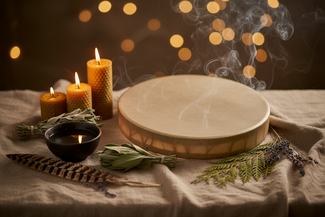
The drum is the central instrument of shamanic practice across virtually every tradition on earth — from Siberian and Central Asian shamanism (where the tradition is oldest and most documented) to the Native American nations of North America, the Q’ero and curandero lineages of the Andes, the Sámi of northern Scandinavia, and the shamanic lineages of Korea, Mongolia, and sub-Saharan Africa. Called the “horse” of the shaman in many traditions — the vehicle that carries the practitioner between worlds — the drum’s steady, rhythmic beat at approximately 4–7 beats per second reliably induces a theta brainwave state: the state of shamanic journeying, deep relaxation, and hypnagogic vision.
The relationship between drummer and drum is central to the practice. Many traditions hold that a drum has its own spirit — that the animal whose skin it bears continues to offer its medicine through the drum. A drum is introduced to the practitioner in ceremony, worked with over years, and cared for with the same reverence as any living ally. See our Shamanic Drums Explained guide → for a full breakdown of drum types, skins, sizes, and how to choose. Shop Natural Skin Frame Drums → | Shop Remo Buffalo Drums → | Shop Drum Bags & Accessories →
The Rattle
The rattle is the second fundamental shamanic instrument. Where the drum carries the journeyer into non-ordinary reality, the rattle works differently — its dry, scattering sound breaks up and disperses stagnant or dense energy, clears a space or a person’s field rapidly, and calls in helping spirits and the elements. In many traditions the rattle is sounded to call in the Four Directions at the opening of ceremony and to close them at the end. It accompanies drumming during healing sessions, is used to cleanse a client’s energy field before and after work, and is the primary instrument in many forms of active ceremony where the practitioner is moving, dancing, or vocally engaged.
Gourd rattles are the most traditional form in Andean and Mesoamerican practice — the dried gourd filled with seeds or small stones produces a sound that is both dry and resonant, immediate and carrying. Rawhide rattles produce a harder, sharper sound. Chungana rattles from the Andean tradition are specifically ceremonial instruments used in Q’ero healing work. Shop Rattles, Maracas & Rainsticks →
Feathers & Fans
Feathers carry the medicine of the bird they come from, and in shamanic traditions worldwide birds are the great intermediaries — the ones who travel between worlds, who carry messages between the visible and invisible, who see from above what cannot be seen from below. A feather fan used in smudging is not simply a practical tool for directing smoke; it is also an invocation of the bird’s medicine and its capacity to move between realms. Eagle and condor feathers are associated with the highest spiritual vision and connection; owl feathers with wisdom and the ability to see in darkness; hawk with far-seeing and speed of perception; turkey with groundedness and abundance.
Feathers are used in smudging to fan sage, palo santo, or copal smoke through a space or around a person. In healing work they are used to brush and clear the energy field directly. On the altar or mesa they represent the element of Air and the spirit world. Shop Smudging Feathers & Fans →
The Mesa – The Andean Altar Bundle
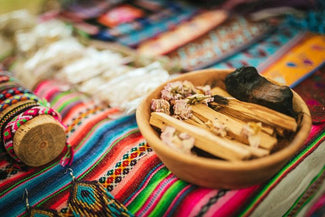
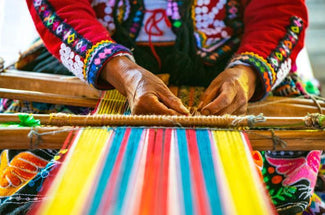
In the Q’ero and broader Andean shamanic tradition, the mesa — literally “table” — is the shaman’s primary working tool and the living record of their lineage, training, and accumulated power. It is a collection of khuyas — sacred stones, each holding the medicine of a teacher, a lineage, an experience, a place of power — wrapped in a mestana or altar cloth. The mesa is not simply carried; it is worked with. It is laid out in ceremony, the khuyas placed and sounded and blown into with the shaman’s breath, transmitting healing energy to the client through the mesa’s field.
Building a mesa is a lifelong practice. Each khuya is received, not purchased — given by a teacher, found in a place of power, or arrived through ceremony. But the mesa cloth and the container it creates can be chosen with care and intention, and chumpi stones — the cylindrical Andean power stones used specifically in mesa work — are among the most direct ways to begin working with this tradition. Shop Mestana Mesa Cloths → | Shop Altar Manta Cloths → | Shop Chumpi & Shamanic Healing Stones → | Shop Altar Items →
Chumpi Stones – Andean Power Objects
Chumpi stones are cylindrical carved stones used in Andean shamanic practice, specifically in mesa work and in the chumpi khuya rites associated with the seven energy belts (chumpis) of the Andean energy body. Each stone corresponds to a specific energetic centre and is used to open, clear, and strengthen that centre during healing sessions. They are among the most direct Andean healing tools available and are typically used by practitioners who have received instruction in the chumpi rites. Shop Chumpi & Shamanic Healing Stones →
Copal, Palo Santo & Sacred Incense
Smoke is the primary cleansing and ceremonial medium in shamanic traditions worldwide — the vehicle that carries prayer and intention into the spirit world, and that clears the energetic field of a space, a person, or a set of tools before and after work. Copal is the sacred resin of Mesoamerican and Andean shamanic ceremony — burned on charcoal to produce a rich, purifying white smoke that has been used in ceremony across this lineage for thousands of years. In Andean tradition it accompanies virtually every ceremonial act. Palo Santo is the primary clearing wood of the Peruvian and Ecuadorian tradition — its warm, citrus-sweet smoke is used for space clearing, for cleansing the mesa and its tools, and as an offering. White Sage is the primary clearing plant of North American traditions. Each has its own quality and lineage. See our Incense Guide →, Palo Santo Guide →, and Smudging Guide → Shop Resin Incense & Charcoal Discs → | Shop Palo Santo → | Shop White Sage →
Florida Water – Agua de Florida
Florida Water is the universal cleansing and ceremonial cologne of South American shamanic practice. Used by curanderos across Peru, Colombia, and Ecuador, by practitioners of Andean and Amazonian traditions, and in Afro-diasporic traditions across the Americas, it is a cologne-based preparation of alcohol, essential oils, and floral waters whose use spans centuries and lineages. In ceremony it is used to cleanse the hands before working, to clear a person’s energy field, to cleanse mesa objects and tools, and as an offering. It is also blown from the mouth across a person or space in a specific technique used in many traditions. Its scent is fresh, citrus, and floral — immediately recognisable to anyone who has worked with South American traditions. Shop Florida Water →
Crystals & Power Stones
Stones are among the oldest and most universal shamanic allies. In Andean tradition the khuyas of the mesa are most often stones — each one a living being carrying specific medicine from a teacher, a lineage, or a place of power. Selenite for high-vibrational clarity and connection; Black Tourmaline for protection and grounding; Clear Quartz for amplification and vision; Obsidian for shadow work and the journeys that go into the deep dark. Choosing stones for shamanic work is an intuitive process — the stone that draws your attention, that feels right in the hand, that seems to want to work with you, is the right choice. See our Crystal Guide → Shop Crystals & Power Stones → | Shop Chumpi Stones →
Singing Bowls & Sound Tools
Sound is a primary healing modality in shamanic practice. The sustained tone of a singing bowl, the sharp penetrating ring of Tingsha bells, the driving rhythm of a drum — all are used to shift the energetic field of a space or person, to clear what has become stuck or dense, and to induce the altered states of consciousness in which healing work happens. See our Sound Healing at Home guide → and Singing Bowl Size Guide → Shop Singing Bowls & Tingshas → | Shop All World Instruments →
Medicine Pouches & Ceremonial Items
Medicine pouches carry sacred objects — stones, herbs, protective talismans, power objects — close to the body, maintaining their energetic presence and protection in daily life. Prayer flags and despacho bundles are ceremonial tools of the Andean tradition: the despacho is a complex ceremonial offering assembled from a specific set of ingredients and burned as a prayer to the Apus (mountain spirits) and Pachamama (Mother Earth). Shop Medicine Pouches → | Shop Prayer Flags & Despacho Bundles → | Shop Ritual Tools & Altars →
Caring for Your Shamanic Tools
- Cleanse new tools with smoke — copal, Palo Santo, or White Sage — before first use, and set a clear intention for the relationship
- Introduce yourself to each tool: hold it, breathe with it, tell it what work you are doing and what you are asking of it
- Store tools wrapped in natural cloth — silk, wool, or cotton — away from direct sunlight and from the energy of spaces where they are not in use
- Cleanse tools after intense healing work — smoke, moonlight, running water (for stone tools), or sound
- Treat your tools with the reverence you would bring to any living relationship — because in the animist worldview, that is exactly what it is
Shop Shamanic Tools
- Frame Drums – Shamanic & Bodhrán
- Remo Buffalo Drums (Vegan & All-Weather)
- Drum Bags & Accessories
- Rattles, Maracas & Rainsticks
- Smudging Feathers & Fans
- Mestana Mesa Cloths
- Altar Manta Cloths
- Chumpi & Shamanic Healing Stones
- Resin Incense & Charcoal Discs
- Palo Santo
- White Sage
- Florida Water
- Crystals & Power Stones
- Singing Bowls & Tingshas
- Medicine Pouches
- Prayer Flags & Despacho Bundles
- Ritual Tools & Altars
- Altar Items & Offerings
Related Guides
- Shamanic Drums Explained
- Shamanic Journeying Guide
- Sound Healing at Home
- Singing Bowl Size Guide
- Creating a Sacred Space
- Smudging & Energy Cleansing Guide
- Palo Santo Guide
- Incense Guide
- Crystal Guide
- Energy Cleansing Explained