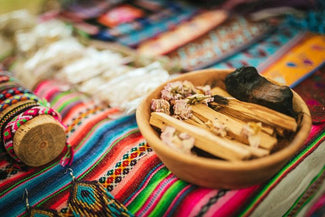
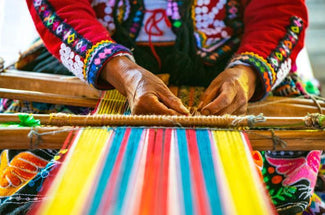

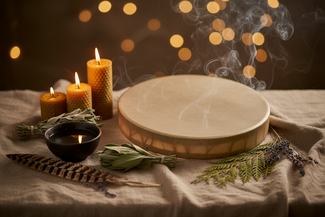
From the beat of a drum to the objects held within a sacred space, explore shamanism, altars and ceremonial tools — their meanings, traditions and how to approach them with greater understanding and respect.

A drum, a feather, a bowl of water or a single candle can look like simple objects. Placed with care, they can become reminders to pause, listen and act with intention.
Shamanism, shamanic altars and tools begin not with collecting objects, but with understanding the traditions, relationships and responsibilities that give ritual its meaning.
The word shamanism is now used widely, from Indigenous spiritual traditions and established lineages to contemporary journeying, nature-based spirituality and personal ritual. That breadth can make the subject fascinating, but it can also make it confusing.
Shamanism is not one single religion, culture or set of rituals.
Traditions described as shamanic can have very different histories, cosmologies, ceremonial practices and relationships with the natural and spiritual worlds. Siberian traditions are not interchangeable with Andean practice, and Q’ero teachings should not simply be blended with Native American traditions because all may be described as “shamanic”.
Understanding those differences doesn't make contemporary spiritual practice less accessible. It gives us a more respectful place from which to learn.
What Does Shamanism Mean?
Shamanism is often used as a broad modern term for spiritual practices involving connection with the natural world, ancestors, spirit helpers, ceremony, healing and altered states of consciousness. Yet it is not one single religion, belief system or spiritual aesthetic.
The word shaman has roots among Tungusic-speaking peoples of Siberia and was later adopted much more broadly by Western researchers and writers. Practices subsequently described as shamanic exist within many distinct cultures around the world, but that does not mean they all developed from one original system.
There is no single historical founder of shamanism, no universal scripture and no one set of ceremonies followed by everyone described as a shaman.
In traditional communities, a practitioner may hold a recognised role shaped by lineage, training, service and cultural responsibility. Depending upon the tradition, that role may involve ceremony, healing, divination, relationships with ancestors or spirits, interpreting dreams, working with the land or helping a community through important transitions.
It is therefore not simply a title someone claims after buying a drum or attending a workshop.

Traditional Shamanism and Contemporary Shamanic Practice
Contemporary shamanic practice, particularly in the UK, Europe and North America, can look quite different.
People may explore shamanic journeying, repetitive drumming, animism, meditation, energy work, personal ceremony or deeper relationships with nature without belonging to an Indigenous tradition.
These practices may be personally meaningful without being presented as identical to living Indigenous traditions.
A respectful approach is both simpler and deeper than imitation. Learn where a practice comes from. Understand the meaning of ceremonial objects before adopting them. Avoid claiming a lineage or identity that isn't yours, and be honest about the path you are actually following.
Rather than gathering rituals from different cultures because they look spiritual, ask better questions:
Where did this practice originate? What did it mean in its original context? What am I actually trying to achieve through it? Is there a simpler practice that belongs naturally within my own life and landscape?
For many people, regular time outdoors, meditation, journalling, caring for the local environment and developing a consistent personal practice can provide a more grounded beginning than attempting to recreate another culture's ceremony.
Do You Need Shamanic Tools?
No.
A collection of ceremonial objects does not create a spiritual practice by itself.
Tools may act as anchors for attention, symbols of relationship or instruments that help mark the transition between everyday life and ritual. Their significance often develops through how they are used and understood rather than how rare, expensive or impressive they appear.
A drum played regularly may become deeply familiar. A stone carried through years of practice can gather personal meaning. A cloth opened only for meditation or ceremony may gradually signal that ordinary activity has stopped and a different kind of attention has begun.
The more useful question is therefore not simply “What tools does a shaman need?”
It is:
“What genuinely supports the practice I am developing?”

Shamanic Altars: A Place for Relationship, Not Display
An altar is a dedicated space that helps focus attention. It may support meditation, prayer, seasonal ritual, ancestor remembrance, divination or personal reflection.
It does not need to be large, ornate or permanently set up. A windowsill, shelf, tray or small cloth can be enough.
A shamanic or earth-based altar is often shaped around relationship: relationship with place, the elements, the natural world, guiding values, loved ones or ancestors.
Rather than asking what an altar should look like, it can be more useful to ask what you are coming to it for.
You may want a calmer daily practice, somewhere to mark the changing seasons, a place for remembrance or a focal point before meditation, drumming or journey work.
Some practitioners arrange an altar around the [four directions] or elements. Earth might be represented by a stone, salt or plant; air by incense, a naturally found feather or a bell; fire by a candle; and water by a small bowl or shell.
There is no universal shamanic altar layout.
Avoid turning the altar into a crowded collection. One meaningful stone, a candle and a small bowl can carry more purpose than dozens of objects chosen only because they appear spiritual.
Leave some empty space.
That space can be just as important as the objects themselves — somewhere to place a card, light a candle safely, open a journal or simply rest your hands in stillness.

An Altar Is Not Only Something We Create
An altar does not always begin with a table, cloth or collection of sacred objects. Sometimes it begins with recognising that the sacred space is already there.
A mountain, spring, ancient tree or particular place in the landscape may be approached as sacred without anyone needing to decorate it. Places such as Machu Picchu remind us on a much greater scale that landscape, architecture, relationship and ceremony can come together to create sacred space. An altar can be a place we encounter as much as something we construct.
Our home can become an altar too. The way we care for it, what we bring into it, how we welcome people and the attention we give to the spaces where we sleep, eat, gather and practise can all become expressions of intention.
And perhaps the most important altar we will ever tend is ourselves.
If an altar is somewhere we approach with care, respect and attention, the same principle can be turned inward. How we nourish our body, speak to ourselves, care for our emotional wellbeing, maintain our boundaries and carry ourselves through the world can all become part of spiritual practice.
There is an external altar and an internal one.
We can clean a sacred space while leaving our own lives neglected. We can carefully arrange crystals, candles and ceremonial tools while forgetting to rest, eat well, spend time outside or attend to relationships that need our presence. The objects are valuable when they remind us of the practice — they cannot do the practice for us.
This does not mean striving for perfection. An altar does not have to be immaculate, and neither do we. Tending is an ongoing relationship.
The same can be true of the place we live. Opening a window, repairing something that has been neglected, preparing nourishing food, clearing unnecessary clutter or bringing something beautiful into a room can become small acts of tending the wider altar of home.
Eventually the boundaries begin to soften:
The altar can be the table.
The altar can be the home.
The altar can be the land.
The altar can be you.
Perhaps the deepest purpose of creating a physical altar is not to contain the sacred in one corner of our lives, but to practise recognising and caring for it everywhere else.

Choosing a Location
Choose somewhere reasonably clean, stable and undisturbed.
A bedroom altar may feel private and restorative, while a living-room shelf can support a more visible everyday practice. If space is limited, a portable altar box, cloth or tray can be put away when the practice is finished.
Practical care is part of sacred care.
Keep candles away from curtains and never leave them unattended. Use appropriate heatproof holders for incense, resins and charcoal, ventilate the room, and consider a sacred spray, bell or meditation chime where smoke is unsuitable.
A sacred space should support everyday life, not create worry or clutter.
Create Your Own Sacred Space
Explore altar cloths, ritual tools, candles and carefully chosen objects for meditation, ceremony and personal spiritual practice.
Explore:
Tools Used in Shamanic & Earth-Based Practice
There is no universal shaman's toolkit. Instruments and sacred objects vary according to culture, lineage, teacher and individual practice.
However, certain types of tools occur within particular shamanic traditions, while others have become widely used within contemporary shamanic and earth-based practice.

Drums and Rattles
The drum is perhaps one of the objects most strongly associated with shamanic practice.
Repetitive rhythm is used within a number of traditions to accompany ceremony, movement, chanting or altered states of consciousness. Within contemporary shamanic journeying, a steady drumbeat may provide a rhythmic anchor while the practitioner turns their attention away from everyday distractions.
Rattles provide a brighter, more textured sound and may be used to mark transitions, accompany movement, work around a ceremonial space or provide another repetitive focus.
Natural hide frame drums have their own character. Temperature and humidity can alter the tension of the skin and therefore the voice of the instrument.
Synthetic drums such as Remo Buffalo Drums provide greater consistency and can be especially practical for travelling, workshops, group work and environments where moisture or temperature changes considerably.
Neither material determines whether a practice is more authentic or spiritual. They simply provide different relationships with sound and different practical advantages.
Explore Shamanic Frame Drums, Remo Buffalo Drums (Vegan) & Rattles
Discover natural hide frame drums, Remo Buffalo drums, rattles and sound tools for journeying, meditation and personal practice.
Explore World Instruments →

Candles, Incense and Cleansing Materials
A candle can represent focus, warmth or transformation. White is often selected for clarity and peace, while other colours may be chosen according to personal symbolism or intention.
Incense, resins, aromatic woods and dried plants can help create a sensory boundary between ordinary activity and spiritual practice.
Language and sourcing deserve care here.
The term smudging is associated with specific ceremonial practices within some Indigenous North American traditions. For a personal practice outside those traditions, smoke cleansing may sometimes be a more accurate description.
White Sage, cedar, sweetgrass, Palo Santo, copal and other plants, woods and resins also have different geographical and cultural histories. They shouldn't automatically be treated as interchangeable ingredients in a generic “shamanic cleansing kit”.
Locally grown herbs, responsibly sourced incense or a familiar resin can be every bit as meaningful as something marketed as exotic or powerful.
And smoke isn't essential. Sound, a sacred spray, fresh air or simply physically cleaning and preparing a space can also mark the beginning of practice.
Explore Spell Candles →

Stones, Symbols and Natural Objects
Stones appear within spiritual practices around the world, but their meanings are not universal.
Within contemporary crystal practice, Black Tourmaline and Smoky Quartz are often associated with grounding, Clear Quartz with clarity and Amethyst with meditation. These traditional associations can provide a starting point without needing to treat them as guaranteed effects.
Natural objects can also connect an altar with the landscape around you.
A responsibly collected pebble, fallen leaves, a piece of wood, seeds or seasonal flowers may hold greater personal meaning than an object bought specifically because it has been labelled spiritual.
Here in the Lake District, changing light, water, stone, woodland and weather can become part of that relationship without anything needing to be removed from protected land.
Be particularly careful with feathers, bones, skins and other animal-derived materials. Wildlife law, ethical considerations and cultural significance all matter. Know where an item has come from rather than assuming everything offered online is appropriate for spiritual use.
Explore Crystals, Healing Stones, Tumblestones
Explore Crystals, Healing Stones, Tumblestones, Worry / Pocket Stones →

The Q’ero, Paqos and the Andean Mesa Tradition
The Q’ero people of the Peruvian Andes are frequently encountered by Western readers exploring shamanic practice, particularly through teachings surrounding paqos, the Andean mesa, khuyas, Chumpi stones, despacho ceremony and relationship with Pachamama.
This does not mean that the Q’ero are the origin of shamanism or that their practices represent all shamanic traditions.
They belong to a particular Andean cultural and spiritual landscape.
Practitioners commonly described as paqos work within a worldview in which relationship is fundamental — relationship with community, ancestors, landscape and forces within the natural world.
Mountains, earth, water and particular places can carry spiritual significance. Pachamama, often translated into English as “Mother Earth”, belongs within this much wider Andean understanding rather than simply being another name for nature.
This relationship helps explain why an Andean mesa should not be understood merely as a collection of attractive spiritual objects.
What Is an Andean Mesa?
The Spanish word mesa literally means “table”, but within Andean ceremonial practice it can refer to something much more specific than the conventional Western idea of an altar.
A mesa may contain sacred objects associated with the practitioner and their ceremonial work.
Stones and other objects held within it can acquire significance through landscape, teaching, ceremony, personal experience and continuing relationship.
For this reason, a mesa is better understood as something that develops through practice, rather than as a ready-made spiritual kit.
A seemingly ordinary stone may carry considerable significance because of where it came from, how it entered someone's practice or what it has come to represent.
That idea reaches beyond Andean practice:
A sacred object can become meaningful through relationship rather than acquisition.

Khuyas and Sacred Stones
Sacred or medicine stones associated with Andean mesa practice are often referred to as khuyas.
Their role shouldn't automatically be interpreted through modern Western crystal-healing terminology.
A crystal may be selected because of a traditional association with grounding or clarity. A khuya within a practitioner's mesa can have a much more personal and ceremonial identity connected with place, teaching, lineage, ceremony or continuing practice.
Recognising that distinction prevents another culture's sacred objects from being reduced to a list of metaphysical properties.
Chumpi Stones and Andean Practice
Chumpi stones are another specialist ceremonial tool encountered within contemporary teachings associated with Andean spiritual practice.
Sets commonly feature carved symbols and are used within particular energetic and ceremonial practices. They have also become increasingly visible within Western shamanic and energy-work communities.
It can therefore be tempting to approach Chumpi stones simply as another form of healing crystal.
Their greater interest lies in understanding the teachings and worldview surrounding their use.
Someone can appreciate a Chumpi stone as a beautifully carved object, but working with a traditional ceremonial tool at greater depth requires learning rather than inventing a meaning simply because the object appears mysterious.
Explore Chumpi & Shaman Stones
Discover Chumpi stones and specialist ceremonial stones alongside information about their traditional and contemporary use.
Explore Chumpi & Shaman Stones →

The Mesa as a Living Practice
Perhaps the most helpful way to understand a mesa is not as a finished altar, but as something that can evolve alongside its practitioner.
Objects may be added, removed or understood differently as experience develops.
The cloth surrounding them physically gathers sacred objects together while also creating a distinction between everyday belongings and objects held specifically for ceremonial practice.
Opening the mesa can therefore become part of entering ceremonial space. Closing and wrapping it again can mark the end of that work.
And this brings us to another distinctive part of Andean practice: the textiles themselves.
Mesa Cloths, Mestanas and Ceremonial Textiles
Textiles have a deep practical and cultural place within Andean life, and woven cloths encountered within Q’ero and paqo practice should not be reduced to decorative backgrounds for an altar.
A Mestana can form an outer wrapping and ceremonial working surface for a mesa, while inner cloths such as an Unkuna or Wachala may hold more personal sacred objects.
When the mesa is closed, these layers gather and protect its contents. When opened, the cloth provides a defined space in which the objects can be worked with.
The weaving itself matters too.
Colours, patterns, construction and variations emerge from living textile traditions rather than simply being added to make an object look “shamanic”. Handmade pieces naturally differ, and those variations are part of their character.
This is particularly important when approaching Q’ero and Andean ceremonial textiles. Understanding who made something, where it came from and the tradition surrounding it should be part of understanding the object itself.
Explore Q’ero Mesa & Ceremonial Textiles
Discover Mestana mesa cloths, inner ceremonial cloths, Chuspas, ties and other Andean textiles made for practical and ceremonial use.
Explore Q’ero Textiles →

Is a Shamanic Altar the Same as an Andean Mesa?
Not necessarily.
This is an important distinction because the words are sometimes used interchangeably online.
A personal altar may be a fixed or temporary place for meditation, remembrance, nature connection, ritual or journeying. Its meaning and arrangement can develop entirely from your own practice.
A mesa within an established Andean tradition has a more particular cultural and ceremonial context.
You can therefore learn from ideas such as relationship, reciprocity, intention and respectful care of sacred objects without claiming that your own collection of stones and spiritual tools is a traditional Q’ero mesa.
That doesn't make your personal altar less meaningful.
It simply allows your practice to be honest about what it is.
Creating a Simple, Respectful Altar Practice
Begin by cleaning the surface and choosing two or three objects that genuinely relate to your intention.
You might place a stone, light a candle and ring a bell once before sitting quietly for five minutes with a question such as:
“What needs my attention today?”
There is no requirement to force visions, messages or dramatic experiences.
If you use a drum or rattle for journey work, give the practice a beginning and an ending. Afterwards, allow time to write, draw, walk outside or simply notice how you feel before returning to ordinary activity.
Some people find guided practice useful when first exploring altered-state or journeying work. If meditation, ritual or spiritual experiences become distressing, disruptive or difficult to manage, pause and seek appropriate professional support alongside any spiritual guidance.
A regular closing can be equally valuable.
Extinguish the candle. Put away the drum. Close a mesa or fold an altar cloth if that is part of your practice. Take a breath and choose one practical action arising from your reflection.
That action might be making a phone call, resting properly, apologising, tending a plant, helping somebody or spending time outdoors.
Ritual becomes most useful when it changes how we meet ordinary life.
Let Your Tools Earn Their Place
The most meaningful sacred space is rarely the fullest one.
Let each object have a reason to be there — whether it is a drum that has accompanied years of journeying, a stone from a meaningful place, a candle that marks the beginning of quiet time or a cloth carefully opened when you are ready to practise.
You do not need to reproduce someone else's ceremony for your own practice to have depth.
Learn where traditions and tools come from. Respect the cultures that carry them. Spend time with what you already have. Allow experience to come before accumulation.
Because ultimately, the most important part of a sacred space isn't what sits upon it.
It is the relationship you develop with your practice — and what you carry from that practice back into the world.

Explore Further with Sacred Essence
Shamanic practice can take many forms, from drumming and journeying to working with sacred space, nature and meaningful ceremonial objects. Wherever you begin, take time to understand the traditions behind the practices and choose tools because they genuinely support what you do.
Shop Shamanic & Ceremonial Tools
Explore carefully chosen tools for shamanic, ceremonial and earth-based practice:
Incense, Sacred Herbs & Cleansing:
- Incense sticks
- Incense cones
- Palo Santo
- White Sage
- Smudge sticks
- Sacred herbs, resins and incense charcoal for ritual, meditation and preparing sacred space.
Crystals & Tumblestones – natural stones and crystals for altars, grounding, meditation, intention and personal practice.
Sacred Sprays & Spiritual Cleansing Waters:
Explore
- Lanman & Kemp Brand Collection & Florida Water
- Alaskan Essences Brand Collection & Purification Spray
- Australian Bush Flower Brand Collection & Space Clearing Mists, alongside sacred sprays and energy mists for cleansing and preparing your room, altar or personal sacred space.
Explore Sacred Essence Guides
Continue learning with our practical Guides:
- How to Create an Altar – A Complete Guide
- Shamanic Journeying Guide
- Four Directions – Opening Sacred Space
- Fire Ceremony Guide
- Spiritual Wellbeing Guide
- Meditation Guide
- All Guides
Continue Your Journey
Explore more from the Sacred Essence Blog:
- Beginner Altar Tools
- Which Types Of Meditation are right for you
- Why Sometimes Cleansing comes before Manifestation
- Daily Spiritual Hygiene: Why Regular Cleansing Matters
- Energy Cleansing Explained: Reset Your Energy
- Grounding Practices
- Q'ero Altar Rituals
- All Blogs
FAQs: Shamanism, Altars & Tools
What is shamanism?
Shamanism is a broad term now used for spiritual and ceremonial practices involving relationships with nature, ancestors or spirits, healing, ceremony and altered states of consciousness.
It is not one universal religion or tradition. Practices described as shamanic occur within different cultures and should be understood within their own historical and cultural contexts.
What is a shamanic altar?
A shamanic or earth-based altar is a dedicated sacred space used for practices such as meditation, journeying, prayer, remembrance or ceremony.
There is no universal arrangement. A personal altar might contain a candle, stone, bowl, drum, rattle or objects connected with nature and personal experience. What matters more than the number of objects is understanding why they are there.
What is the difference between an altar and a mesa?
A personal altar can be created as a fixed or temporary sacred space for meditation, ritual or reflection.
A mesa within particular Andean traditions has a more specific ceremonial and cultural context. It may contain sacred objects connected with a practitioner's teachings, relationships and ceremonial work and should not simply be treated as another name for a spiritual altar.
What tools are used in shamanic practice?
There is no single set of shamanic tools. Depending upon the tradition or contemporary practice, people may work with drums, rattles, bells, stones, ceremonial textiles, plants, incense, candles and natural objects.
The meaning and appropriate use of these objects varies considerably between traditions.
Do I need a drum for shamanic journeying?
No. Drumming is widely associated with contemporary shamanic journeying because repetitive rhythm can provide a focus for attention, but owning a drum is not a requirement.
Some practitioners use rattles, recorded drumming or other repetitive sounds, while others work through meditation or practices taught within their particular tradition.
What are khuyas?
Khuyas are sacred or medicine objects, often stones, encountered within particular Andean ceremonial traditions.
Their significance can develop through relationship, place, teaching and ceremonial practice, so they should not simply be understood as crystals chosen according to modern metaphysical properties.
What are Chumpi stones?
Chumpi stones are carved stones associated with particular contemporary teachings and practices connected with the Andes. Sets commonly feature different carved symbols and may be used within energetic or ceremonial work.
Understanding the teachings surrounding them provides far more context than treating them simply as another type of healing crystal.
Can beginners explore shamanic practice?
Yes, but there is no need to begin by collecting ceremonial tools or attempting to recreate Indigenous ceremonies.
Meditation, spending attentive time in nature, learning about animistic perspectives, exploring rhythm and sound, journalling and studying the origins of particular traditions can provide a grounded starting point.
How can I explore shamanism respectfully?
Learn where practices and objects originate, distinguish contemporary spiritual practice from living Indigenous traditions and avoid claiming cultural identities, ceremonies or lineages that are not yours.
Respectful exploration is less about reproducing how somebody else's spirituality looks and more about developing knowledge, relationship and responsibility within your own practice.
Visit Us or Explore Online
Visit Sacred Essence in Coniston, the Lake District, where you can explore shamanic drums, ceremonial textiles, Chumpi stones, ritual tools, incense, crystals and sound instruments alongside our wider spiritual and holistic collection. Visit us
Our online holistic spiritual shop serves customers throughout the UK and internationally, supported by Sacred Essence Guides and Blog articles designed to help you understand the traditions, tools and practices behind what you choose. Browse
You can also follow along on Instagram and Facebook for inspiration, new arrivals and updates from our Coniston shop.

A Final Thought
Shamanic practice can easily become associated with its most visible objects — the drum, feather, stone, cloth or altar.
But an object alone does not create a relationship with the sacred.
That relationship grows through attention, learning, repeated practice and respect: for the natural world, for the people and traditions from which teachings originate, and for the ordinary life to which every ceremony eventually returns. ✨
Choose fewer things. Understand them more deeply. Let your practice give them meaning.
Sacred Essence 🌈