Traditional Smudge Sticks, Feathers & Ceremonial Tools
Fluorescent Ranch and Prairie Falcon offer a distinctive range of smudge sticks, ceremonial feathers, incense and botanical bundles inspired by traditional cleansing, prayer and ritual practices.
The collection includes sage, cedar and other aromatic botanical blends alongside feathers and ceremonial accessories for meditation, personal ritual and sacred spaces. Many of these materials have long-standing associations with cleansing, protection, prayer and connection with nature within particular Indigenous and spiritual traditions.
Each product has its own origin, ingredients and intended use, so individual listings provide further details on materials, preparation and provenance. Sacred Essence presents the range with respect for the cultural traditions that inform its symbolism and ritual context.
Whether used for meditation, ceremony, intention setting or practices traditionally associated with cleansing and grounding, Fluorescent Ranch and Prairie Falcon offer practical tools for thoughtful spiritual practice.
Fluorescent Ranch and Prairie Falcon bring together aromatic botanical bundles, feathers, incense and ceremonial accessories selected for meditation, personal ritual, smoke-cleansing practice and the creation of meaningful sacred spaces.
The collection centres around natural materials traditionally associated with prayer, aromatic smoke and relationship with the natural world. Depending on the individual product, you may find white sage, cedar, sweetgrass, botanical blends, feathers and ritual accessories, each with its own material, origin and cultural context.
These materials should not be treated as belonging to one single universal Native American practice. Indigenous peoples across North America have distinct nations, ceremonies and teachings, and the meaning of a particular plant or ritual object can vary considerably between communities.
For that reason, Sacred Essence presents each piece according to its individual provenance and use rather than applying one meaning to the entire collection.
White Sage, Cedar, Sweetgrass & Botanical Bundles
Aromatic plants have been used in many cultures as part of prayer, ceremony and the preparation of sacred space.
Within this collection, some of the most familiar materials include:
white sage
cedar
sweetgrass
mixed botanical bundles
loose aromatic herbs
ritual incense blends
Each plant carries its own history.
White sage has particular cultural significance to a number of Indigenous peoples of western North America.
Sweetgrass is sacred within several First Nations and Native American traditions and is often associated with prayer, respect and relationship.
Cedar also appears in a wide range of Indigenous ceremonial traditions, although its use and meaning differ between nations and communities.
These plants are therefore best understood individually rather than grouped together simply as “cleansing herbs”.
Smudging & Smoke Cleansing
The word smudging is commonly used commercially, but it can refer to specific ceremonial practices within particular Indigenous traditions.
Not every act of burning sage, cedar or another aromatic plant is the same ceremony.
For general personal use, smoke cleansing, aromatic ritual or ritual incense practice can often be more accurate terms.
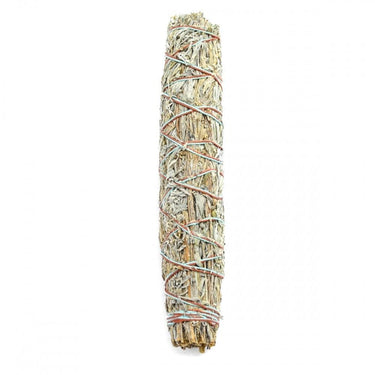
A botanical bundle may be used to create fragrance, mark the beginning of meditation, prepare a personal altar or establish a contemplative atmosphere.
The deeper meaning of a traditional Indigenous smudging ceremony belongs to the community and teachings from which that practice comes.
Ceremonial Feathers & Smoke Direction
Feathers are commonly paired with aromatic smoke in contemporary ritual practice.
They may be used to gently direct smoke around:
an altar
a room
an object
a meditation space
a personal ritual setting
Feathers also carry important symbolic and ceremonial meanings within many Indigenous cultures.
Those meanings are not universal.
The significance of a particular bird, feather or ceremonial use depends on nation, community and context.
For this reason, the species and sourcing information supplied with an individual feather should always take priority over broad symbolic claims.
Creating a Thoughtful Ritual Space
A ritual does not need to be elaborate to be meaningful.
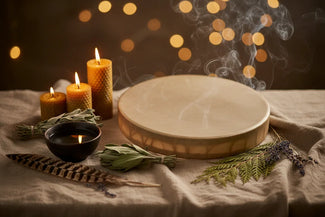
A botanical bundle, a safe burner and a few moments of focused attention may be enough to establish a transition between ordinary activity and a more reflective space.
People may use products from this collection before:
meditation
yoga
sound practice
journalling
prayer
seasonal ritual
altar work
personal reflection
The object helps create structure around the practice.
Its purpose is not to guarantee a spiritual result.
How to Use a Botanical Smudge or Smoke-Cleansing Bundle
Always begin with fire safety.
Place the bundle over a suitable heat-resistant bowl or burner.
Light the end briefly, allow a small flame to establish, then gently extinguish the flame so that the material smoulders.
Keep the smoke light rather than filling the room heavily.
If using a feather, it can be moved gently through the air to guide smoke around the chosen space.
When finished, extinguish the bundle completely in sand or another suitable fire-safe medium and confirm that no ember remains before leaving it unattended.
Use good ventilation and be considerate of anyone with asthma, respiratory sensitivities, children or pets nearby.
Using White Sage Respectfully
White sage has become widely sold throughout the spiritual and wellness market.
Its popularity has also prompted important conversations around cultural appropriation, commercial harvesting and ecological pressure.
Respectful use begins with recognising that white sage is not merely a fashionable fragrance.
It has living cultural significance.
Where sourcing information is supplied for an individual product, Sacred Essence recommends reading it carefully rather than assuming all white sage has been harvested or prepared in the same way.
Those who prefer a different aromatic practice may also explore incense, locally grown herbs or other botanical materials appropriate to their own tradition.
Sweetgrass & Aromatic Tradition
Sweetgrass has a very different fragrance and cultural context from white sage.
Its scent is soft, grassy and naturally sweet, often compared with warm hay or vanilla-like meadow notes.
Within a number of Indigenous North American traditions, sweetgrass holds sacred importance.
Commercial descriptions sometimes present it simply as a plant used to “bring positive energy”, but its meanings are richer and vary between communities.
For contemporary personal use, a sweetgrass braid may be appreciated for its fragrance, symbolism and relationship with prayer or reflective practice while still recognising the living traditions from which those associations come.
Cedar in Ritual Practice
Cedar is another aromatic material with long ceremonial associations.
Different cedar species have been used by different Indigenous communities in different ways.
Contemporary spiritual practice often associates cedar with ideas such as grounding, protection and preparation of sacred space.
These are best described as traditional or contemporary associations, rather than guaranteed effects.
Its strong woody aroma also makes cedar appealing simply as a natural ceremonial fragrance.
Fireproof Bowls, Shells & Burners
A fire-safe holder is one of the most important tools when burning herbs or loose aromatic material.
Bowls, burners and shells can collect ash and help contain embers.
Although abalone shells have become strongly associated with commercial smudging sets, they should not be presented as a universal element of Indigenous ceremony.
Different communities use different vessels and methods.
For home practice, choose a stable, heat-resistant holder appropriate for the material being burned.
Feathers, Air & Movement
Feathers create a particularly tactile connection between smoke and movement.
A gentle sweep of the feather can guide smoke without the need to blow directly upon burning herbs.
Some contemporary spiritual systems connect feathers with the element of air.
That symbolism can be meaningful within a personal ritual, but it should not automatically be described as the traditional meaning of every Indigenous feather practice.
Context matters.
Incense & Alternative Aromatic Practice
Not every customer wants to burn loose herbs or botanical bundles.
Incense sticks, cones, resins and other aromatic materials offer alternative ways to bring fragrance into meditation or sacred space.
They may suit customers who want:
easier portion control
less loose ash
a familiar incense holder
shorter ritual use
a wider choice of fragrances
The aim is not to reproduce an Indigenous ceremony through another format.
It is simply another way of using scent intentionally.
Natural Materials & Individual Character
Botanical products naturally vary.
Leaves may differ in shape.
Bundles may be tighter or looser.
Colour changes as herbs dry.
Feathers vary in markings, curve and size.
These differences are part of natural material rather than evidence of poor manufacture.
Always check the individual listing for exact measurements, plant species, feather information and material details.
Sourcing & Provenance
Sourcing matters particularly with culturally significant plants and animal-derived materials.
Where Sacred Essence has specific information about:
artisan origin
harvesting method
botanical species
feather species
country of origin
natural or cultivated status
that information should be stated on the individual product page.
Broad collection claims such as “all products are Native made”, “all sage is wild-harvested” or “all feathers are sustainably gathered” should only be made where that provenance is documented for every relevant item.
Accuracy is a stronger form of respect than a general authenticity claim.
Choosing Between Sage, Cedar & Sweetgrass
These materials have very different aromas and traditions.
White sage has a strong, dry and herbaceous scent.
Cedar tends to be woody, resinous and grounding in character.
Sweetgrass has a softer, sweeter fragrance.
Customers may choose according to fragrance, cultural context, the practice they follow or simply the atmosphere they wish to create.
There is no need to treat one plant as spiritually stronger than another.
Cultural Respect
Native American and First Nations cultures are not one single spiritual tradition.
Individual nations have their own teachings, plants, songs, ceremonies and protocols.
A commercially available sage bundle, feather or ritual tool should therefore not automatically be presented as belonging to every Indigenous tradition.
Using these products respectfully means recognising the difference between:
traditional ceremony • contemporary spiritual practice • cultural inspiration • commercial ritual products
For more aromatic formats and accessories, explore the wider Incense collection.
Frequently Asked Questions
What is smudging?
Smudging can refer to specific Indigenous ceremonial practices involving sacred plants and smoke. Commercially, the term is also widely used for more general smoke-cleansing practices. The two should not automatically be treated as identical.
Can I use a sage bundle for personal meditation?
Yes. Botanical bundles may be used carefully as aromatic tools for meditation, reflection or personal ritual. This does not mean the practice becomes a traditional Indigenous ceremony.
What is the difference between white sage and sweetgrass?
White sage has a strong herbaceous aroma, while sweetgrass has a softer, naturally sweet scent. They also have different cultural histories and traditional uses.
What is cedar used for?
Cedar has ceremonial importance within a number of Indigenous traditions and is also used in contemporary spiritual practice for its woody aroma and associations with grounding and protection.
Why are feathers used with smoke?
Feathers may be used to gently guide smoke through a ritual space. Their traditional meanings differ greatly between Indigenous cultures.
Do I need an abalone shell?
No. A stable heat-resistant bowl or burner can be used. Abalone shells appear in some cultural and contemporary practices but should not be treated as a requirement for every smoke-cleansing ritual.
Are these products suitable for indoor use?
Many are, provided they are used carefully with suitable ventilation and fire safety.
Is white sage sustainable?
Sustainability depends on the plant source and harvesting practices. Check the individual product listing for specific sourcing information rather than assuming all commercially sold sage is sourced in the same way.
Can smoke cleansing remove negative energy?
Some spiritual traditions and contemporary practices associate aromatic smoke with cleansing or purification. These are spiritual and cultural beliefs rather than scientifically guaranteed effects.
Are all Fluorescent Ranch and Prairie Falcon products Indigenous-made?
Only describe an individual product as Indigenous-made, Native-made or directly sourced from Indigenous artisans where that provenance has been specifically verified for that item.
Plants, feathers and ceremonial forms within this collection can have important meanings within living Indigenous cultures.
Sacred Essence presents these products for thoughtful personal, aromatic and spiritual use while recognising that culturally specific ceremonies cannot be reduced to a general commercial ritual.
Traditional associations with cleansing, protection, grounding or blessing are presented as cultural and spiritual meanings rather than guaranteed effects.
Always follow fire-safety guidance and use aromatic smoke with adequate ventilation.
Join our community
Sign up for 10% discount off your first order, exclusions apply.*