Explore the Origins & Craftsmanship
Inti Watana wraps originate from Andean traditions where ceremonial ties were gifted as symbols of connection, protection, and devotion. Historically, watanas were tied into a daughter’s hair, worn during rites of passage, or presented to couples during sacred ceremonies, carrying prayers for unity, balance, and continuity.
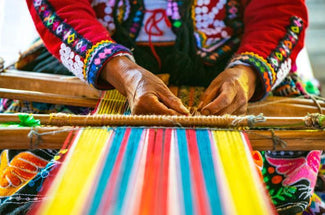
Each Inti Watana is handwoven from naturally dyed alpaca or sheep wool, using techniques passed down through generations of Q’ero artisans. The beadwork is sewn with intention, with each bead symbolising Inti, holding prayers, blessings, and spiritual energy. Patterns reflect family lineage, natural forces, and the guiding principle of Ayni — reciprocity, balance, and harmony with Pachamama (Mother Earth).
Uses & Symbolism
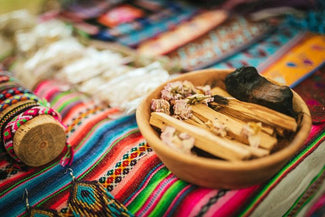
Inti Watana wraps play a vital role in shamanic practice as the binding element of the ceremonial mesa. Used to secure the mesa cloth around sacred items, they symbolically contain, protect, and unify the energies of the altar.
By wrapping the inner and outer cloths together, the Watana ensures that prayers, intentions, and spiritual tools are held in integrity
throughout ritual and healing work. Beyond the mesa, these ties may also be worn as personal adornment, extending their protective and spiritual presence into daily life.
Working Together in Ceremony
Sacred textiles function as a unified ceremonial system:
- The Unkuna (inner cloth) holds the inner spiritual world — personal sacred items, medicine bundles, and prayers
- The Mestana mesa cloth forms the outer layer, representing the external world of ceremony
- The Inti Watana (mesa tie) binds and secures these layers, uniting inner and outer worlds into a single sacred bundle
Larger Manta altar cloths serve as the ceremonial foundation or altar base, while ponchos provide personal protection during rituals, fire ceremonies, and initiations.
What Is a Mesa Tie?
A mesa tie, or Inti Watana, is both practical and symbolic.
It physically secures the ceremonial bundle while spiritually holding
prayers, blessings, and intention within its woven form and beadwork. By binding the mesa together, it ensures balance, protection, and continuity throughout ritual practice.
Frequently Asked Questions About Inti Watana Mesa Ties
What is an Inti Watana used for?
An Inti Watana is used to bind and secure the ceremonial mesa, holding the inner and outer cloths together and uniting prayers, intentions, and sacred items into a single bundle.
Is an Inti Watana the same as a mesa tie?
Yes. Inti Watana is the traditional Andean name for a mesa tie, referring to the ceremonial wrap used to secure and protect the mesa.
What do the beads on an Inti Watana represent?
Each bead represents Inti, the sun, and is sewn with intention to hold prayers, blessings, and spiritual energy within the wrap.
How is an Inti Watana used in ceremony?
It is wrapped around the mesa cloth and Unkuna to bind the inner and outer worlds together, ensuring balance, protection, and continuity during ritual work.
Can Inti Watana wraps be worn?
Yes. Beyond ceremonial use, Inti Watana wraps may be worn as bracelets, necklaces, or woven into the hair as ceremonial adornment and protection.
Are Inti Watana wraps used only in Q’ero tradition?
They originate in Andean and Q’ero traditions, but are now used respectfully by practitioners worldwide as part of shamanic and ceremonial practice.
See Associated Ceremonial Textiles
Inti Watana wraps are traditionally used alongside other sacred textiles to form a complete ceremonial system: