

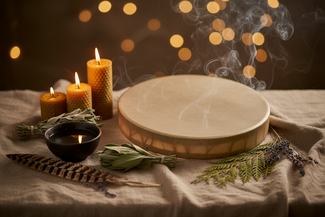
A practical comparison of natural hide frame drums and Remo synthetic drums for shamanic journeying, meditation, ceremony and sound healing

Discover the differences between natural hide frame drums and Remo synthetic drums for shamanic journeying, meditation, ceremony and sound healing.
If you have ever held a natural skin frame drum in one hand and a Remo synthetic drum in the other, you will already know this is not just a question of materials. Frame drums vs Remo synthetic drums: what’s the difference and which should you choose? For most people, the answer comes down to how you want the drum to feel in practice, how much care you want to give it, and whether you are buying for ceremony, meditation, sound healing or relaxed everyday playing at home.
For some practitioners, the drum is a sacred companion and the organic quality of natural hide matters deeply. For others, consistency, ease and reliability are what make a drum truly supportive. Both approaches are valid, and both can sit beautifully within a spiritual practice.
Frame drums vs Remo synthetic drums: the core difference
At the simplest level, a traditional frame drum usually refers to a wooden frame with a natural animal hide stretched across it, often goat, deer or similar skin. A Remo synthetic drum uses a man-made drumhead designed to imitate some of the warmth and resonance of natural skin while being much less affected by climate and handling.
That difference changes almost everything about the playing experience. Natural hide tends to feel alive, textured and slightly unpredictable. A synthetic head tends to feel more stable, more uniform and easier to manage from day to day.
Neither is automatically better. They simply support different needs.
What a natural frame drum offers
A natural frame drum often appeals to people who want a strong sense of connection with the instrument itself. The tone can be earthy, warm and complex, with subtle shifts depending on humidity, temperature and how the skin responds on any given day. For ceremonial work, shamanic journeying and more intuitive playing, that living quality can feel deeply meaningful.
The tactile experience matters too. Natural hide has a softness and grain that many players find more emotionally resonant than a synthetic surface. It can feel less manufactured and more rooted in tradition, especially for those who are building a sacred practice around rhythm, intention and ancestral forms of sound work.
There is also a visual beauty to natural drums. Variations in colour, markings and texture make each one feel individual. If you are choosing a drum as a ritual tool rather than simply a percussion instrument, this uniqueness can be part of the attraction.

Where natural frame drums ask more of you
The same qualities that make a natural frame drum special can also make it less convenient. Natural skins react to weather. On damp days the head may slacken and the sound may become flatter or softer. In dry or warm conditions it may tighten, changing both pitch and response.
That means natural drums need a little relationship and care. You may need to warm the head gently before playing, store it thoughtfully, and accept that it will not sound exactly the same every time. For many experienced practitioners this is part of the beauty. For beginners, it can feel confusing if they are not expecting it.
Natural hide can also be a more sensitive choice for people who travel regularly, attend outdoor circles in changing weather, or simply want a drum that works the moment they pick it up.
Why Remo synthetic drums are so popular
Remo synthetic drums are widely chosen because they remove much of that uncertainty. The drumhead is designed to stay stable in different environments, so the sound remains more consistent whether you are playing at home, taking it to a workshop, or carrying it between spaces.
For beginners, this can be a relief. You can focus on rhythm, holding technique and confidence without wondering whether the weather has altered the drum. For facilitators, therapists and sound practitioners who need dependable performance across group settings, this consistency is often a major advantage.
They are also generally lower maintenance. You do not need to monitor them in the same way, and they are less likely to demand adjustment before use. If your spiritual practice needs to fit around work, family and ordinary routines, that practicality can be exactly what makes regular drumming possible.
Sound and feel: where the real choice happens
When people compare frame drums vs Remo synthetic drums, sound is usually the deciding factor. A natural hide drum often has more tonal variation and a slightly rawer, more organic character. Some players describe it as deeper, more soulful or more textured. It can whisper, rumble and pulse in a way that feels intimate and personal.
A Remo synthetic drum usually sounds cleaner and more even. It may not have quite the same organic complexity, but it often projects well and responds reliably. In group circles, teaching spaces and beginner sessions, that clarity can be very useful.
Feel matters just as much as sound. Some people place their hand on natural skin and instantly know it is right for them. Others prefer the firmer, more predictable response of a synthetic head. If your practice includes trance drumming, sound baths, chanting support or meditative repetition, the way the drum responds under your hand can shape the whole experience.
Which drum suits beginners best?
If you are entirely new to drumming, a Remo synthetic drum is often the easier starting point. It is straightforward, dependable and less likely to throw up practical issues you were not expecting. That can help you build a steady relationship with rhythm before moving into the nuances of natural hide, if that later calls to you.
That said, beginners are not limited to synthetic drums. If you already feel strongly drawn to natural materials, ceremony, or traditional shamanic tools, a natural frame drum may still be the right first choice. The key is to buy with realistic expectations. A natural drum is not difficult in a negative sense, but it does ask for attentiveness.
So the beginner question is less about skill and more about temperament. If you want ease, go synthetic. If you want connection and do not mind learning the drum’s moods, natural hide may suit you beautifully.

Best uses for each type
Natural frame drums are often especially suited to ceremonial practice, shamanic journeying, altar and ritual work, and personal devotional use. They can feel deeply supportive when the drum is part of a sacred relationship rather than simply a musical tool.
Remo synthetic drums are often ideal for sound healing spaces, workshops, community circles, meditation groups, travel, gifting, and everyday home use where practicality matters. They are also a strong choice for anyone who wants a reliable world instrument without specialist maintenance.
If you are buying for a mixed-use setting, such as personal practice plus occasional group work, synthetic may offer the most flexibility. If the drum will be central to a deeply personal spiritual path, natural hide may feel more aligned.
Natural and Synthetic Drums Can Work Together
Natural hide and synthetic drums do not always need to be an either-or choice. Many practitioners find they serve different roles within the same practice.
A natural hide drum can offer more tonal movement, texture and responsiveness. Its sound may shift with temperature, humidity and the atmosphere around it, which can make the instrument feel more alive and relational. On a damp day it may soften; in warmer, drier conditions it may tighten and brighten. For some people, that changing voice becomes part of the practice itself.
A synthetic drum offers something different: consistency.
This can make it particularly useful in environments where moisture, temperature or practical reliability matter. Sweat lodges, outdoor ceremonies, travelling, workshops and shared group settings can all place greater demands on a natural hide drum. A Remo synthetic drum is often much easier to bring into those situations because it is less affected by ambient moisture and generally requires less preparation before playing.
The same can apply to everyday professional practice. During Reiki drumming, group meditation, sound sessions or ceremonies where the practitioner needs an instrument that is simply ready to work, a synthetic drum can remove the need to think about warming, weather or changing hide tension.
Natural hide may suit another moment entirely.
There are times when the slower relationship with a natural drum becomes part of what makes it meaningful. The drum may ask you to notice the room, the weather and the way you are approaching it before you begin. Its pace can change with its surroundings, and sometimes that responsiveness seems to mirror our own need to slow down, listen and adjust.
That does not make one drum more spiritual than the other. It simply means they offer different qualities.
A synthetic drum can bring reliability, freedom and continuity. A natural hide drum can bring responsiveness, variation and a deeper awareness of environment. Used together, they can give a practitioner a much wider range of possibilities than choosing one type and dismissing the other.

Ethical, sensory and personal considerations
For some buyers, the choice also includes ethics and comfort. A natural frame drum uses animal hide, and that will feel honouring and traditional for some people, while others will prefer a synthetic option for personal or ethical reasons. There is no single correct answer here, only the one that fits your values.
Sensory preferences matter as well. Some people are highly responsive to natural textures and subtle tonal changes. Others prefer an instrument that feels neutral, clean and consistent. If you are purchasing for emotional grounding, meditation support or nervous system regulation, these details can make more difference than technical specifications.
At Sacred Essence, this is often the heart of the decision across many ritual tools - not just what the item is, but how it supports the way you practise.
Natural or Synthetic, the Drum Can Still Become Yours
Natural hide drums are often spoken about as instruments that need to be welcomed, birthed or introduced into practice, while synthetic drums are sometimes treated as purely functional tools. In reality, both can become deeply personal instruments.
A natural hide drum may carry more obvious organic variation in tone, texture and response, but a Remo Buffalo Drum can still develop its own place within meditation, Reiki, journeying or ceremonial practice. The relationship comes through how the drum is used, cared for and intentionally brought into your practice.
Some people mark that beginning with a simple birthing or welcoming ritual: holding the drum quietly, setting an intention, sounding its first beats with care or introducing it to a sacred space. The ceremony does not need to follow one fixed script.
Whether the head is natural hide or synthetic, the point is the same: the drum becomes more than an object when it begins to hold your rhythm, your practice and your own familiar way of working with sound.
That gives the article a much more Sacred Essence angle and stops the comparison becoming purely technical.
So which should you choose?
You may not need to choose one drum forever. Natural hide and synthetic drums can serve different parts of the same practice.
A natural hide drum may become the instrument you reach for during quieter ceremonial work, personal journeying or times when its changing tone and responsiveness feel meaningful. A Remo synthetic drum may become the practical companion for travel, group work, Reiki drumming, workshops, humid environments or any situation where dependable sound and minimal preparation matter.
If you prioritise consistency and ease, synthetic may suit you best. If you are drawn to natural materials, tonal variation and the care relationship that comes with hide, a natural frame drum may feel more aligned.
For some practitioners, the most useful answer is simply to have access to both. One offers responsiveness and organic variation; the other offers reliability and freedom across changing conditions.
A good drum should not make you feel pressured to be more advanced, more spiritual or more traditional than you are. It should meet you where you are, support the practice you already have, and gently grow with you over time.

Explore Further
Natural hide and synthetic drums can serve different parts of the same practice. Explore further with Sacred Essence through related instruments, practical Guides and articles on sound, meditation and shamanic practice.
Shop Sacred Essence
Continue your practice through the most relevant Sacred Essence collections:
- Natural Hide Frame Drums
- Remo Buffalo All-Weather Synthetic Drums
- Drum Bags & Cases
- Shamanic & Ceremonial Tools
- World Instruments & Sound Healing
Keep it to these five. They're directly connected to the article rather than padding the section with unrelated departments.
Explore Sacred Essence Guides
Our Sacred Essence Guides offer practical information for learning about sound, meditation, shamanic practice and spiritual tools.
Continue Reading
Explore related articles from the Sacred Essence Blog:
FAQs
Are Remo synthetic drums suitable for shamanic journeying?
Yes. Their consistent response makes them particularly practical for repetitive journeying rhythms, workshops and regular practice.
Can a synthetic drum be used ceremonially?
Yes. The material does not determine how meaningful a drum can become. Intention, relationship and the way the instrument becomes part of your practice can all contribute to its ceremonial role.
Why does a natural hide drum change sound?
Natural hide responds to temperature and humidity. Damp conditions can soften and loosen the skin, while warmer, drier conditions can tighten it and change its tone.
Which drum is better for a sweat lodge?
A synthetic drum can be particularly practical where heat and ambient moisture are present because it is less affected by changing humidity than natural hide.
Can I use both natural and synthetic drums?
Absolutely. They can complement rather than replace one another. Natural hide may suit personal or ceremonial work, while synthetic drums can offer greater consistency for travel, groups, Reiki drumming or changing environments.

Visit Us or Explore Online
Visit Sacred Essence in Coniston, Lake District, where you can explore drums, sound instruments and ceremonial tools in person.
Our online spiritual and holistic shop serves customers throughout the UK, alongside our Guides and Blog for those wanting to learn more before choosing.
You can also follow along on Instagram and Facebook for inspiration, new arrivals and updates from our Coniston shop.

A Final Thought
Choosing a drum is about more than deciding between natural and synthetic materials.
One may change with the weather, the room and the moment; another may give you the dependable rhythm you need wherever your practice takes you. Over time, you may discover there is space for both. ✨
What matters is the relationship that develops when you pick up the drum, listen to its voice and allow its rhythm to become part of your own practice.
Sacred Essence 🌈