
Incense Guide – Types, Uses & How to Burn Incense
Incense is one of the oldest ritual substances in human history. Long before it was a lifestyle accessory or a way to make a room smell pleasant, it was a technology of the sacred — a means of communicating with the divine, purifying space, altering consciousness, and marking the boundary between the ordinary and the ceremonial. Frankincense was burned in the temples of ancient Egypt. Copal carried Mayan prayers to the heavens. Nag Champa perfumed the ashrams of India. In virtually every culture that has ever existed, humans have burned aromatic plants and resins — and the reasons why have remained remarkably consistent across thousands of years and thousands of miles.
Today, incense serves those same purposes: to create atmosphere, to support meditation and spiritual practice, to cleanse and refresh a space, and simply to bring beauty and fragrance into everyday life. The range available has never been greater — from quick-burning sticks for daily use to ancient ceremonial resins burned on charcoal, to handcrafted Japanese incense of extraordinary refinement. Browse all incense at Sacred Essence →
How to Choose Incense – A Quick Guide
Not sure where to start? Here is the simplest framework:
- Incense sticks — easiest everyday use; wide fragrance range; 20–60 min burn; ideal for beginners
- Incense cones — stronger, more concentrated fragrance; shorter burn (15–30 min); no bamboo core
- Resin incense — the most ceremonial and traditional form; richest fragrance; requires charcoal discs; no binders or synthetics
- Japanese incense — lighter, more refined smoke; shorter sticks; natural ingredients; suits smaller spaces or sensitive noses
- Nag Champa — the world’s most recognised blend; warm, earthy, grounding; the classic choice for meditation
- Smudging herbs (sage, Palo Santo) — a distinct smoke-cleansing tradition; purpose is energetic cleansing rather than fragrance
- Dragon’s Blood & specialty blends — protective, warming, and ceremonially significant; suits ritual and spiritual practice
If you are new to incense, start with a quality incense stick — Morning Star or Nag Champa are reliable first choices. If you want to go deeper, move to resin incense.
Incense Traditions Around the World
Indian tradition is the origin of most incense sticks as we know them today. The masala method — blending aromatic herbs, resins, essential oils, and natural binders into a paste around a bamboo core — was developed in India and produces the rich, complex sticks associated with Nag Champa, Sandalwood, and similar blends. Indian incense is typically warm, full-bodied, and long-burning.
Japanese tradition developed independently and in a very different direction — toward refinement, subtlety, and purity. Japanese incense (known as koh) uses natural aromatic woods including Agarwood (Oud) and Sandalwood, along with dried herbs and resins, pressed into thin sticks or cones without a bamboo core. The smoke is clean and light. The Japanese art of incense appreciation, kodo, is a highly refined practice with its own ceremony and vocabulary.
Middle Eastern and North African tradition centres on resin incense — Frankincense, Myrrh, Oud — burned on charcoal or in electric incense heaters. These traditions are thousands of years old and remain central to religious, social, and ceremonial life across the Arab world, East Africa, and the Persian Gulf.
Tibetan and Himalayan tradition produces incense of a very different character — typically hand-rolled from complex blends of Himalayan herbs, roots, and resins following traditional Ayurvedic and Tibetan medicine recipes. The smoke is earthy, herbal, and distinctive. Tibetan incense is particularly associated with meditation and purification practice.
Mesoamerican tradition centres on Copal — tree resin burned by the Maya, Aztec, and other Mesoamerican peoples for thousands of years as an offering to the gods and a means of purifying people and sacred spaces. Copal remains central to Day of the Dead ceremony and many contemporary indigenous practices in Mexico and Central America.
Smoke-cleansing traditions using specific sacred plants exist in many indigenous cultures worldwide. It is important to distinguish these as separate traditions rather than grouping them under a single label. The use of White Sage in particular is associated with specific Nations of the American Southwest and Pacific Coast, where it carries deep ceremonial significance. We carry these plants with respect for their origins. See our Smudging Guide → for fuller context.
Types of Incense
Incense Sticks
Incense sticks are the most accessible and widely used form of incense. A bamboo core is coated in a paste of aromatic herbs, resins, essential oils, and a natural binding agent, then dried. When lit, the stick burns slowly from the tip, releasing fragrant smoke for anywhere from 20 to 60 minutes depending on thickness and length.
Quality varies enormously. The finest incense sticks — such as Morning Star Japanese Incense and Nitiraj Original Incense — use natural aromatic ingredients and produce a clean, complex smoke. Lower-quality sticks use synthetic fragrance oils and chemical binders that produce a thinner, harsher smoke with a different character entirely. If incense smoke feels unpleasant or irritating, quality and ventilation are the most likely factors to address first. Browse all incense sticks → | Read our Incense Sticks Guide →
Incense Cones & Dhoop Cones
Cones are made from the same aromatic materials as sticks, but shaped into a compact cone without a bamboo core. They burn faster than sticks — typically 15–30 minutes — and produce a stronger, more concentrated fragrance in a shorter time. Dhoop cones are a denser, more resinous variation with a particularly rich smoke.
Dhoop sticks are a related coreless form — a thick, solid stick of aromatic paste with no bamboo core, which burns more slowly and produces a richer, fuller fragrance than a standard bamboo-core stick. Worth trying if you want the fragrance depth of a cone with the longer burn of a stick.
Backflow cones are a speciality type designed to work with backflow burners — a hollow channel through the cone allows smoke to cascade downward rather than rising. Used with a backflow burner, the visual effect is genuinely beautiful. Browse incense cones →
Resin Incense
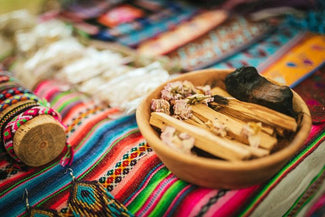
Resin incense is the oldest and most ceremonially significant form. It is the hardened sap of aromatic trees — Frankincense from the Boswellia, Myrrh from the Commiphora, Copal from the trees of Mesoamerica, Dragon’s Blood from the Dracaena — collected by hand and burned on hot charcoal discs. There are no binding agents, no synthetic fragrance, no processing beyond collection and drying.
The fragrance of high-quality resin is richer and more complex than manufactured incense — and the ritual of preparation (heating the charcoal, waiting for it to ash over, placing the first pieces of resin) is itself a meaningful act of slowing down. Resin burns well for deep meditation, ceremony, and any practice where you want the incense to carry genuine weight. Browse resin incense & charcoal discs → | Read our full Resin Incense Guide →
Dragon’s Blood Incense
Dragon’s Blood is the deep red resin of the Dracaena tree, used for centuries in ceremony, protection rituals, and as a potent amplifier of other incenses and intentions. It has a warm, sweet, slightly vanilla-and-resin character — distinctive and immediately recognisable. It is associated with protection, amplification, and the clearing of heavy or stagnant energy, and is used in many ceremonial traditions. Available as raw resin for charcoal burning, and as incense sticks and cones. Shop Dragon’s Blood Incense →
Nag Champa
Nag Champa deserves its own mention because it is in a category of its own — the world’s most beloved and recognisable incense blend. Made from the Champa flower combined with sandalwood, it originated in the ashrams and temples of India and Nepal, where it has been used for generations during meditation and puja. Its warm, earthy, slightly floral scent is simultaneously grounding and uplifting.
Satya Sai Baba Nag Champa uses a traditional wet masala process with natural ingredients that produces a smoke of genuine depth. Shop Nag Champa →
Japanese Incense
Japanese incense — particularly the Morning Star range by Nippon Kodo — represents a distinct tradition that prioritises refinement, subtlety, and purity over intensity. Sticks are typically shorter and thinner than Indian varieties, burning for 25–30 minutes, using natural aromatic woods, herbs, and resins with a clean, light smoke.
Morning Star is particularly consistent — the Sandalwood, Lavender, and Frankincense varieties are among the finest everyday incense available, and excellent for people who find heavier incense overwhelming. Browse Morning Star Incense →
Smudging Herbs – A Note on Tradition
Smudge sticks and loose smudging herbs — most commonly White Sage and Palo Santo — are a related but distinct practice from incense burning. They are burned not primarily for fragrance but for energetic cleansing, and they come from specific cultural and spiritual traditions rather than the broader incense-making traditions described above.
White Sage in particular is associated with the ceremonial practices of specific indigenous Nations of the American Southwest and Pacific Coast, where it carries deep and particular significance. We carry it with respect for that context. Palo Santo comes from South American traditions and is widely used in shamanic and healing practice across Peru, Ecuador, and beyond.
If your intention is energetic cleansing of a space or person, smudging herbs are the most direct tool. If your intention is fragrance, atmosphere, or meditation support, incense is typically the better choice — though the two complement each other well. Browse smudge sticks → | Read our Smudging Guide → | Read our Palo Santo Guide →
Quick Comparison
| Type | Burn Time | Fragrance Strength | Best For | Requires |
|---|---|---|---|---|
| Incense sticks | 20–60 min | Medium | Everyday use, beginners | Holder |
| Dhoop sticks | 30–60 min | Medium–strong | Richer fragrance without bamboo | Holder |
| Incense cones | 15–30 min | Strong | Shorter sessions, intensity | Cone holder |
| Backflow cones | 15–25 min | Strong | Visual effect + fragrance | Backflow burner |
| Resin on charcoal | 30–60 min | Very strong | Ceremony, deep meditation | Charcoal disc + heatproof dish |
| Japanese incense | 25–30 min | Light–medium | Sensitive noses, refined use | Holder |
| Smudge sticks | Variable | Medium | Space cleansing | Fireproof dish |
Incense Quality – What to Look For
Quality varies significantly across all incense types. Here is what to look for and what to avoid:
Masala vs charcoal-based sticks — Masala incense is made by rolling aromatic paste directly onto a bamboo core; the fragrance comes entirely from the natural ingredients in the paste. Charcoal-based sticks use a plain charcoal-and-binder core dipped in fragrance oil; the result is typically less complex and more likely to produce an irritating smoke. The finest Indian incense — including Nag Champa and Nitiraj — uses the masala method.
Bamboo-core vs coreless — Bamboo-core sticks are standard and reliable. Coreless sticks (like most Japanese incense and dhoop) produce a purer fragrance since there is no bamboo burning alongside the aromatic material. Neither is inherently better — they suit different purposes.
Natural vs synthetic fragrance — Natural incense uses essential oils, plant extracts, and resins. Synthetic incense uses fragrance oils, which are cheaper and more consistent but lack the complexity and depth of natural ingredients, and may produce a smoke that feels harsh in enclosed spaces. Check ingredient lists where possible; if a brand does not disclose ingredients, that is itself informative.
Resin content — In resin incense, freshness and provenance matter. High-quality Frankincense resin (Boswellia sacra or serrata) should be pale to golden, fragrant when handled, and produce a white or pale grey smoke. Darkened, brittle, or odourless resin is old or poorly stored.
What to look for on packaging — “Natural ingredients”, “masala process”, “no synthetic perfume”, named botanical ingredients, and country of origin are all positive indicators. Generic packaging with no ingredient information and very low prices often indicates low-quality synthetic product.
Choosing Incense by Intention
Relaxation & Sleep
For winding down, easing tension, and preparing for sleep, softer, calmer scents tend to work well. Lavender, Chamomile, and Sandalwood are widely used for this purpose and many people find them settling. Burn 30–60 minutes before bed and allow the fragrance to settle into the room before sleeping. Pair with Amethyst or Howlite on the bedside table. See our Crystals for Sleep guide →
Meditation & Focus
Frankincense, Nag Champa, and Sandalwood are traditional choices for meditation across many cultures. Many people find that using a consistent scent before and during meditation creates a useful olfactory cue that helps the mind settle — over time, simply smelling your chosen meditation incense begins to shift the atmosphere toward stillness. Use Morning Star Frankincense for a clean, non-overwhelming burn in smaller spaces. See our Meditation Guide →
Energy Cleansing
White Sage, Palo Santo, Cedar, and resin incense such as Frankincense and Copal are commonly used for energetic cleansing. Light your chosen incense or smudge, move through each room with clear intention, paying particular attention to corners, doorways, and windows. Follow with a sacred spray to seal the cleared space. See our Energy Cleansing guide → and Smudging guide →
Love & Heart-Opening
Rose, Jasmine, and Ylang Ylang are warm, sweet, and widely associated with the heart. Burn during moments of self-care, during rituals connected to love and relationships, or simply when the space feels like it needs softening. Pair with Rose Quartz or Rhodonite →
Grounding & Earthing
Patchouli, Vetiver, Cedarwood, and Myrrh all carry a quality of downward, earthward energy — dense, warm, and stabilising. Use when you feel scattered or unmoored. Burn alongside grounding crystals such as Black Tourmaline, Hematite, or Smoky Quartz. See our Crystals for Anxiety guide →
Protection & Ceremony
For any ceremonial or ritual purpose — fire ceremony, Despacho, shamanic journeying, altar work, moon rituals — resin incense is the traditional and most powerful choice. Dragon’s Blood and Frankincense for opening and amplification; Myrrh for depth and ancestral connection; Copal for offering and ceremony. See our Resin Incense Guide → and Shamanic Journeying Guide →
Shop by Type
- Incense Sticks
- Incense Cones & Dhoop Cones
- Resin Incense & Charcoal Discs
- Nag Champa
- Morning Star Japanese Incense
- Smudge Sticks & Loose Sage
- Backflow Incense Burners & Cones
- Incense Burners & Holders
How to Burn Incense Safely
Fire & Heat Safety
- Always use a proper incense holder or burner designed to catch ash and withstand heat
- Place on a heat-resistant surface, away from draughts that may cause uneven burning or scatter ash
- Keep away from flammable materials — curtains, paper, fabric
- Never leave burning incense unattended
- Extinguish fully by pressing the tip into sand or a heatproof surface before leaving the room
Smoke & Ventilation
- Always burn incense in a well-ventilated room — open a window, especially in smaller spaces
- Incense smoke, like all combustion smoke, is not intended for continuous inhalation; occasional, ventilated use is how it is traditionally employed
- People with asthma, respiratory sensitivities, or smoke allergies should use caution and may prefer sacred sprays as a smoke-free alternative
- Keep pets out of the room when burning incense — birds are particularly sensitive to airborne particles and should always be in a separate, well-ventilated space
- Keep out of reach of children
- If incense smoke regularly feels harsh or irritating, try a higher-quality natural product and ensure better ventilation before concluding that incense does not suit you
Storing Your Incense
Proper storage preserves fragrance and prevents deterioration:
- Keep dry — moisture is the main enemy of incense sticks and cones; damp sticks burn unevenly, produce poor smoke, and may go mouldy. Store in a cool, dry place away from humidity
- Keep sealed — once opened, store sticks in a sealed container or the original box with the opening closed; fragrance volatilises over time when exposed to air
- Keep away from direct sunlight — UV light degrades aromatic compounds; a drawer or closed cupboard is ideal
- Store resins in glass or ceramic — resins keep well in sealed glass jars away from heat and light; avoid plastic containers for long-term storage
- Do not mix strong fragrances — storing very different incense types in the same box can cause fragrance transfer; keep strong resins and delicate florals separate
- Charcoal discs — keep in a sealed, airtight container; once exposed to air for extended periods they become harder to light
Our Incense Brands
We stock a carefully selected range of incense brands chosen for quality, authenticity, and consistency:
- Satya Sai Baba / Nag Champa — the world benchmark for Indian incense sticks; wet masala process with natural ingredients
- Morning Star by Nippon Kodo — exceptionally refined Japanese incense; clean, light, and beautifully consistent
- Nitiraj Original — premium Indian incense using traditional Ayurvedic blends and natural resins
- Karma Incense / Namaste Scents — hand-rolled incense in a wide range of classic and contemporary fragrances
Frequently Asked Questions
What is the difference between incense and joss sticks?
Joss sticks is simply another name for incense sticks — the term comes from the Portuguese deus (god) via Javanese jos, and became common in English through trade with South and East Asia. They are the same product.
Which incense is best for beginners?
Start with a quality incense stick in a fragrance you are drawn to — Nag Champa, Sandalwood, or a Morning Star variety are reliable starting points. Use a proper holder, burn in a ventilated room, and try a few different fragrances before settling on a favourite. Avoid very cheap, unbranded sticks for your first experience — quality matters significantly for how incense smells and feels.
How long does incense burn?
Standard incense sticks burn for 20–60 minutes depending on thickness and length. Cones burn for 15–30 minutes. Japanese incense sticks (which are shorter) burn for 25–30 minutes. Resin on charcoal varies — a charcoal disc stays hot for around 45–60 minutes, and you can add resin throughout. See the comparison table above.
Can you burn incense every day?
Many people burn incense daily as part of a morning or evening ritual, and this is a longstanding practice across many traditions. Ensure good ventilation, use natural-ingredient incense rather than synthetic, and avoid extended periods of heavy smoke in small unventilated spaces. People with respiratory conditions should take advice from their GP.
What incense produces the least smoke?
Japanese incense sticks — particularly the Morning Star range — produce the cleanest, lightest smoke of any stick incense. They are the best choice for people who want the benefits of incense with minimal smoke. If you need a completely smoke-free option, sacred sprays achieve many of the same atmospheric and energetic effects without any combustion.
What is the difference between resin and stick incense?
Stick incense is a pre-made product — aromatic materials are blended and shaped around a core, ready to light directly. Resin incense is the raw, unprocessed sap of aromatic trees, burned on a separately heated charcoal disc. Resin is more ceremonial, more fragrant, and completely natural; sticks are more convenient for everyday use. Many people use both — sticks for daily practice, resin for ceremony and deeper work.
What is Dragon’s Blood incense?
Dragon’s Blood is the deep red resin of the Dracaena tree. It has a warm, sweet, slightly vanilla-and-resin fragrance and has been used in ceremony and ritual across many cultures for centuries. It is associated with protection and amplification and is available as raw resin, sticks, and cones.
Is incense safe for pets?
Incense smoke should be kept away from pets — particularly birds, whose respiratory systems are highly sensitive to airborne particles. Burn in a separate, well-ventilated room and ensure animals are not exposed to sustained smoke. If in doubt, use a sacred spray instead.
Shop All Incense
- All Incense
- Incense Sticks
- Incense Cones & Dhoop Cones
- Resin Incense & Charcoal Discs
- Nag Champa
- Smudge Sticks & Loose Sage
- Morning Star Japanese Incense
- Nitiraj Original Incense
- Karma Incense
- Incense Burners & Holders
- Backflow Incense Burners & Cones
Related Guides
- Incense Sticks Guide – Uses, Benefits & How to Choose
- Resin Incense & Charcoal Discs Guide
- Smudging & Energy Cleansing Guide
- How to Use Sage – A Complete Guide
- Palo Santo – Benefits, Uses & How to Burn
- Sage vs Palo Santo
- Energy Cleansing Explained
- Creating a Sacred Space
- Meditation Guide
- Crystal Guide
- Sacred Sprays Guide
Related Blog Articles
- Incense Sticks Guide: History, Types, Benefits & How to Use
- Incense Sticks Explained: Uses and How to Choose
- Incense Cones vs Sticks: Which to Choose?
- The Complete Guide to Incense Cones
- The Complete Guide to Backflow Incense Burners & Cones
- How to Choose Incense Sticks for Your Space
- Best Incense for Meditation at Home
- Best Incense for Relaxation & Sleep at Home
- Best Incense for Each Mood
- How to Use Incense Safely at Home
- Nag Champa Incense: Uses, Benefits and Popularity
- How to Cleanse Your Home With Incense
- What Is Dragon’s Blood Incense?
- Bringing Balance to Your Life With Incense