
Shamanic Drums Explained – History, Types & How to Use a Shamanic Drum
There is a moment, usually within the first few minutes of steady drumming, when something shifts. The thinking mind, with its constant commentary and restless movement between past and future, begins to quiet. The body settles. Attention moves inward and downward — away from the surface of ordinary consciousness and toward something older, deeper, and more spacious. This is the threshold the drum opens. It has been opening it for human beings for at least thirty thousand years, across every culture that has ever existed, in every language and every landscape on earth. The drum is the original consciousness technology — the most ancient and most universal tool for intentional altered states. Browse shamanic drums →
The Role of the Drum in Shamanism
In virtually every shamanic tradition, the drum is called the “horse” of the shaman — the vehicle that carries the practitioner from ordinary reality into non-ordinary reality, the spirit world, the dreaming. The metaphor is precise: the drum does not simply accompany the journey, it enables it. The steady, monotonous beat — typically between 4 and 7 beats per second — entrains the brain into a theta brainwave state: the state of deep meditation, hypnagogic vision, and the threshold between waking and sleep. In this state, the internal imagery, encounters, and navigation of the shamanic journey become possible in a way they are not in ordinary beta-wave waking consciousness.
The drum is also a living ally. In most traditions the drum has its own spirit — it is understood as a being, not a tool. The animal whose skin it carries continues to offer its medicine through the drum. This is not symbolic language; in the animist worldview it is a literal description of the relationship. The drum is introduced to the practitioner, worked with over years, cared for with reverence, and consulted as a partner in the work. See our Shamanic Journeying Guide → for a full introduction to the journey practice itself.
A Brief History of Shamanic Drumming
Archaeological evidence of frame drums and ritual drumming dates back over 30,000 years — making shamanic drumming one of the oldest documented human practices. The tradition is most extensively documented in Siberia and Central Asia, where the word “shaman” itself originates (from šaman in the Tungus language of Siberia — the language of the tradition in which shamanism was first described by Western observers in the 17th century).
But the practice is not Siberian — it is universal. The same rhythmic tempo, the same cosmological framework of multiple worlds, and the same understanding of the drum as a bridge between the visible and invisible are found independently across the indigenous nations of North and South America, the Sámi of Scandinavia, the healing traditions of Korea and Mongolia, the ceremonial practices of sub-Saharan Africa, and the Celtic and Norse traditions of Northern Europe. No culture received this knowledge from another. They all arrived at the same understanding through their own direct experience of what the drum does to human consciousness.
Types of Shamanic Drums
Natural Skin Frame Drums
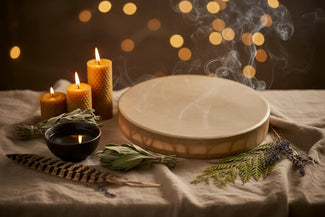
The frame drum — a single drumhead stretched over a shallow circular or oval wooden frame — is the most traditional and widely used shamanic drum across virtually every lineage. Natural skin drums carry the spirit and medicine of the animal whose hide they bear, and many practitioners feel this dimension of the drum’s energy is fundamental to its power in ceremony and journeying.
Natural skin drums are sensitive to humidity and temperature. They need to be warmed before playing — held near a gentle heat source until the skin tightens and the tone brightens to its full resonance. They should be stored away from damp environments and extremes of temperature. Many practitioners experience this relationship — caring for the drum, reading how it responds to the weather, warming it before ceremony — as itself a form of shamanic practice. The drum teaches attunement. Shop Natural Skin Frame Drums →
The Medicine of the Animal Skin
The animal whose skin the drum carries continues to offer its specific medicine through the instrument. Deer brings gentleness, sensitivity, and the ability to move between worlds with grace and quietness — deer is associated with the forest, the threshold, and the Otherworld in Celtic and European traditions. Elk brings stamina, endurance, and the power to sustain long journeys; elk medicine supports practitioners in extended ceremony work. Buffalo/Bison brings abundance, strength, prayer, and deep connection to the earth and to gratitude — in Plains Indian traditions the buffalo is the most sacred animal, the one whose body provided everything needed for life. Horse brings freedom, the capacity to travel vast distances, and the energy of the shaman’s own vehicle — in Siberian traditions the drum is literally called the horse, and horse-skin drums carry this medicine most directly.
Synthetic Skin Drums (Vegan & All-Weather)
Modern shamanic drums with synthetic drumheads — most notably the Remo Buffalo Drum range — are unaffected by changes in humidity and temperature, producing a consistent, reliable tone in any conditions. They are the practical choice for outdoor ceremony, travel, damp climates, and for practitioners who want a cruelty-free, vegan alternative to natural animal skin.
Synthetic drums are an excellent choice for beginners — the consistent tone makes them easier to work with when you are still learning to warm and tune a drum — and for experienced practitioners who need a reliable outdoor instrument. Many practitioners work with both: a natural skin drum for indoor ceremony and a synthetic drum for outdoor work and travel. Shop Remo Buffalo Synthetic Drums →
Bodhráns
The bodhrán is the traditional frame drum of the Celtic and Irish traditions, played with a double-headed wooden beater called a tipper. Its earthy, resonant tone connects it to the Celtic tradition of sacred drumming and the rhythms of the land. Used in both ceremonial and musical contexts. Shop Frame Drums →
Ceremonial & Pow Wow Drums
Larger ceremonial drums — often played by multiple drummers simultaneously — carry the heartbeat of the community in many Native American traditions. These drums are used in ceremony, prayer, celebration, and healing work at a collective scale. Their deep, carrying tone is felt as much as heard, particularly when multiple players drum together.
Drum Sizes – Which is Right for You?
- 10–12” (25–30cm) — Small and light; portable and easy to play for extended periods. Brighter, higher tone. Good for travel, personal practice, and beginners wanting a manageable starting point.
- 14–16” (35–40cm) — The most popular size for solo shamanic journeying. Deep enough tone to fully induce the theta state; light enough to hold comfortably for a full session. The sweet spot for most practitioners.
- 18–22” (45–55cm) — Full, powerful, room-filling tone. Ideal for group ceremony, sound healing sessions, and practitioners who want maximum depth and resonance. Heavier to hold for extended play; often rested on the lap or a stand.
- 24”+ (60cm+) — Ceremonial and community drums. Deep bass tone that carries great distance and is felt as a physical vibration throughout the body. Typically played on a stand or shared between players.
Drum Beaters & Mallets
The beater is as important as the drum. A padded or wrapped beater produces a softer, rounder tone with more sustain — warmer and more enveloping, ideal for journeying where the sustained tone is what carries you. A harder, less padded beater produces a sharper, more percussive strike with a faster decay — more driving and rhythmically immediate, useful for active ceremonial drumming and working with groups. Most shamanic drums come with a beater, but having two — one soft, one harder — gives you the full range of the drum’s expressive and therapeutic capacity. Shop Drum Bags & Accessories →
Natural Skin vs Synthetic – Summary
- Natural skin — richer, more complex and living tone; animal spirit medicine; requires warming and careful storage; sensitive to weather. Best for indoor ceremony and practitioners who want a deep relational practice with their drum.
- Synthetic skin — consistent tone in all conditions; no maintenance requirements; vegan and cruelty-free; ideal for outdoor use, travel, and beginners. Best for practitioners who work outside or travel regularly.
See our Drum Birthing Guide → for how to welcome, name, and build relationship with a new drum — natural or synthetic.
How to Use a Shamanic Drum for Journeying
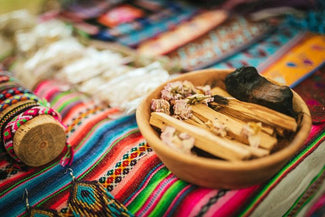
- Prepare your space — cleanse with sage, Palo Santo, or sacred spray. Set up a simple altar. See our Creating a Sacred Space guide →
- Set your intention — state clearly, aloud, the purpose of this journey: what question you are carrying, what you are seeking
- Warm your drum — if using a natural skin drum, hold it near gentle warmth until the skin tightens and the tone brightens
- Lie down or sit comfortably — cover your eyes with a cloth or eye mask to deepen inward focus and reduce visual distraction
- Begin drumming — maintain a steady, even beat at approximately 4–7 beats per second. Keep the tempo consistent — monotony is the point
- Journey — allow images, encounters, sensations, and knowing to arise without forcing or directing them. Follow what appears
- Return — a callback signal (typically a rapid drumbeat sequence followed by four slow beats and silence) marks the end of the journey and returns awareness to ordinary reality
- Ground yourself — eat something, drink water, move your body. Record your journey in a journal while it is fresh
See our full Shamanic Journeying Guide → for detailed instructions.
Caring for Your Shamanic Drum
- Cleanse with sacred smoke — sage, Palo Santo, or copal — before first use and thereafter, especially after intense healing work
- Introduce yourself to your drum: hold it, speak to it, tell it what work you are doing. Build the relationship from the beginning
- Store away from direct sunlight, damp, and extremes of temperature
- Natural skin drums: never leave near a radiator or in a hot car; avoid damp environments; warm gradually before playing rather than applying sudden heat
- Re-tune natural skin drums by warming if the tone has dropped due to humidity — a drop in tone tells you the skin has absorbed moisture
- Treat your drum with the reverence of a living relationship — because in the animist understanding, that is precisely what it is
Shop Shamanic Drums
- Natural Skin Frame Drums
- Remo Buffalo Synthetic Drums (Vegan & All-Weather)
- Drum Bags & Accessories
- Rattles & Maracas
- All World Instruments & Sound Therapy
- Ritual Tools & Altar Items
- Smudge Sticks & Loose Sage
- Palo Santo
- Resin Incense & Charcoal Discs
- Sacred Sprays
Related Guides
- Shamanic Journeying Guide
- Drum Birthing Guide
- Shamanic Tools Guide
- Sound Healing at Home
- Singing Bowl Size Guide
- Creating a Sacred Space
- Smudging & Energy Cleansing Guide
- Crystal Guide
Related Blog Posts
- What is a Shaman Drum? Choosing the Right One
- Shamanic Journeying for Beginners
- Shamanism and Shamanic Altars and Tools: A Comprehensive Guide
- Rattles, Maracas, Gourd Shakers & Rainsticks – The Differences
- Remo Buffalo Drums Explained: How to Choose the Right Size
- Frame Drums vs Remo Synthetic Drums
- What Is Shamanic Drumming? A Grounded Guide
- Shamanic Drum Care & Birthing Guide