

Sound Healing at Home – A Complete Beginner’s Guide
Sound is the oldest medicine. Before plant remedies, before ceremony, before language itself — rhythm and tone were the first tools humans used to shift states of consciousness, induce healing, and mark the boundary between the ordinary and the sacred. The shamanic drum inducing trance. The Tibetan bowl settling the mind before meditation. The voice raised in chant, carrying prayer into the invisible world. Every culture on earth has its own version of this knowledge, arrived at independently, preserved across millennia: sound heals.
You do not need to attend a professional sound bath or see a practitioner to experience this. A single singing bowl on a quiet evening, played with care and intention, can shift the quality of your nervous system in minutes. A drum beaten steadily for twenty minutes can take you into states of expanded awareness that most people only encounter in deep meditation. A set of Koshi chimes hung in a window, touched by the wind, can change the quality of a room. The tools are accessible. The practice is learnable. And the effects, once you experience them, are immediately obvious. Browse all sound healing instruments →
Which Sound Healing Tool Is Right for You?
- Complete beginner, want the most accessible starting point — a medium singing bowl (13–18cm); no technique required, immediately effective, works for meditation, relaxation, and space clearing
- Want to clear and reset the energy of a room quickly — Tingsha bells; one strike, and the space shifts; the fastest and simplest tool for space clearing and marking transitions
- Drawn to shamanic practice or deep journey work — a frame drum; beaten at 4–7 beats per second it reliably induces theta brainwave state; the most powerful tool for intentional altered-state work
- Struggle to meditate silently or settle the mind — singing bowl or Koshi chimes; sound bypasses the analytical mind and induces stillness without effort; ideal for people who find breath-focused meditation difficult
- Want something passive that works without playing — Koshi wind chimes near a window; touch them by hand or let the wind do it; elemental, beautiful, continually present
- Want to work with chakras and specific healing frequencies — Heola chimes, tuned to chakra notes; or a set of chakra singing bowls; pair with our Chakra guide →
- Looking for an active ceremonial or rhythm practice — rattle or drum; rattles scatter stagnant energy and are used to open and close ceremony; drums ground, journey, and call
- Want to integrate breath and sound in one practice — a simple flute or panpipe; the sustained exhalation needed to produce tone directly activates the parasympathetic nervous system; no musical experience required
- Want a complete home sound bath experience — Tingshas to open, rattle to clear, singing bowl for the body of the session, drum to ground; see the full sequence below
Why Sound Works – The Science of Sound Healing
Sound healing operates through several well-documented mechanisms. Entrainment is the most fundamental: the brain’s electrical activity naturally synchronises with external rhythmic stimuli. Introduce a slow, steady beat or a sustained low tone, and the brainwaves shift to match it — from the fast beta waves of ordinary waking consciousness into the slower alpha waves of relaxed alertness, and deeper still into theta, the brainwave state of deep meditation, hypnagogic imagery, and the edge of sleep. This is why shamanic drumming at around 4–7 beats per second is so reliable as a journeying tool — it is directly inducing a theta state.
Physical vibration is the second mechanism. Sound is not simply an auditory experience — it is a physical one. The body is mostly water, and water transmits vibration extremely efficiently. The sustained tone of a large singing bowl, or the deep beat of a frame drum, is felt throughout the body as a physical sensation — a kind of resonance that many people describe as profoundly releasing. Sound healers use this deliberately, placing bowls on or near the body during sessions to work with specific areas of tension or blockage.
The third mechanism is focused attention. The act of listening carefully to a rich, complex, sustained sound — a singing bowl, a chime, a drum — is naturally incompatible with anxious thinking. The mind cannot simultaneously ruminate and truly listen. Sound gives the mind something absorbing to do, and in doing so, quiets it. This is the same principle behind most meditation techniques; the sound simply provides an exceptionally effective object of attention.
Sound Healing Tools for Home Practice
Singing Bowls – The Foundation of Home Sound Healing
The most accessible and versatile sound healing instrument for home use. Tibetan singing bowls — hand-hammered from a multi-metal alloy — produce a rich, complex, multi-tonal sound with multiple harmonics sounding simultaneously. The sustained tone, built by running a mallet around the rim, is particularly effective for meditation and nervous system regulation — the complexity of the sound gives the mind enough to engage with that thinking subsides naturally.
A medium bowl (13–18cm) is the ideal starting point for most people — portable, affordable, and producing a warm, satisfying tone that works well in most domestic spaces. See our Singing Bowl Size Guide → for a full breakdown by size, tone, and use case. Shop Singing Bowls →
Tingsha Bells – Space Clearing & Transition Markers
Small Tibetan cymbals connected by a leather strap. Struck together, they produce a clear, penetrating, high-frequency tone that instantly clears the energy of a space and brings scattered attention to a point of stillness. In Tibetan Buddhist practice they are used to mark the beginning and end of meditation sessions — the sound acts as a threshold, signalling the shift from ordinary to sacred time. Use them to open your practice, to clear the room before a session, or to bring yourself back to presence at any moment during the day. Shop Tingsha Bells →
Shamanic Drums – Journey Work & Deep Grounding
The frame drum is the oldest and most universal sound healing instrument. Its single-headed, hand-held design produces a deep, resonant beat that travels through the body and, when played at a steady rhythm of approximately 4–7 beats per second, reliably induces a theta brainwave state — the state associated with shamanic journeying, deep relaxation, and the hypnagogic edge of sleep. It is a more active practice than a singing bowl — you are creating the sound rather than sustaining it — and its effects are correspondingly more physical and grounding.
Natural skin drums have the warmest, most resonant tone and the deepest traditional roots. Synthetic (Remo Buffalo) drums are weatherproof, maintenance-free, and ideal for regular practice, outdoor use, or humid environments. See our Shamanic Drums Explained guide → | Shop Natural Skin Drums → | Shop Remo Buffalo Drums →
Koshi & Heola Wind Chimes – Elemental Sound
Koshi chimes are among the finest wind chimes in the world — handcrafted in the Pyrenees, tuned to the four elements (Earth, Water, Fire, Air), each producing a unique, crystalline, multi-tonal sound that is deeply calming and meditative. They are not simply decorative: the specific tuning of each chime is designed to evoke its element’s quality — the grounding stability of Earth, the flowing clarity of Water, the brightness and energy of Fire, the lightness and openness of Air. Hang near a window where they will be caught by natural air movement, or sound them by hand during practice.
Heola chimes are tuned to specific healing frequencies and chakra notes, making them particularly effective for chakra-focused sound work. Shop Koshi & Heola Wind Chimes →
Rattles, Maracas & Rainsticks – Rhythm & Ceremony
Rattles are among the oldest ritual sound tools on earth — found in the ceremonial practice of virtually every indigenous culture. Their dry, rhythmic sound is distinct from the sustained tone of a bowl or the deep beat of a drum: it scatters and disrupts stagnant energy rather than sustaining a frequency, making rattles particularly effective for space clearing, for moving energy that feels stuck or dense, and for active ceremonial use. Rainsticks produce a continuous, flowing sound of falling seeds or beads that is deeply relaxing and associated with water energy, release, and letting go. Shop Rattles, Maracas & Rainsticks →
Flutes & Panpipes – Breath & Melody
Wind instruments bring the element of breath into sound healing — and breath is itself one of the most powerful healing tools available. The practice of playing a simple flute or panpipe is simultaneously a breathwork practice: the slow, controlled, sustained exhalation required to produce a tone directly activates the parasympathetic nervous system and induces calm. The melodic, flowing quality of flute sound is associated with the heart chakra, emotional healing, and spiritual connection across many traditions. No musical experience is required — simple pentatonic flutes are designed to be intuitive from the first breath. Shop Flutes & Panpipes →
Meditation Bells & Garden Chimes
Meditation bells for practice and ceremony; tuned garden chimes that bring the healing quality of sound into your outdoor space. Shop Meditation Bells → | Shop Wind Chimes & Gongs →
How to Create a Sound Healing Practice at Home
Step 1: Prepare Your Space
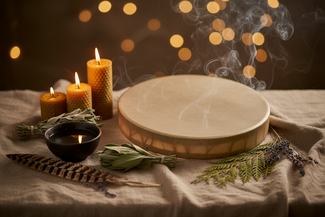
Choose a quiet room where you will not be disturbed. Clear the energy first — smudge with White Sage or Palo Santo, or use a sacred spray. Dim the lights. Light a candle. Place crystals around the space — Selenite to hold the cleared energy, and any stones that support your intention for the session. See our Creating a Sacred Space guide →
Step 2: Set Your Intention
Before you touch your instrument, sit quietly and identify your intention for the session. What are you working with? What do you want to release, restore, or receive? Name it clearly — aloud if possible. Hold the instrument and let the intention transfer into the object before you begin.
Step 3: Begin with Stillness
Sit or lie comfortably. Take five to ten slow, deep breaths — longer exhale than inhale. Allow your nervous system to shift down before you introduce sound. The quality of your state when you begin playing will shape the quality of the session.
Step 4: Open with Tingshas or a Bell
Strike your Tingsha bells or a meditation bell to mark the opening of the session. This single, clear tone signals the shift from ordinary time to sacred time — and begins the process of clearing the space energetically.
Step 5: Play Your Instrument
Begin slowly and gently. There is no correct sequence or structure — trust your intuition. For a singing bowl, alternate between striking and rimming. For a drum, begin at a slow, steady beat and allow it to build naturally. For chimes or rattles, move through the space, paying particular attention to corners and areas that feel energetically dense. Follow the sound — let it guide you rather than trying to control it.
Step 6: Rest in Silence
When the sound naturally reaches a resting point, stop and sit in complete silence for five to ten minutes. This integration period is as important as the sound itself — it is in the silence that the nervous system processes and integrates what the sound has initiated. Do not rush this.
Step 7: Close with Tingshas
Strike your Tingshas again to close the session and mark the return to ordinary time. Offer gratitude — to the instruments, to the practice, to whatever you experience as holding and supporting your work.
Combining Tools – A Complete Home Sound Bath
The most powerful home sessions combine multiple sound sources in a natural sequence. Open with Tingshas to clear and mark the beginning. Move through the space with a rattle to break up stagnant energy. Settle into sustained singing bowl work for the body of the session — striking, then rimming, allowing the tone to build and sustain. Introduce a slow drum beat if you want to deepen the grounding effect or move into journey work. Close with Tingshas and rest in silence. The whole session can be as short as 20 minutes or as long as an hour — let the instruments and your intuition guide the timing.
Crystal Pairings for Sound Healing
Selenite is the natural companion to any sound healing session — its high-vibrational, self-cleansing quality holds the space clear and amplifies the healing effect of the sound. Clear Quartz amplifies intention and the energetic effect of whichever bowl or instrument it is placed near. Amethyst deepens the meditative quality of a session and supports intuitive states. Black Tourmaline provides grounding and protection during deep or journey work. Shungite near electronic devices protects the energetic field of the space. See our Crystal Guide →
Benefits of Sound Healing at Home
- Reduces stress and anxiety through direct nervous system regulation
- Promotes deep relaxation and supports better sleep
- Clears stagnant energy from your space and your own energy field
- Deepens and enhances meditation practice
- Supports emotional release and processing
- Balances and aligns the chakras through specific frequencies
- Raises the energetic quality and atmosphere of your home
- Provides an accessible, effective daily self-care practice
Frequently Asked Questions
Do I need any musical ability to practise sound healing at home?
None at all. Sound healing instruments are not played in the musical sense — they are sounded with intention. A singing bowl requires only that you strike it or rim it; a drum only that you beat it steadily. The quality that matters is your presence and intention, not technique. If you can listen, you can practise sound healing.
What is the best instrument to start with?
A medium singing bowl (13–18cm) is the ideal first instrument for most people. It is immediately effective, requires no technique, works for meditation, space clearing, and relaxation, and produces a sound that most people find instantly settling. See our Singing Bowl Size Guide → for help choosing the right size.
How often should I practise?
Even five minutes daily will produce noticeable effects over time. A short daily practice — striking a bowl at the start and end of your day, or using Tingshas to mark a transition — is more valuable than occasional long sessions. The nervous system responds to consistency; the more regularly you practise, the more quickly and deeply your body learns to shift into the relaxation response when it hears the sound.
What’s the difference between a singing bowl and Tingshas?
Singing bowls produce a sustained, complex, multi-tonal sound that builds over time — ideal for meditation, deep relaxation, and the body of a sound healing session. Tingshas produce a single, clear, penetrating strike tone that fades quickly — ideal for space clearing, marking the beginning and end of sessions, and bringing scattered attention instantly to a point of stillness. Most practitioners use both: Tingshas to open and close, a bowl for the practice itself.
Can I use sound healing for sleep?
Yes — it is one of the most effective uses. Play a singing bowl for 10–15 minutes before bed, allowing the tone to sustain and fade naturally. The entrainment effect gradually shifts brainwaves from beta toward alpha and then theta, creating ideal conditions for sleep onset. You can also place Amethyst and Howlite near the bowl to deepen the calming effect. See our Meditation Guide → for more on preparing the mind and body for rest.
What is the difference between a natural skin drum and a synthetic drum?
Natural skin drums have a warmer, richer, more resonant tone and a deeper traditional and ceremonial quality. They require care — they are sensitive to changes in humidity and temperature and should not be left in damp or very hot environments. Synthetic (Remo Buffalo) drums are weatherproof, maintenance-free, consistent in all conditions, and ideal for regular daily practice, outdoor use, or humid climates. Both are excellent instruments; the choice depends on your priorities. See our Shamanic Drums Explained guide →
How does sound healing work with crystals?
Crystals placed near a sounding instrument absorb and radiate the vibration, extending and shaping the energetic field the sound creates. Selenite and Clear Quartz are the most versatile pairings — both amplify and clarify. Place crystals around your bowl, near your drum, or at the four corners of your practice space. You can also hold a palm stone in your non-dominant hand while a partner plays, or place stones on the body during a lying-down bowl session. See our Crystal Combinations Guide →
Shop Sound Healing Instruments
- All World Instruments & Sound Therapy
- Singing Bowls, Tingshas & Gongs
- Frame Drums – Shamanic & Bodhrán
- Remo Buffalo Drums (Vegan & All-Weather)
- Rattles, Maracas & Rainsticks
- Koshi & Heola Wind Chimes
- Wind Chimes & Garden Gongs
- Meditation Bells & Whistles
- Flutes & Panpipes
- Drum Bags & Accessories
- Selenite
- All Crystals
Related Guides
- Singing Bowl Size Guide
- Shamanic Drums Explained
- Shamanic Tools Guide
- The Chakra System Explained
- Creating a Sacred Space
- Smudging & Energy Cleansing Guide
- Crystal Guide
- Crystal Combinations Guide
- Meditation Guide