



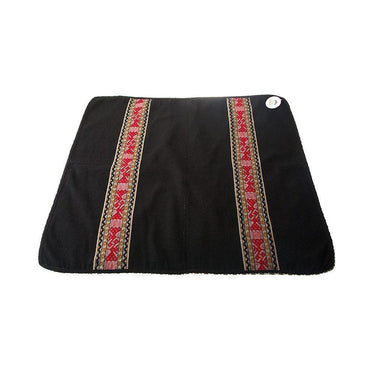


Grand autel et tissu Manta de Chaman de Chinchero (A50) – Textile sacré andin
 Grand autel et tissu Manta de Chaman de Chinchero (A50) – Textile sacré andin
£240.00
/
Grand autel et tissu Manta de Chaman de Chinchero (A50) – Textile sacré andin
£240.00
/
RRP£240.00

products.product.pickup_availability.unavailable
Vos informations de paiement sont traitées en toute sécurité. Nous ne stockons pas les détails de votre carte de crédit et n'avons pas accès à ces informations.
Autel Chamanique Chinchero Noir & Manta – Textile Sacré Q'ero Paqo Andin
Cette manta cérémonielle finement tissée est un textile d'autel de très grande qualité, tissé à la main dans les Andes péruviennes. Ornée d' yeux protecteurs tissés, elle dégage une forte énergie d'ancrage tout en offrant un espace pour les cérémonies, la méditation et le travail spirituel.
Inspiré par les traditions d'autel des chamans Q'ero Paqo du Pérou, ce tissu sacré sert de pièce maîtresse pour les installations cérémonielles et de support de méditation. Sa grande taille le rend particulièrement adapté au travail de groupe, aux cérémonies de despacho et aux aménagements de roue de médecine étendue.
Tissé dans la tradition de la région de Chinchero, ce tissu reflète la culture spirituelle andine vivante, où les textiles ne sont pas seulement décoratifs, mais participent activement à l'espace rituel.
Détails du produit :
- Design & Couleurs : Tons noir et rouge symbolisant la protection, la présence ancrée et l'espace sacré ; "yeux" protecteurs tissés le long des bords
- Matériau : Fils fins et de haute qualité en alpaga et laine de mouton – 100% fibres naturelles
- Taille : Env. 103 cm × 99 cm (40" × 39") ±3% en raison du tissage à la main
- Origine : Fabriqué à la main dans les hautes Andes du Pérou par les familles de tisserands de Chinchero
- Utilisations : Idéal pour les grandes roues de médecine, les autels de groupe, les cérémonies de despacho, et comme tapis de méditation cérémoniel
Commandes et expédition
Les commandes passées avant 15h00 sont traitées et expédiées le jour même. Nous livrons dans le monde entier.
Informations de suivi
Veuillez suivre votre colis à l'aide des informations de suivi fournies dans votre e-mail de confirmation d'expédition. Le suivi est généralement mis à jour dans les 24 heures suivant l'expédition et se poursuit jusqu'à ce que la livraison soit confirmée.
Droits de douane et taxes
Les droits de douane et taxes de l'UE et internationaux sont à la charge du client et doivent être payés localement, le cas échéant. Pour les clients non britanniques, la taxe britannique est automatiquement supprimée à la caisse une fois la destination d'expédition sélectionnée.
Retards douaniers
Certaines commandes internationales peuvent être retardées en raison de contrôles douaniers, qui échappent à notre contrôle. Les retards peuvent être plus longs pendant les périodes de forte activité.
Retours
Pour les commandes ayant bénéficié de la livraison gratuite, les articles retournés peuvent être soumis aux frais d'expédition initiaux et aux éventuels frais de collecte.
Commandes internationales refusées ou annulées
Les commandes internationales qui sont refusées, retournées puis annulées peuvent être soumises à une surtaxe de 10 %. Les colis peuvent être réexpédiés sur demande, bien que des frais supplémentaires puissent s'appliquer.