
Cravate Qero Chaman Inti Watana Tissée Mesa Wrap – 1,5 m (QT1)

La cravate Qero Chaman Mesa Wrap incarne un lien profond avec les traditions spirituelles andines, Inti Watana symbolisant le soleil et les énergies d'ancrage.

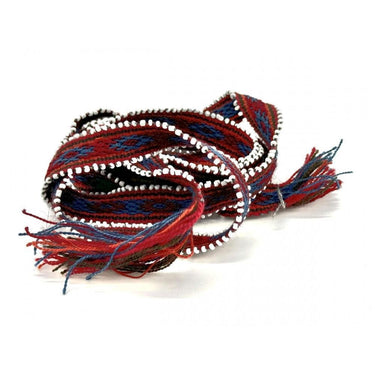
Utilisée par les chamans Qero pour sécuriser et protéger la mesa, un paquet sacré d'outils spirituels, cette cravate joue un rôle vital dans les rituels et les pratiques de guérison. Le motif tissé complexe de la cravate est plus large que les cravates traditionnelles et est bordé de perles solaires Inti Watana, offrant à la fois une signification ornementale et symbolique. Ces perles représentent des prières liées au soleil et aux étoiles, enrichissant davantage la signification spirituelle de la cravate. Les couleurs reflètent l'artisanat andin traditionnel, incarnant l'énergie de Pachamama (Mère Terre).

Au-delà de son rôle pratique, la cravate est un symbole de protection spirituelle, de connexion à la terre et de la riche cosmologie des Andes. Historiquement, les Watanas andines colorées étaient utilisées pour exprimer l'amour, souvent attachées dans les cheveux d'une fille ou drapées sur les mariés pendant les cérémonies. Chaque perle cousue dans la cravate représente une prière. Ces cravates polyvalentes peuvent être portées comme bracelets, utilisées pour sécuriser une mesa ou servir de porte-prières autour d'un autel en pierre.


Design et signification :

  • Design : Cravate péruvienne Chaman Q'ero Inti Watana Tissée Mesa Wrap avec perles solaires Inti Watana
  • Signification : Représente la protection, les prières et la conservation de l'énergie sacrée au sein de la mesa
  • Taille approximative : 1,2 m x 20 mm
  • Couleurs : Tons de terre naturels, y compris les bruns, les crèmes et les beiges, symbolisant Pachamama (Mère Terre)
  • Matériau : Laine de mouton filée à la main, teinte naturellement avec des colorants naturels locaux
  • Origine : Pérou – Hautes Andes – Communauté Qero


Utilisations :

La cravate Qero Chaman Mesa Wrap est utilisée pour sécuriser un paquet de mesa, symbolisant l'intégration des mondes intérieurs et extérieurs au sein d'un autel de roue de médecine. Elle sert également de cravate Despacho, de collier ou de charm de poignet, offrant un lien entre les mondes de Pachamama et d'Inti. La cravate peut être coupée à la longueur désirée, représentant une prière qui contient et protège le contenu sacré de la mesa.

Qero Shaman Mesa Tie – Sacred Woven Wrap

A spiritually significant tool crafted by the Q’ero shamans of Peru, this mesa tie, sometimes referred to as a wrap, is an essential part of Andean shamanic traditions. It is a wider version compared to the beaded Inti Watana Pini, making it both practical and symbolic in securing and protecting the sacred mesa bundle. Traditionally woven and edged with Inti Watana sun beads, this tie holds deep spiritual significance, connecting the practitioner to the powerful energies of Inti (the Sun) and Pachamama (Mother Earth).

The Qero Shaman Mesa Tie plays a critical role in rituals and ceremonies. It is used to secure the mesa, a sacred bundle of spiritual tools such as healing stones, herbs, and other ritual objects. The mesa itself acts as a portable altar, serving as a repository of the shaman's energy, prayers, and intentions. The wider design of the tie provides additional strength and stability to keep the bundle intact, symbolising the integration of both inner and outer worlds during spiritual work.

In Andean cosmology, this wider mesa wrap goes beyond a simple functional role. The inclusion of Inti Watana sun beads along its edges is highly symbolic, representing the life-giving energy of the Sun, which is central to Andean beliefs. These beads not only serve as decorative elements but also embody prayers that connect the shaman to the celestial realms. Each knot and bead enhances the tie’s sacred purpose, reinforcing the connection between the physical and spiritual dimensions.

The Qero Shaman Mesa Tie is used to secure the medicine bundle during healing, divination, and ceremonial practices. Its wider form allows for a more stable binding of the mesa’s sacred contents, ensuring that the energy within the bundle remains unified and protected. The act of tying the mesa becomes a prayer in itself, with each twist of the wrap symbolising a deeper connection to nature, the cosmos, and the energies that flow between them.

These wider mesa wraps are also worn as symbols of personal protection and spiritual connection. They can be used as bracelets, necklaces, or even tied to personal belongings, acting as a constant reminder of the sacred energies that flow through the practitioner. In some traditions, these ties are also incorporated into Despacho bundles, offerings made to Pachamama, further emphasising their role as conduits between the physical and spiritual worlds.

The versatility of the Qero Shaman Mesa Tie makes it an indispensable tool in Andean shamanic practices. Whether used to secure a medicine bundle, as an offering, or worn as a personal charm, this wider and adorned wrap serves as a powerful symbol of the interconnectedness of all things—Earth, Sky, and Spirit—rooted in the ancient wisdom of the Q’ero shamans of Peru.


Who are the Qero Shaman Priests?

Q'ero Shaman Priests are considered the spiritual leaders and last living descendants of the Inca civilization. They live high in the Andes Mountains of Peru, particularly in remote villages such as Q'eros, and have preserved ancient traditions, spiritual practices, and teachings that have been passed down through generations. As keepers of the sacred knowledge, they maintain a deep connection with Pachamama (Mother Earth) and Inti (the Sun), both central figures in Andean cosmology.

The Q'ero shaman priests, also known as Paqos, practice a form of Andean mysticism that focuses on the harmonious relationship between human beings, nature, and the cosmos. Their core philosophy is known as Ayni, which means reciprocity or balance. This concept guides their rituals and interactions, ensuring a flow of energy between people, nature, and the divine in a harmonious and balanced way.

The Q'ero shamans perform various ceremonies, including healing rituals, Despacho offerings (prayers to Pachamama), and rites of passage that align participants with the spiritual forces of the earth, stars, and universe. Their most well-known ceremonies are linked to the Munay Ki rites, which are meant to initiate individuals into spiritual leadership, wisdom, and healing abilities.

These shamans are the custodians of sacred knowledge, including the use of the mesa (a sacred bundle or altar), as well as the Chumpi stones, mesa ties, and other sacred tools used to invoke healing and spiritual protection.The Q'ero people, with their rich spiritual heritage, are seen as living embodiments of ancient wisdom, keeping alive the sacred practices of the Inca and offering teachings to those seeking spiritual growth and connection with nature.

Today, Q'ero shaman priests are revered globally for their role in preserving these ancient traditions, and they share their wisdom with the world to help reconnect humanity with the natural and spiritual realms.

Commandes et expédition
Les commandes passées avant 15h00 sont traitées et expédiées le jour même. Nous livrons dans le monde entier.

Informations de suivi
Veuillez suivre votre colis à l'aide des informations de suivi fournies dans votre e-mail de confirmation d'expédition. Le suivi est généralement mis à jour dans les 24 heures suivant l'expédition et se poursuit jusqu'à ce que la livraison soit confirmée.

Droits de douane et taxes
Les droits de douane et taxes de l'UE et internationaux sont à la charge du client et doivent être payés localement, le cas échéant. Pour les clients non britanniques, la taxe britannique est automatiquement supprimée à la caisse une fois la destination d'expédition sélectionnée.

Retards douaniers
Certaines commandes internationales peuvent être retardées en raison de contrôles douaniers, qui échappent à notre contrôle. Les retards peuvent être plus longs pendant les périodes de forte activité.

Retours
Pour les commandes ayant bénéficié de la livraison gratuite, les articles retournés peuvent être soumis aux frais d'expédition initiaux et aux éventuels frais de collecte.

Commandes internationales refusées ou annulées
Les commandes internationales qui sont refusées, retournées puis annulées peuvent être soumises à une surtaxe de 10 %. Les colis peuvent être réexpédiés sur demande, bien que des frais supplémentaires puissent s'appliquer.