

Frankincense vs Myrrh: Understanding Their Aromas, Uses & Spiritual Meanings

A resin can change the feeling of a room before a ritual has even begun. Frankincense tends to bring a brighter, fresher fragrance, while myrrh offers something darker, warmer and more inward-looking.
Yet the question of frankincense vs myrrh: scent, differences and how to choose is not really about which is better. It is about what kind of atmosphere, moment or personal practice you want to create.
Both have been valued for thousands of years, appearing in religious observance, traditional medicine, perfumery and incense burning across different cultures. Their fragrances have travelled along ancient trade routes, filled temples and places of worship, and become part of personal rituals passed through generations.
They are often paired, which can make them seem interchangeable. In practice, each resin has its own character, aroma and place in a simple home ritual.
Whether you are discovering natural incense for the first time or already enjoy working with aromatic resins, understanding their differences can help you choose with greater confidence.
Frankincense vs Myrrh: The Essential Differences
Frankincense and myrrh are both aromatic tree resins, natural substances released by certain trees that harden into tears, grains or irregular pieces.
They belong to different botanical genera within the same plant family, Burseraceae.
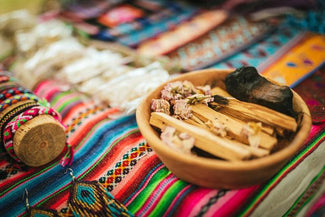
Frankincense comes from Boswellia trees, particularly species growing in north-east Africa, the Arabian Peninsula and India. Its resin is commonly pale gold, yellow, amber or off-white.
Myrrh comes from Commiphora trees, most notably Commiphora myrrha, associated with north-east Africa and the Arabian Peninsula. Its resin is generally darker, ranging from reddish brown to deep mahogany.
Although they share a long history as sacred aromatics, their fragrances are noticeably different.
| Feature | Frankincense | Myrrh |
|---|---|---|
| Botanical source | Boswellia species | Commiphora species |
| Resin appearance | Pale gold, cream, yellow or amber | Reddish brown to dark brown |
| Typical aroma | Fresh, citrusy, pine-like, woody and balsamic | Earthy, warm, bitter, smoky and resinous |
| Fragrance character | Often brighter and more uplifting | Often deeper and more contemplative |
| Traditional associations | Purification, prayer, clarity and spiritual connection | Grounding, protection, remembrance and reflection |
| Common ritual settings | Meditation, prayer, cleansing and sacred-space preparation | Evening ritual, contemplation, remembrance and altar work |
| Blending qualities | Adds brightness and freshness | Adds depth, warmth and richness |
These descriptions are useful starting points rather than fixed rules.
Natural resins vary according to species, growing conditions, origin, harvest, age and storage. Different varieties of frankincense can smell surprisingly different from one another, and the same is true of myrrh.
The way they are heated also changes the fragrance.

What Does Frankincense Smell Like?
Frankincense is often described as fresh, woody, citrusy and resinous.
Depending on the variety, its aroma may include notes reminiscent of lemon peel, pine needles, warm wood, pepper or soft balsamic sweetness.
Some frankincense varieties are noticeably bright and sparkling, while others are warmer, deeper and more rounded.
This variation is part of the appeal of natural resin incense.
When gently heated, frankincense can produce an inviting fragrance that feels spacious and clear without necessarily being overpowering.
For those familiar with traditional church incense, the aroma may feel recognisable, although many church incense blends contain additional resins and aromatic ingredients.
Frankincense is often a welcoming starting point for people moving from incense sticks towards loose natural resins.
One variety to explore is Frankincense Superior Hojari Gum Resin Incense 25g.
What Does Myrrh Smell Like?
Myrrh has a distinctly different character.
Its fragrance is generally warmer, darker and more earthy, often with a characteristic bitterness beneath its resinous sweetness.
Some people notice smoky, leathery, medicinal, woody or liquorice-like notes.
Where frankincense can feel bright and expansive, myrrh often creates a richer, more intimate atmosphere.
It can be particularly appealing to those who enjoy deep resinous fragrances rather than light floral or citrus aromas.
Myrrh may also take a little more getting used to.
Its scent is distinctive, and someone who enjoys frankincense will not necessarily enjoy myrrh in the same way.
Starting with a small amount allows you to discover its character without overwhelming the room.
If you would like to explore this fragrance in resin form, there is Myrrh Resin Incense 30g.

The Ancient History of Frankincense and Myrrh
Frankincense and myrrh have remarkable histories stretching back thousands of years.
Both were valuable commodities in ancient trade networks linking southern Arabia, the Horn of Africa, the Mediterranean and neighbouring regions.
Their importance extended far beyond fragrance.
In ancient Egypt, aromatic resins featured in religious observance, preparations associated with burial and embalming, and the production of perfumes and incense.
Across Arabia and parts of Africa, these resins became closely connected with trade, hospitality, personal fragrance and established cultural practices.
Frankincense was especially important along the incense routes that connected producing regions with markets across the ancient world.
Myrrh also held considerable value, appearing in perfumery, traditional preparations and ceremonial contexts.
Both resins became significant within Jewish and Christian religious traditions.
They are particularly familiar in Christianity through the biblical account of the gifts of gold, frankincense and myrrh presented to Jesus.
Frankincense remains associated with prayer and worship in several Christian traditions, while both resins continue to appear in incense blends and ceremonial preparations.
Their uses have varied considerably across cultures and centuries.
It is important to recognise these histories rather than treating frankincense and myrrh as though they belong to one universal spiritual tradition.
Today, people may appreciate them for religious observance, personal ritual, fragrance, historical interest or simply the pleasure of natural incense.
Their Traditional Spiritual Associations
Many practitioners choose frankincense for meditation, prayer, altar work and energy cleansing.
Its fresh, rising fragrance is traditionally associated with purification, spiritual connection and bringing focus to a scattered mind.
It may suit a morning practice, preparing a sacred space or creating a quiet transition between everyday responsibilities and personal reflection.
Myrrh is often chosen for grounding, protection, remembrance and contemplative ritual.
Its deeper fragrance may appeal to people exploring themes of reflection, endings, grief, ancestor remembrance or simply settling into a quieter evening.
These are traditional and personal associations, not guaranteed effects or fixed rules.
Some people find myrrh deeply comforting, while others prefer it only in small amounts.
There is a useful contrast here.
Frankincense is often associated with opening and uplifting a space, while myrrh is traditionally linked with grounding and depth.
For a personal ritual that brings both qualities together, blending them can be a meaningful choice.
How Frankincense and Myrrh Smell When Burned
Unburned resin gives only a hint of its full fragrance.
As the resin warms, aromatic compounds are released and the scent begins to develop.
Frankincense often releases brighter notes first, followed by warmer woody and balsamic aromas.
Myrrh may begin with a sharper, slightly bitter character before developing its richer, sweet-earthy fragrance.
The temperature makes a considerable difference.
A hot charcoal disc can produce a strong release of fragrance and smoke, but excessive heat may overwhelm delicate aromatic notes and cause the resin to scorch.
A little resin goes a long way.
Begin with a small piece and add more only if the fragrance remains comfortable.
For a different experience, a suitable tealight resin burner or electric incense warmer may allow the resin to heat more gradually.
Depending on the design and temperature, this can reveal different aspects of the fragrance, although it does not guarantee a smoke-free experience.
Charcoal is often chosen for traditional incense burning and ceremonial use, particularly where visible smoke forms part of the practice.
A resin warmer may appeal to someone who wants to explore the fragrance itself with greater control over the heating process.
Whichever method you choose, suitable equipment, ventilation and careful supervision are essential.
How to Choose Between Frankincense and Myrrh
The simplest approach is to begin with the fragrance you enjoy.
Traditional associations can offer inspiration, but your own response to an aroma is equally important.
Choose frankincense if you enjoy:
- Fresh, woody and citrus-like fragrances.
- Traditional incense associated with prayer and meditation.
- A brighter aromatic atmosphere.
- Exploring natural resins for the first time.
- Fragrance for a morning or daytime personal ritual.
Choose myrrh if you enjoy:
- Richer, earthier and more resinous fragrances.
- Warm, slightly bitter aromatic notes.
- Contemplative or reflective evening practices.
- Traditional associations with grounding and remembrance.
- A deeper fragrance for an altar or quiet personal space.
Consider the room as well as the intention.
In a compact room, a small amount of either resin may be sufficient. Larger spaces may allow the fragrance to disperse more widely, but this is not a reason to burn excessive quantities.
Ventilation matters regardless of the resin or room size.
There is also no need to make a permanent choice.
Many people enjoy keeping both resins and choosing according to the moment.

Can You Burn Frankincense and Myrrh Together?
Yes. Frankincense and myrrh have a long history of appearing together in incense preparations and aromatic blends.
Their fragrances complement one another because they bring different qualities to the mixture.
Frankincense can add brightness, freshness and a slightly citrusy lift.
Myrrh contributes warmth, depth and an earthy, resinous character.
Together, they can create a rounded fragrance that is neither as bright as frankincense alone nor as dark as pure myrrh.
For someone beginning to explore blending, a small quantity is the best approach.
A Frankincense-Led Blend
Try approximately two parts frankincense to one part myrrh.
This allows the fresher character of frankincense to remain prominent while myrrh adds a deeper background note.
It may appeal to those who enjoy a balanced fragrance for meditation, prayer or quiet reflection.
A Myrrh-Led Blend
Try approximately two parts myrrh to one part frankincense.
This produces a more earthy and resinous character, with frankincense contributing some brightness.
It may suit someone who already enjoys myrrh's distinctive fragrance.
These are starting proportions, not prescribed ritual formulas.
Begin with a very small total quantity, using equipment designed for resin incense, and adjust according to personal preference.
You may discover that equal amounts suit you better, or that a tiny addition of myrrh is enough to change the character of frankincense.
Keep a simple note of the resins used, their proportions and how you experienced the fragrance.
Over time, your own preferences become more useful than any general description.
Choosing Loose Resin, Incense Sticks or Essential Oils
Frankincense and myrrh appear in several different types of aromatic products.
Understanding the differences helps you choose the most suitable format.
Loose Resin Incense
Natural resin tears or pieces are the traditional choice for burning on suitable charcoal or heating in a purpose-designed resin burner.
They offer a direct experience of the raw aromatic material, with natural variations in fragrance.
Loose resins may appeal to those who enjoy traditional incense preparation, ceremonial burning or experimenting with different varieties.
Incense Sticks and Cones
Incense sticks and cones provide a convenient alternative for everyday use.
They may contain frankincense or myrrh alongside other aromatic materials, wood powders, binders or fragrance ingredients.
The resulting scent will depend on the formulation rather than the resin alone.
They can be a practical choice for someone who enjoys incense but does not want to prepare charcoal or work with loose resin.
For this format, you might explore Frankincense Incense Sticks 15g or Myrrh Incense Sticks 15g, remembering that each stick's fragrance reflects its complete formulation.
Frankincense and Myrrh Essential Oils
Essential oils are concentrated aromatic extracts, not resin tears.
They may be used in a suitable diffuser according to the product instructions or in properly diluted preparations where the product is intended for that use.
They should not be poured onto burning charcoal or treated as loose incense.
Essential oils also require particular care around children, pets, pregnancy and people with relevant health conditions or fragrance sensitivities.
Do not ingest essential oils or apply them undiluted to the skin unless a suitably qualified professional and the product's specific directions establish that the use is appropriate.
For someone interested primarily in traditional incense fragrance, loose resin is often the most direct starting point.
For convenience, incense sticks or cones may be preferable.
How to Burn Frankincense and Myrrh Safely
Burning natural resin can be a simple practice, but it involves heat, smoke and equipment that must be used carefully.
Choose a suitable incense burner designed for the method you intend to use.
For charcoal burning, use a stable, fireproof incense vessel with an appropriate insulating layer, such as suitable sand or ash, where recommended by the burner manufacturer.
Self-igniting charcoal discs become extremely hot.
Use appropriate tongs and follow the charcoal manufacturer's lighting and readiness instructions before adding a small amount of resin.
Never hold burning charcoal in your hands or place it directly on an unprotected surface.
For tealight or electric resin warmers, follow the equipment manufacturer's directions regarding suitable resins, heating temperatures and quantities.
Keep all burning incense away from curtains, paper, textiles and other combustible materials.
Provide ventilation, avoid inhaling concentrated smoke and keep equipment out of reach of children and animals.
People with asthma, respiratory conditions or smoke sensitivities may find burning incense unsuitable. If fragrance causes discomfort, stop using it.
Never leave charcoal, candles or incense unattended, and allow everything to cool completely before handling or disposal.
A meaningful ritual should always include practical care.
Read our charcoal disc safety guidance and our guide to burning resin incense for more detail.
A Simple Frankincense or Myrrh Ritual
You do not need elaborate tools or a prescribed belief system to enjoy natural resin incense.
Sometimes a small amount of fragrance and a few minutes of attention are enough.
Begin by choosing the resin that appeals to you.
Perhaps frankincense for a brighter, more open atmosphere, or myrrh for a warmer, more reflective setting.
Prepare a suitable incense burner safely, following its instructions, and allow a small amount of resin to release its fragrance.
You might choose a simple intention:
I welcome a moment of clarity.
I make space for quiet reflection.
I release the busyness of the day.
There is no need to force a particular feeling or experience.
You might sit comfortably, notice your natural breathing or spend a few minutes journalling.
Frankincense may appeal before meditation, prayer or tarot reading.
Myrrh may feel appropriate for an evening pause, remembrance or quiet contemplation.
If you enjoy combining the two, allow their fragrances to become part of your personal practice without expecting a particular spiritual outcome.
The intention is not to make the ritual complicated.
It is simply to create a moment that feels considered.

Is Frankincense Better Than Myrrh?
Neither resin is universally better.
Frankincense and myrrh have different aromatic qualities, histories and traditional associations.
Someone who loves the bright, citrusy character of frankincense may find myrrh too earthy or intense.
Another person may appreciate myrrh's warmth and depth while finding frankincense less suited to their preferences.
The best choice depends on what you enjoy and how you intend to use it.
If you are uncertain, trying a small amount of each is often the most useful way to decide.
Frequently Asked Questions About Frankincense and Myrrh
What is the main difference between frankincense and myrrh?
Frankincense comes from Boswellia trees and generally has a fresher, woody, citrus-like fragrance. Myrrh comes from Commiphora trees and is usually warmer, earthier, more bitter and resinous. They also have different traditional spiritual associations.
Which smells better, frankincense or myrrh?
This is entirely personal. Frankincense often appeals to people who enjoy fresh, woody incense, while myrrh may suit those who prefer richer, darker fragrances.
Can frankincense and myrrh be burned together?
Yes. They can be combined in small amounts in a suitable resin incense burner. Frankincense contributes brightness, while myrrh adds warmth and depth.
Is frankincense or myrrh better for meditation?
Both have been used in religious and contemplative settings. Frankincense is often associated with clarity and spiritual connection, while myrrh is traditionally linked with grounding and reflection. Choose the fragrance you find most comfortable.
Are frankincense and myrrh the same as incense sticks?
No. Frankincense and myrrh are natural tree resins. Incense sticks may contain these resins alongside other ingredients, so the fragrance and burning experience can be different.
Do frankincense and myrrh have healing properties?
Both have histories of traditional medicinal use, and their constituents have been studied scientifically. However, burning incense should not be regarded as a treatment for illness or a substitute for medical care. Spiritual and aromatic associations are not evidence of clinical benefits.
Is it safe to burn frankincense and myrrh indoors?
Burning either resin produces airborne emissions, including smoke and fine particles. Appropriate ventilation and fire safety are important, and people with respiratory conditions or sensitivities may need to avoid smoke-based incense entirely. A resin warmer may change the heating experience but does not automatically eliminate emissions.
Which resin should a beginner choose?
Frankincense is often a good starting point because its brighter, woody fragrance may feel more familiar. However, someone who enjoys earthy and bitter aromatic notes may prefer myrrh. A small quantity of each allows you to compare them without committing to a large amount.
Explore Further with Sacred Essence
Frankincense and myrrh have travelled through centuries of religious tradition, aromatic practice and cultural exchange.
Today, their appeal can be wonderfully simple.
A carefully chosen fragrance, a moment of quiet and a personal space prepared with intention.
At Sacred Essence, we offer a wide selection of incense, natural aromatic materials and ritual essentials for those exploring traditional fragrances and mindful practices.

Continue Your Journey
Explore more blogs
about incense, fragrance and mindful ritual:
- What Is Dragon's Blood Incense?
- Nag Champa Incense: Uses, Benefits and Popularity
- Best Incense for Every Mood
Sacred Essence Guides
For those wishing to explore collections further:
- Resin Incense & Charcoal Discs Guide
- Incense Sticks Guide
- Incense Cones Guide
- Energy Cleansing Explained
- Creating a Sacred Space
Visit Us in the Lake District
Sacred Essence is a family-run spiritual and holistic shop established in 2006, based in the village of Coniston in the heart of the Lake District.
Whether you are discovering natural resins for the first time or exploring new fragrances for an established practice, we welcome you to browse our incense and ritual collections.
Visit our Lake District shop in Coniston or explore our spiritual and holistic products online.

A Final Thought
Frankincense and myrrh have been valued for thousands of years, yet their beauty does not depend on an elaborate ceremony.
Frankincense may bring brightness to a quiet morning. Myrrh may offer a deeper fragrance for an evening of reflection.
Together, they can create something beautifully balanced. ✨
But the most meaningful choice is often the one that feels right for you.
“Sometimes the value of a ritual is not in what we add to it, but in the moment of attention we create around it.”
Sacred Essence 🌈