



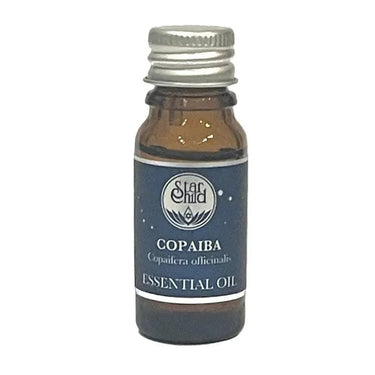
Huile essentielle de Copaïba 10ml – Copaifera officinalis
Huile Essentielle de Copaïba • Huile d'aromathérapie chaude et balsamique pour le calme, le confort et un ancrage doux

Cette huile essentielle de copaïba est distillée à partir de l'oléorésine des arbres tropicaux Copaifera, appréciés pour leur caractère balsamique riche et leur longue utilisation traditionnelle en aromathérapie et en création de parfums. Avec son arôme légèrement doux, chaud et légèrement épicé, le copaïba est souvent choisi pour créer une sensation de confort, de calme et d'ancrage facile.

L'huile est couramment utilisée dans les diffuseurs, les mélanges d'huiles, les savons, les parfums et les rituels d'aromathérapie personnels, où son doux parfum balsamique ajoute de la chaleur sans être trop lourd. Elle se marie particulièrement bien avec le cananga, l'ylang-ylang, la violette, le jasmin, l'hélichrysum, la sauge sclarée et la vanille.

Détails du produit :

  • Design : Huile essentielle de copaïba en flacon de 10 ml
  • Nom botanique : Copaifera officinalis
  • Matériau : Huile essentielle de copaïba distillée à partir d'oléorésine d'arbre
  • Arôme : Légèrement balsamique, doux-poivré, chaud et légèrement épicé
  • Signification : Traditionnellement associée au confort, à l'ancrage et à la stabilité émotionnelle
  • Taille : 10 ml
  • Utilisation : Aromathérapie, diffuseurs, mélanges d'huiles, savons, parfums et parfums d'ambiance
  • Origine : Royaume-Uni
  • Vendu comme : Prix à l'unité

Étant donné que l'huile de copaïba peut provenir de différentes espèces de Copaifera, une légère variation d'arôme et de composition peut se produire entre les lots.

Copaiba Essential Oil for Aromatic & Ritual Practice

Copaiba essential oil originates from the oleoresin held within Copaifera trees.

The resinous material is collected from the tree and processed to obtain the aromatic oil. Because Copaifera is a wider genus containing several species, the exact aromatic profile of commercial copaiba oils can vary according to species, growing conditions and processing.

The supplied botanical name for this oil is Copaifera officinalis.

What Does Copaiba Essential Oil Smell Like?

The aroma is warm and balsamic with a lightly sweet, woody character and a gentle peppery edge.

It is considerably softer than many people expect from a resin-derived oil. Rather than smelling aggressively smoky or heavy, copaiba tends to sit quietly within a blend and give other ingredients warmth and depth.

This makes it useful where you want a grounding resinous quality without overwhelming more delicate fragrances.

Traditional & Magical Associations

Within contemporary magical practice, copaiba has been associated with protection, grounding and ritual strength.

Older Star Child material also links it with counter-magic and protection from fear or anxious states. It is better understood today as symbolic ritual language rather than a claim that the oil can prevent or treat anxiety.

Its warm balsamic scent may be used when creating a ritual atmosphere centred on steadiness, boundaries or quiet reflection.

Aromatic Use

Copaiba may be used in a suitable diffuser or oil burner according to the appliance and product instructions.

It can also form part of fragrance and perfume-style blends, where its soft balsamic character works especially well beneath floral or sweet notes.

For a warmer floral blend, combine it with Ylang Ylang or Jasmine. For something softer and sweeter, pair it with Vanilla. Clary Sage can bring out more of its herbal side.

A Simple Grounding Ritual

Diffuse a small amount of copaiba while settling into meditation, journalling or quiet reflection.

Rather than expecting the fragrance to produce a particular emotional state, allow its warm resinous aroma to become a sensory cue for slowing down and returning attention to the present practice.

This can be especially useful when creating a regular evening or reflective ritual.

Quick FAQs

What does Copaiba Essential Oil smell like?
Warm, balsamic and lightly sweet, with woody and gently peppery notes.

What is Copaiba Essential Oil made from?
It is obtained from the oleoresin produced by Copaifera trees.

What botanical name is supplied for this oil?
Copaifera officinalis.

What blends well with Copaiba?
Cananga, Ylang Ylang, Violet, Jasmine, Helichrysum, Clary Sage and Vanilla are particularly suitable companions.

Can Copaiba be used in a diffuser?
Yes, according to the current product label and the instructions for your diffuser or oil burner.

Can it be applied directly to the skin?
No. Essential oils should not be applied neat unless the product directions specifically state otherwise. Use appropriate dilution and follow the current label.

Is Copaiba traditionally associated with protection?
Yes. Within magical and metaphysical traditions it has been associated with protection and grounding. These are symbolic correspondences rather than guaranteed effects.

Care & Safety

Use according to the current product label. Essential oils are concentrated aromatic materials and should be handled carefully.

Do not ingest. Avoid contact with the eyes, mucous membranes and broken skin. Do not apply undiluted to the skin. Keep out of reach of children and pets.

If topical use is permitted by the product label, dilute appropriately in a suitable carrier oil and patch test first. Discontinue use if irritation occurs.

If pregnant, breastfeeding, under medical care or particularly sensitive to essential oils, seek appropriate professional advice before use.

Please Note

Traditional references to protection, grounding, counter-magic or emotional steadiness belong to historical and metaphysical practice rather than scientifically established effects.

This product is intended for appropriate aromatic and ritual use and is not presented as a treatment for anxiety, fear or any medical or psychological condition.

Commandes et expédition
Les commandes passées avant 15h00 sont traitées et expédiées le jour même. Nous livrons dans le monde entier.

Informations de suivi
Veuillez suivre votre colis à l'aide des informations de suivi fournies dans votre e-mail de confirmation d'expédition. Le suivi est généralement mis à jour dans les 24 heures suivant l'expédition et se poursuit jusqu'à ce que la livraison soit confirmée.

Droits de douane et taxes
Les droits de douane et taxes de l'UE et internationaux sont à la charge du client et doivent être payés localement, le cas échéant. Pour les clients non britanniques, la taxe britannique est automatiquement supprimée à la caisse une fois la destination d'expédition sélectionnée.

Retards douaniers
Certaines commandes internationales peuvent être retardées en raison de contrôles douaniers, qui échappent à notre contrôle. Les retards peuvent être plus longs pendant les périodes de forte activité.

Retours
Pour les commandes ayant bénéficié de la livraison gratuite, les articles retournés peuvent être soumis aux frais d'expédition initiaux et aux éventuels frais de collecte.

Commandes internationales refusées ou annulées
Les commandes internationales qui sont refusées, retournées puis annulées peuvent être soumises à une surtaxe de 10 %. Les colis peuvent être réexpédiés sur demande, bien que des frais supplémentaires puissent s'appliquer.