A Deep, Earthy Evening Aroma
Valerian’s scent is distinctive. It carries damp-earth, root, wood and balsamic notes with a slightly bitter sweetness underneath.
Many people choose it when they want a fragrance that feels heavy, settling and inward. It may suit evening routines, slow meditation, quiet reading or moments when the aim is to step away from daytime stimulation.
Because the aroma is so strong, it is often more enjoyable when blended rather than used alone.
Calm, Grounding & Letting Go
In aromatherapy, Valerian is traditionally associated with rest, calm and emotional settling.
Its grounding character may suit intentions around:
- unwinding after a busy day
- creating an evening atmosphere
- releasing mental overactivity
- slowing the pace of a room
- supporting quiet meditation
- preparing for rest
These are traditional aromatic associations rather than medical claims.
Blending Valerian Essential Oil
Valerian blends well with oils that soften its earthy intensity.
It may be paired with:
- Lavender for a gentler evening blend
- Sweet Orange for warmth and brightness
- Frankincense for depth and meditation
- Cedarwood for a rich woody base
- Roman Chamomile for a softer calming character
Start with one drop of Valerian and build the blend slowly. Its fragrance can easily dominate lighter oils.
Diffuser Use
Add a very small amount to a diffuser, following the manufacturer’s instructions.
A simple evening blend could combine:
- 1 drop Valerian
- 3 drops Lavender
- 2 drops Sweet Orange
Diffuse for a short period in a well-ventilated room.
Do not run continuously or place the diffuser close to the face, bed, babies, children or pets.
Personal Ritual Use
Valerian may be used as an aromatic marker for the end of the day.
Dim the lights, open a window slightly and add a small amount to a diffuser. Let the fragrance settle while you sit quietly or write down what you are ready to leave behind.
You may repeat:
“The day is complete. I release what can wait and return to stillness.”
Its role is to create atmosphere and intention rather than guarantee sleep or emotional change.
Dilution for Skin Use
Do not apply Valerian essential oil directly to the skin.
Dilute it in a suitable carrier oil before topical use and begin with a low concentration because of its strong aroma.
Always carry out a patch test first and stop use if irritation occurs.
Avoid using on broken, inflamed or highly sensitive skin unless advised by a qualified aromatherapy or healthcare professional.
Natural Variation
As a natural botanical oil, Valerian may vary slightly between batches.
Changes in colour, intensity, earthiness and balsamic depth can occur according to harvest conditions and production.
These natural differences are expected.
Quick FAQs
What does Valerian essential oil smell like?
It has a dark, earthy-musty and balsamic scent with a bitter-sweet undertone.
Is it a floral fragrance?
No. It is a deep, root-like oil with a strong and unusual aroma.
Can it be used in a diffuser?
Yes, but use it sparingly and follow the diffuser manufacturer’s instructions.
Is it suitable for evening use?
Yes. It is commonly chosen for evening aromatherapy, grounding and quiet relaxation rituals.
Can it be applied directly to the skin?
No. It must be diluted in a suitable carrier oil before topical use.
What blends well with Valerian?
Lavender, Sweet Orange, Frankincense, Cedarwood and Roman Chamomile can help soften and balance its aroma.
Safety
For external and aromatic use only.
Do not swallow or apply undiluted to the skin.
Avoid contact with the eyes and other sensitive areas.
Use only in a well-ventilated room and avoid breathing concentrated vapour directly.
Keep away from babies, children and pets.
Those who are pregnant, breastfeeding, taking medication or living with a medical condition should seek professional advice before use.
Avoid use before driving, operating machinery or carrying out tasks requiring full alertness if the aroma makes you feel drowsy.
Store tightly closed in a cool, dark place away from heat and direct sunlight.
Disclaimer
This essential oil is intended for aromatherapy, fragrance and properly diluted topical use. References to calm, rest or relaxation describe traditional aromatic associations and are not medical claims. It is not intended to diagnose, treat, cure or prevent disease.




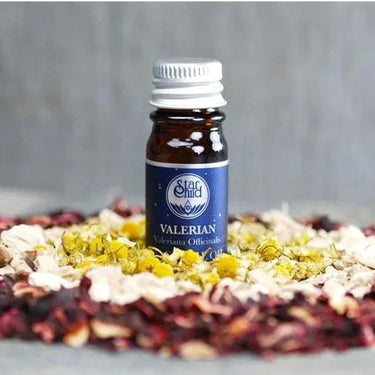

 Huile Essentielle de Valériane 5ml – Huile d'Aromathérapie, Sommeil et Calme
£14.95
/
Huile Essentielle de Valériane 5ml – Huile d'Aromathérapie, Sommeil et Calme
£14.95
/