The Meaning of Nada Yoga
The name Nada Yoga comes from two Sanskrit words.
Nāda refers to sound, tone or resonance.
Yoga derives from the root yuj, meaning to join or yoke, and in this context points towards disciplined practice and union.
Together, Nada Yoga is commonly described as “the yoga of sound.”
The practice turns listening itself into a form of meditation.
Rather than treating sound as background, attention is placed on the tone as it begins, changes, develops and finally disappears.
A singing bowl is beautifully suited to this approach because its resonance naturally creates that journey from sound into silence.
A Larger Bowl for Deeper Listening
The 20cm Nada Yoga bowl has considerably more scale than the smaller 11–12cm version.
Its greater diameter and weight give it more physical presence and generally allow a broader, fuller-feeling sound to develop.
Handmade bowls naturally vary, so size alone does not determine pitch or musical note, but larger bowls of comparable construction often feel deeper and more spacious in their resonance.
That makes this version especially appealing when you want sound to fill more of the room rather than remain closely centred around the player.
Hand-Beaten Character & Resonance
Each bowl is individually shaped and finished by hand.
Small irregularities in the surface, hammer pattern and rim are not flaws; they are part of what distinguishes a hand-beaten instrument from a perfectly uniform cast bowl.
Those differences also contribute to each bowl having its own voice.
With a 20cm diameter and close to a kilogram of weight, this version has enough substance to produce a satisfying resonance that can linger after the initial strike.
How to Play the Nada Yoga Bowl
Place the bowl on a flat open palm or suitable singing-bowl cushion, allowing the sides to remain free to vibrate.
A gentle strike near the outer rim will awaken the initial tone.
You can then simply listen as the sound unfolds and fades, or move the striker slowly around the outside of the rim using smooth, even pressure to encourage a continuous singing tone.
Larger bowls can take a little more patience when played around the rim. A consistent pace and steady contact are usually more effective than pressing hard.
The aim is not to force the sound but to find the point where the bowl naturally begins to sing.
The Included Striker
A striker or beater is included, although the exact style may vary.
Wood generally brings out a clearer initial attack, while felt, suede or velour surfaces can soften the strike and create a warmer response.
If your striker offers more than one usable surface, trying both can reveal very different aspects of the bowl.
With a larger bowl, these tonal differences can become particularly noticeable.
Meditation, Yoga & Mindful Listening
A bowl of this size works beautifully when sound itself is intended to become part of the meditation space.
One strike can mark the beginning of practice.
The sustained resonance provides a focus for attention.
The final fading tone naturally leads back into quiet.
It may be used before or after yoga, during breathwork, alongside meditation or simply as a ritual sound to open and close a sacred or contemplative space.
Sound Healing & Contemporary Wellbeing Practice
“Singing bowl sound healing” is widely used to describe contemporary practices centred on tone, resonance, vibration and attentive listening.
This larger Nada Yoga bowl can be incorporated into those settings, particularly where a fuller and more sustained acoustic presence is preferred.
Its tangible qualities are its resonance, audible harmonics and physical vibration.
Claims that a singing bowl directly heals the body, removes negative energy or produces specific medical or psychological outcomes should instead be understood as spiritual or contemporary wellbeing beliefs rather than established therapeutic effects.
Chakra & Spiritual Practice
Singing bowls are also commonly used within contemporary chakra and energy-based practice.
Larger bowls are sometimes chosen when practitioners want a fuller or more grounding acoustic presence, but bowl size does not automatically correspond to a particular chakra.
No fixed musical note or chakra tuning has been supplied for this bowl.
It is therefore better approached as a versatile meditation and sound instrument that can be incorporated into whichever contemplative or spiritual practice feels appropriate to the user.
Sound Returning to Silence
The deeper identity of the Nada Yoga bowl is not simply the sound it creates.
It is what happens after the sound begins.
The strike opens the space.
The resonance expands.
The harmonics shift.
Then everything gradually disappears back into quiet.
With the larger 20cm bowl, that transition can feel particularly spacious — giving the listener more time to remain with the tone before silence returns.
Small or Large Nada Yoga Bowl?
The 11–12cm Nada Yoga bowl is compact, bright and intimate, making it particularly convenient for personal meditation, small altars and everyday practice.
The 20cm Nada Yoga bowl feels more substantial, with greater physical presence and a broader sense of resonance.
The larger version is particularly suited to meditation rooms, yoga studios, treatment spaces or practitioners who simply prefer a fuller sound.
Neither size is inherently better. They offer two different ways of experiencing the same central idea: attentive listening as meditation.
Care
Wipe the bowl gently with a soft dry cloth after use.
Avoid harsh chemical cleaners, abrasive pads and prolonged exposure to moisture.
Protect the rim from hard knocks, as the rim plays an important part in the bowl's response and resonance.
Because this version is heavier, place it securely when not in use and lift it with both hands if needed.
Quick FAQs
How large is the Nada Yoga bowl?
Approximately 20cm in diameter and around 6cm high.
How much does it weigh?
Approximately 850g–1kg.
What does Nada Yoga mean?
Nada Yoga is commonly described as “the yoga of sound.” Nāda means sound or resonance, while yoga refers to union or disciplined practice.
How does the 20cm bowl differ from the smaller Nada Yoga bowl?
It has considerably more weight and physical presence and will generally offer a fuller, broader sense of resonance, although every handmade bowl is acoustically individual.
Is Nada Yoga Tibetan?
Nada Yoga is rooted in Indian yogic tradition. The bowl itself is a Himalayan-style singing bowl made in India and associated with the wider Tibetan and Himalayan singing-bowl tradition.
Is it handmade?
Yes. Each bowl is individually hand beaten and finished in India.
Does it include a striker?
Yes. A striker or beater is included, although the exact style may vary.
Can it be used for sound healing?
Yes, it can be incorporated into contemporary sound-healing and wellbeing practice, although this should not be understood as a medical treatment.
Is it tuned to a specific chakra or musical note?
No specific tuning has been supplied, so we would not claim a fixed chakra or note.
NB
As this bowl is individually hand beaten and finished, slight variations in size, weight, surface texture, hammer markings, rim shape, finish and tone are to be expected.
These handcrafted differences give each bowl its own individual character and are not considered faults.
Please Note / Disclaimer
Nada Yoga is an Indian yogic tradition centred on sound, listening and contemplative awareness.
References to sound healing, chakra work, energy practice, meditation or spiritual alignment describe traditional, symbolic or contemporary wellbeing practices.
This singing bowl is not intended to diagnose, treat or cure any medical or psychological condition.





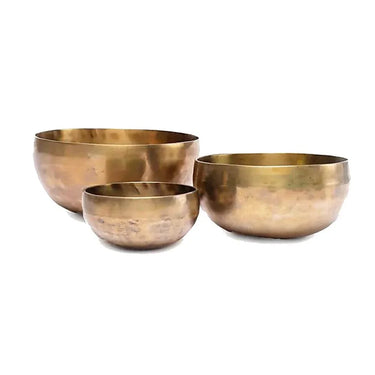


 Bol Chantant Nada Yoga 20cm – Bol Tibétain de Méditation pour Sonothérapie avec Maillet
£154.00
/
Bol Chantant Nada Yoga 20cm – Bol Tibétain de Méditation pour Sonothérapie avec Maillet
£154.00
/