


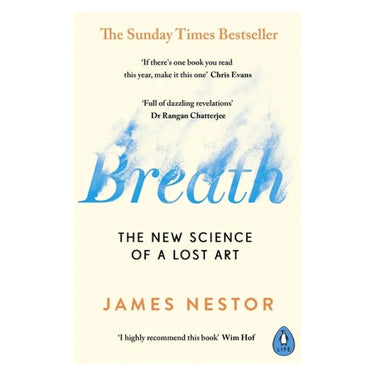
LE BEST-SELLER INTERNATIONAL PHÉNOMÉNAL ENTENDU DANS L'ÉMISSION « DIARY OF A CEO » DE STEVEN BARTLETT « Qui aurait cru que quelque chose d'aussi simple que changer notre façon de respirer pouvait être si révolutionnaire pour notre santé, du ronflement aux allergies en passant par l'immunité ? Un livre fascinant, plein de révélations éblouissantes » Dr Rangan Chatterjee

Il n'y a rien de plus essentiel à notre santé et à notre bien-être que la respiration : inspirer, expirer, répéter 25 000 fois par jour. Pourtant, en tant qu'espèce, les humains ont perdu la capacité de respirer correctement, avec de graves conséquences. Dans Souffle, le journaliste James Nestor parcourt le monde pour découvrir la science cachée derrière les anciennes pratiques de respiration afin de comprendre ce qui n'a pas fonctionné et comment y remédier.


  • Livre de poche
  • 280 pages
  • Penguin Hay House Publications - Le premier éditeur mondial d'ouvrages sur l'esprit, le corps et l'âme
  •  Le best-seller n°1 du Sunday Times
  • Auteur de renom

Citation :

  • « Je recommande vivement ce livre » Wim Hof


À propos de l'auteur :


James Nestor a écrit pour Scientific American, Outside Magazine, Men's Journal, National Public Radio, The New York Times, et plus encore. Son livre, Deep: Freediving, Renegade Science, and What The Ocean Tells Us About Ourselves, a été finaliste du prix PEN American Center du meilleur livre sportif de l'année et un Book of the Week de BBC Radio 4. Nestor est apparu dans des dizaines d'émissions de radio et de télévision nationales, notamment Nightline d'ABC, CBS Morning News et NPR. Il vit et respire à San Francisco.

Science, History & Ancient Breathing Practices

A major part of Breath is the connection Nestor draws between modern respiratory research and breathing practices with much older roots.

The book explores how people have deliberately altered breathing for centuries through traditions involving meditation, prayer, physical training and contemplative practice.

Nestor compares these approaches with research into respiratory physiology and investigates why seemingly small changes in breathing pattern can affect how breathing feels and how the body responds.

The result is part science journalism, part history and part personal investigation.

Breathing, Sleep & Snoring

Sleep is one of the prominent themes in the book.

The supplied description highlights Nestor's exploration of breathing in relation to healthy sleep patterns and snoring.

He investigates the role of the airway, breathing habits and nasal versus mouth breathing, presenting research and observations that challenge readers to pay closer attention to something normally performed without thought.

The book may be useful for understanding the topic, but persistent snoring, sleep apnoea or breathing difficulties require professional medical assessment rather than self-treatment through breathing exercises alone.

Exercise & Physical Performance

Breath also considers the relationship between breathing and exercise.

Nestor examines how breathing rate, rhythm and technique may affect the experience of physical activity and looks at practices used by athletes and others who deliberately train their breathing.

This does not mean there is one universal breathing method for every type of exercise.

Instead, the book introduces readers to the idea that breathing can be trained and observed rather than treated as something completely outside conscious influence.

Nasal Breathing & Breathing Habits

One of the recurring subjects in Breath is the distinction between breathing through the nose and breathing through the mouth.

Nestor explores why nasal breathing has received attention in both traditional practices and modern respiratory research, as well as what can happen when breathing habits change.

This is one of the reasons the book has appealed not only to readers interested in wellness, but also to those curious about sleep, sport and human physiology.

People with chronic nasal obstruction or respiratory conditions should seek qualified medical guidance rather than forcing a particular breathing method.

A Book About Breathing Rather Than a Quick-Fix Programme

Although Breath contains practical ideas and examples, it is best understood as an investigative book rather than a promise that one breathing technique will solve every health problem.

Nestor presents a wide range of research, experiments and traditional practices and encourages readers to reconsider assumptions about an automatic biological process.

That makes the book particularly suitable for readers who enjoy popular science that moves between physiology, history and personal experience.

What the Book Explores

Across its 280 pages, Breath looks at subjects including breathing mechanics, nasal and mouth breathing, sleep, snoring, physical performance and historical breathing techniques.

It also examines how different cultures have developed deliberate breathing practices and why modern researchers have returned to some of the same questions.

The supplied promotional description goes further by referring to allergies, asthma, immunity and autoimmune disease. Those subjects should be approached carefully: breathing practices may be an area of research or supportive wellbeing practice, but they should not be treated as proven replacements for medical treatment.

Why Breath Became So Widely Read

Part of the book's appeal is the familiarity of its subject.

Everyone breathes continuously, yet most people spend very little time thinking about how breathing works.

Nestor turns that everyday function into a broader investigation involving anatomy, evolution, sport, sleep and traditional practice.

The supplied description also notes that the book has received prominent recommendations and media attention, including discussion on Steven Bartlett's Diary of a CEO and a recommendation from Wim Hof.

Who May Enjoy This Book?

Breath may appeal particularly to readers interested in popular science, human biology, sleep, exercise and evidence-informed wellbeing.

It may also suit those curious about meditation or traditional breathing practices who want to understand how these ideas are discussed alongside modern scientific research.

Readers looking for a purely clinical respiratory textbook should be aware that the book is written as accessible investigative journalism rather than as a medical reference work.

Quick FAQs

What is Breath: The New Science of a Lost Art about?
It is an investigative nonfiction book by James Nestor examining breathing, respiratory science, sleep, exercise and historical breathing practices.

Who wrote Breath?
Journalist and author James Nestor.

How long is the book?
The supplied product information lists 280 pages.

What format is it?
Paperback.

Is Breath a self-help book?
It contains practical ideas, but its main format is investigative popular science combining research, history and personal experimentation.

Does the book discuss nasal breathing?
Yes. Nasal versus mouth breathing is one of the important subjects explored.

Does it cover sleep and snoring?
Yes. The relationship between breathing, sleep and snoring is discussed within the book.

Can breathing exercises cure asthma, allergies or autoimmune disease?
The promotional material makes strong claims in these areas, but breathing techniques should not be treated as proven cures or substitutes for medical care.

Is the book suitable for readers interested in meditation and breathwork?
Yes. It explores both contemporary research and older breathing traditions, making it relevant to readers interested in breathwork as well as science.

Care & Storage

Store the paperback in a dry place away from excessive moisture and prolonged direct sunlight.

Avoid heavily bending the spine if you want to preserve the book in good condition.

Disclaimer

This book discusses breathing, health and physiological research for educational purposes. It should not replace personalised medical advice, diagnosis or treatment. Anyone with respiratory disease, cardiovascular concerns, sleep apnoea or other significant health conditions should seek appropriate professional guidance before making substantial changes to breathing practices.

Commandes et expédition
Les commandes passées avant 15h00 sont traitées et expédiées le jour même. Nous livrons dans le monde entier.

Informations de suivi
Veuillez suivre votre colis à l'aide des informations de suivi fournies dans votre e-mail de confirmation d'expédition. Le suivi est généralement mis à jour dans les 24 heures suivant l'expédition et se poursuit jusqu'à ce que la livraison soit confirmée.

Droits de douane et taxes
Les droits de douane et taxes de l'UE et internationaux sont à la charge du client et doivent être payés localement, le cas échéant. Pour les clients non britanniques, la taxe britannique est automatiquement supprimée à la caisse une fois la destination d'expédition sélectionnée.

Retards douaniers
Certaines commandes internationales peuvent être retardées en raison de contrôles douaniers, qui échappent à notre contrôle. Les retards peuvent être plus longs pendant les périodes de forte activité.

Retours
Pour les commandes ayant bénéficié de la livraison gratuite, les articles retournés peuvent être soumis aux frais d'expédition initiaux et aux éventuels frais de collecte.

Commandes internationales refusées ou annulées
Les commandes internationales qui sont refusées, retournées puis annulées peuvent être soumises à une surtaxe de 10 %. Les colis peuvent être réexpédiés sur demande, bien que des frais supplémentaires puissent s'appliquer.