

A beginner-friendly guide to choosing altar tools, crystals, candles, incense and meaningful objects for sacred space and everyday spiritual practice.

A spiritual altar does not need a spare room, an expensive crystal collection or a perfectly styled shelf. If you are wondering how to create a spiritual altar, the best place to start is with intention - what you want this space to hold for you, and how you want to feel when you come back to it. For some, that is peace and grounding. For others, it is protection, prayer, divination, healing or a daily reminder to slow down.
An altar is simply a dedicated space for your practice. It can be devotional, energetic, seasonal or deeply personal. It might sit on a bedside table, a chest of drawers, a windowsill or a quiet corner of your living room. What matters more than size is that it feels purposeful and easy to return to.
How to create a spiritual altar with intention
Before choosing any tools, decide what your altar is for. This shapes everything else, from the objects you include to the atmosphere you create around it. A meditation altar will feel different from one used for tarot readings or ancestral connection. A moon ritual setup may be softer and more changeable than an altar designed for everyday grounding.
If you are new to altar work, keep your focus simple. Choose one main intention such as calm, protection, heart healing, clarity or spiritual connection. When the purpose is clear, the space tends to come together naturally. If your practice changes over time, your altar can change with it.
You do not need to follow one strict tradition unless you are working within a specific lineage or ceremonial path. Many people create a blended altar that reflects their own spiritual language. That can include crystals, candles, incense, oracle cards, flowers, sacred symbols or personal keepsakes. The key is to choose with care rather than filling the space for the sake of appearance.

Choosing where your altar will live
The most practical location is often the best one. If your altar is tucked somewhere inaccessible, you may stop using it. A small, visible space that fits into your routine usually works better than waiting for perfect conditions.
Bedrooms are often chosen for quiet reflection, while living spaces can support daily rituals and family life. A desk altar can work well if your intention is focus or emotional steadiness during the day. If you share your home and want your practice to feel private, a tray, box altar or cupboard shelf can be a very good option. Portable altars are especially helpful if you like to reset your space after ritual or keep sacred items away from pets and children.
Try to avoid placing your altar in a cluttered, high-traffic area where it will constantly be disturbed. That said, real homes are not retreat centres. If the only available spot is small, make that small space feel cared for.
The foundation of your altar
Once you have chosen the location, begin with the base. This might be a cloth, a wooden tray, a small table or a clean shelf. The foundation helps define the altar as separate from the rest of the room.
Many people like to use altar cloths or textiles to add softness and symbolism. A simple neutral cloth can feel calming, while patterned fabrics, shamanic textiles or seasonal colours may bring more character. There is no rule here beyond choosing something that supports your intention.
At this stage, less is often more. Leave yourself some space to move items around, lay cards down or place your hands in prayer or meditation. An altar that is too crowded can feel visually busy, especially if you are using it to centre yourself.

What to place on a spiritual altar
The most supportive altar pieces are the ones that mean something to you and serve your practice. You do not need every category, but it helps to think in terms of function. Most altars include some combination of focus, energy, element and offering.
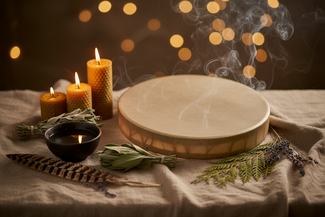
A candle often becomes the visual centre of the altar. It brings warmth, presence and the feeling of entering sacred time. If you use one, choose a holder that feels stable and safe. Incense, resin or smoke cleansing tools can help shift the atmosphere before meditation, prayer or divination, though this depends on your household and sensitivities.
Crystals are a natural choice for altar work because they carry both symbolic meaning and energetic intention. Clear quartz suits clarity and amplification, amethyst supports peace and spiritual connection, rose quartz softens the space with heart energy, while black tourmaline or obsidian can be grounding and protective. Tumblestones work well in small spaces, while larger points, clusters or crystal spheres can create a stronger focal presence.
Divination tools can also belong on your altar if they are part of your regular practice. Tarot cards, oracle decks, pendulums or runes may be displayed neatly or stored nearby. If you work with sound, a small singing bowl, chime or drum can help open and close your ritual time.
Natural items bring life and seasonal rhythm. Fresh flowers, feathers, shells, water in a small bowl or a stone gathered on a meaningful walk can all be powerful additions. Personal objects matter too. A photograph, written prayer, piece of jewellery, flower essence bottle or a gifted sacred item can carry deep emotional significance.
Creating balance without overthinking it
One of the most common worries is getting it wrong. In practice, an altar usually feels right when it has a clear centre and enough breathing room. You might place your candle or main symbol in the middle, with supporting objects arranged around it. Some people like symmetry, while others prefer a more organic layout.
If you work with the elements, you may place a candle for fire, incense for air, a bowl of water for water and a crystal or salt for earth. This can create a balanced structure, but it is not essential. What matters is whether the arrangement helps you feel present.
Let beauty support function. If an item looks lovely but never gets used, it may not need to stay on the altar all the time. Equally, a simple everyday object can belong there if it anchors your practice.

Altar, shrine or sacred space – what is the difference?
The words altar and shrine are often used interchangeably, but they can mean slightly different things. An altar is usually a working space. It is somewhere you actively engage with your practice through meditation, prayer, ritual, divination, journalling, energy work or intention setting.
A shrine is often more devotional. It may be dedicated to a particular deity, ancestor, spiritual teacher, loved one or sacred tradition. While an altar tends to focus on what you are doing, a shrine often focuses on who or what you are honouring.
Many home spiritual spaces become a blend of both. A candle, crystal and tarot deck may create an altar for personal practice, while a photograph, offering bowl or sacred image can bring elements of a shrine. There is no need to choose one or the other. What matters is that the space feels meaningful and respectful.
Cleansing and dedicating the space
Before using your altar, it helps to cleanse the area and the objects you have chosen. This can be done very simply. You might use incense, a cleansing mist, sound from a singing bowl, or a few quiet moments of breath and prayer. The method matters less than the intention behind it.
After cleansing, dedicate the altar in your own words. You can speak aloud or silently. A few simple sentences are enough. You may want to name what the altar is for, ask for protection, invite clarity, or set a commitment to return to the space with honesty and care.
This small act changes the feeling of the space. It becomes less about decoration and more about relationship.

A shamanic approach to creating sacred space
In many shamanic traditions, the altar is not simply a place to store spiritual objects. It becomes a living relationship between yourself, nature, spirit and the unseen aspects of life. The items placed upon it often carry stories, teachings, prayers and personal experiences.
A shamanic altar may include stones gathered from meaningful places, feathers, despacho items, sacred textiles, rattles, drums, mesa bundles or objects connected to the natural world. These are not always chosen because they look beautiful. They are chosen because they carry significance and connection.
Many practitioners see the altar as a bridge between the everyday world and the sacred. It becomes a place to pause, listen, offer gratitude, seek guidance and remember our relationship with the Earth, the elements, our ancestors and the wider web of life.
The most powerful shamanic altars are rarely the most elaborate. They are the ones that reflect genuine relationship, respect and lived experience.
Living with your altar day to day
A spiritual altar works best when it becomes part of your life rather than a project you finish once. You might light a candle in the morning, pull a card, sit quietly for five minutes, refresh the water bowl or place your hands over your heart before bed. Tiny rituals count.
It is also normal for your altar to evolve. You may change it with the moon phases, the seasons or your emotional needs. During difficult periods, your altar might hold grounding stones, protective incense and supportive affirmations. At other times, it may feel lighter, more devotional or more creative.
If something starts to feel stale, gently clear the space and begin again. Dust it, remove anything that no longer resonates and return to your original intention. Sacred spaces need tending, but they do not need perfection.
For beginners, it can be helpful to start with just a few essentials such as a candle, one or two crystals and an incense holder. From there, you can build into other areas of practice like tarot, chakra work, sound healing, flower essences or seasonal ritual. A well-chosen altar grows naturally with you.
At Sacred Essence, many people build their altar this way - beginning with one meaningful object and gradually shaping a space that supports everyday ritual, emotional wellbeing and deeper spiritual practice.

When a spiritual altar becomes truly yours
The most powerful altars are rarely the most elaborate. They are the ones that feel alive with use, memory and intention. Your altar might be quiet and minimal, rich with crystals and sacred tools, or changed often to reflect where you are in your practice. All of these can be right.
If you have been waiting until you know enough, have enough or live in a more spacious home, let that pressure go. A spiritual altar begins the moment you choose a space and meet it with care. Start small, choose what feels meaningful, and let the space grow with you.
Explore Related Collections
- Altar Tools & Ritual Accessories
- Healing Crystals & Tumblestones
- Candles & Ambient Lighting
- Incense, Resins & Palo Santo
- Books, Tarot, Oracle Cards
- Divination Tools
Related Reading
- Healing Crystals Guide
- Creating a Calm Space at Home
- How to Cleanse Crystals Safely
-
Charging vs Cleansing Crystals: What’s the Difference?
FAQs
What should I put on a spiritual altar?
Start with a few meaningful items such as a candle, crystal, incense holder, sacred symbol, photograph, oracle card or personal object connected to your intention.
Can I create a small altar at home?
Yes. A spiritual altar can be as small as a tray, windowsill, bedside table or shelf. The intention matters more than the size.
Do I need to follow a specific tradition?
Not unless you are working within a particular lineage or ceremonial path. Many home altars are personal spaces for meditation, prayer, reflection and spiritual practice.
How often should I cleanse my altar?
Cleanse or refresh your altar whenever it feels dusty, cluttered, heavy or disconnected. Some people do this weekly, monthly or with the moon phases.
Visit Us or Explore Online
You are always welcome to visit our shop in Coniston, in the heart of the Lake District, where we are happy to guide you in person. Or browse online and explore our range of mala beads, meditation accessories, healing crystals and spiritual wellbeing products.
Visit us in Coniston or explore online at Sacred Essence
You can also follow along on Instagram and Facebook for inspiration, new arrivals and updates from our Coniston shop.

A Final Thought
A spiritual altar does not need to be grand to be meaningful. Sometimes a candle, a crystal and a quiet intention are enough to change the feeling of a space.
Start small, tend it gently and let your altar grow with your practice.✨
Sacred Essence 🌈