


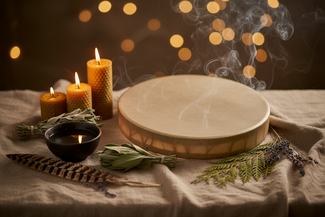
A drum can make meditation feel less like trying to empty the mind and more like giving it a steady path to follow. A reiki drum journeying practice brings together Reiki intention, rhythmic sound and quiet inner listening. It can be a simple way to create space for reflection, rest and personal insight - without needing to force an experience.
For some people, the regular beat makes it easier to settle than sitting in silence. For others, it becomes a meaningful ritual before Reiki self-treatment or at the close of a demanding day. The value is not in travelling somewhere extraordinary every time. Often, the most useful result is feeling more present in your body and clearer about what needs your attention.
What is a Reiki drum journeying practice?
Reiki is commonly understood as a Japanese energy-healing practice, often shared through hands-on or hands-off treatment, self-practice and intention. Drumming is used across many musical, ceremonial and contemplative settings to create rhythm, focus and a change of pace. When practitioners combine them, the drum may support a Reiki session by providing a consistent sound anchor while they rest their hands, visualise, breathe or listen inwardly.
The word journeying can mean different things. In contemporary spiritual practice, it often describes an inward, meditative experience supported by repetitive rhythm. Some people notice images, memories, sensations or a strong sense of calm. Others simply sit with the drumbeat and feel their thoughts become less busy.
It is worth keeping distinctions clear. Shamanic journeying belongs to diverse living cultural and spiritual traditions, with specific teachings, relationships and ceremonial contexts. A Reiki drum practice may be personally meaningful, but it does not need to be presented as, or confused with, a traditional shamanic practice. Respectful language leaves room to learn from traditions without claiming an experience or title that is not yours.
Begin with a realistic intention
A good journey does not start with a demand for a message. It starts with a clear, gentle question. You might choose: “What would help me feel steadier this week?” or “What do I need to acknowledge before I move forward?” If a question feels too much, an intention such as “I am making ten minutes for quiet attention” is more than enough.
Keep the intention grounded in your own choices and wellbeing. Rather than asking the drum to predict an outcome or solve someone else’s life, bring the focus back to what you can understand, feel and do. This makes the practice more useful in everyday life, where insight is only helpful if it can be met with kindness and practical action.
Create a simple, comfortable space
You do not need an elaborate altar or a perfectly silent home. Choose a place where you are unlikely to be interrupted, sit with your back supported or lie down if you are confident you will remain awake, and keep a glass of water nearby. Silence notifications and make sure you are warm enough to relax.
A candle, a few drops of essential oil in a diffuser, a sacred spray or a piece of grounding crystal can help mark the beginning of the practice. These are optional supports, not requirements. If you use a candle or incense, place it safely and never leave it unattended. The intention behind the space matters more than how much is in it.
Many practitioners like to begin by placing their hands at the heart, abdomen or knees and taking several unhurried breaths. If you practise Reiki, invite its flow in the way you were taught. If you are new to Reiki, you can simply set an intention for calm, compassion and awareness.
A gentle drum journey to try
For a first session, allow around ten to fifteen minutes. Shorter is often wiser than trying to create a profound experience through effort. Use a frame drum, Reiki drum or small hand drum that feels comfortable to hold. A beater with a soft head generally gives a rounded, less sharp tone than a hard stick.
Start by tapping a slow, even pulse. There is no single correct tempo, but aim for something steady enough that you do not have to think about it. Let the sound be clear but moderate. Your ears should not ring, and people in the next room should not feel as though they are sitting beside a marching band.
As the rhythm settles, bring your attention to the body. Feel where it meets the chair, floor or bed. Notice your breathing without trying to improve it. If you have an intention or question, repeat it once internally, then let it rest.
Continue the beat for five to ten minutes. You may hold a Reiki hand position between drum sections, or keep the drum going throughout if that feels natural. Some people play for a few minutes, pause in silence to receive whatever is present, then return to the rhythm. Both approaches are valid.
Do not chase imagery. A journey may contain colours, symbolic scenes, physical sensations, emotions, ordinary thoughts or no obvious content at all. Treat any experience as information to reflect on rather than an instruction that must be acted upon immediately. If a thought repeats, notice it. If you feel peaceful, let peace be sufficient.
To close, slow the beat gradually rather than stopping abruptly. Play three quieter strikes, rest both hands on the drum and take a few deeper breaths. Thank yourself for taking the time. If you work with Reiki symbols, use only those you have been attuned to and taught to use.
Grounding is part of the practice, not an afterthought
The closing minutes matter, particularly if you feel emotionally open, dreamy or deeply relaxed. Press your feet into the floor, look around the room and name a few ordinary things you can see. Drink water, eat something nourishing if needed, or step outside for fresh air.
Write down a few words before interpretation takes over. A simple note might include the intention, what you noticed in your body, any images or feelings, and one kind action you could take next. Perhaps your session highlighted tiredness, so the practical response is an earlier night. Perhaps it brought up a difficult conversation, so the next step is to speak carefully with someone you trust rather than treating the experience as a final verdict.
Grounding is especially helpful when using drumming after a stressful day. Sound can be absorbing, but real life is still waiting: the washing-up, the school run, work, relationships and rest. A spiritual practice earns its place when it helps you meet those things with a little more steadiness.
Choosing a drum for Reiki and meditation
The best drum is the one you can use regularly without feeling intimidated by it. A smaller frame drum is often easier for beginners to hold, quieter in a shared home and suitable for short self-practice. Larger drums may create deeper resonance and a fuller sound, but they need more space and can be less practical for flat living or late-evening use.
Natural-hide drums are often chosen for their warm, responsive tone. They can be sensitive to changes in temperature and humidity, so may need gentle warming or careful storage. Synthetic-head drums tend to offer more consistency and can be a practical choice for frequent use, travelling or damp British weather. Neither is spiritually “better”; sound, feel, ethics and care requirements all matter.
You may also prefer a meditation chime or singing bowl at the beginning and end, especially if drumming continuously feels uncomfortable. The point is to find a sound that supports attention rather than becoming another thing to get right.
When to keep it lighter
A Reiki drum journeying practice should leave you feeling supported, not overwhelmed. If you become anxious, disorientated or emotionally flooded, stop the drum, open your eyes and ground through your senses. Choose a shorter session next time, practise seated, or return to simple breathing and a quiet hand-on-heart Reiki practice.
If you are living with trauma, severe anxiety, dissociation, hearing sensitivity or a mental health condition that affects your sense of reality, personalised guidance from an appropriately qualified healthcare or mental health professional may be important. Spiritual tools can sit alongside proper support, but they are not a replacement for it.
You also do not have to journey alone forever. Learning with an experienced Reiki teacher or trusted drum practitioner can help you develop confidence, particularly around pacing, boundaries and aftercare. A good guide will not promise dramatic results or tell you what your inner experience must mean.
Let the drum be a companion rather than a test. A few honest minutes of rhythm, Reiki intention and quiet attention can become a dependable way to return to yourself - and from there, to take the next ordinary, worthwhile step with more care.