

A sacred instrument does not need to be grand, rare or difficult to play to be meaningful. In world instruments explained - which sacred instrument is right for you?, the most useful starting point is not a belief system or a perfect technique. It is the moment you want to support: settling before meditation, marking the beginning of a Reiki session, clearing the feel of a room, deepening a ritual, or simply bringing a little more presence to an ordinary evening.
Sound changes a space quickly. A single bell can call wandering attention back to the body. A steady drumbeat may help some people feel grounded. The sustained tone of a singing bowl can make silence feel less empty and more inviting. Yet the best instrument is rarely the loudest or most impressive one. It is the one you can return to with care.
What Makes an Instrument Sacred?
An instrument becomes sacred through relationship, context and intention, rather than through an object alone. Across many cultures, drums, rattles, bells, bowls, chimes and wind instruments have been used in ceremony, prayer, healing work, community gatherings and rites of passage. Their meanings belong to particular places and living traditions.
At home, you may use an instrument more simply: to open and close a meditation, accompany breathwork, create a boundary between work and rest, or bring focus to an altar. That use can still be sincere without claiming a tradition that is not yours. A respectful approach means learning where an instrument comes from where possible, avoiding costume-like imitation, and choosing practices that are honest about your own experience.
It also helps to release a common assumption: you do not need to be musical. Sacred sound is not a performance. Listening closely, striking one clear note, or keeping a gentle, uncomplicated rhythm can be enough.
World Instruments Explained: Start With the Feeling You Need
Rather than choosing only by appearance, consider what kind of sound and physical experience suits you. A bright sound can refresh a tired atmosphere; a low, repetitive sound can feel containing. Neither is universally better. Some people find a bowl calming, while others prefer a drum because it gives the hands something purposeful to do.
Singing bowls for stillness and sustained sound
Singing bowls are often chosen for meditation, sound baths, yoga and relaxation practices. When struck with a mallet, or played around the rim where appropriate, they produce a lingering tone that gradually fades into silence. Many practitioners use that fading sound as an anchor for the breath or as a gentle way to begin and end a session.
Smaller bowls tend to offer clearer, higher tones and are often easy to use on a desk, bedside table or small altar. Larger bowls generally have a deeper, fuller resonance, but require more space, a steadier hand and consideration for neighbours or clients. There is no need to chase a particular note or chakra association unless it genuinely informs your practice. A bowl that feels comfortable to hold and whose sound you enjoy is a sound beginning.
If you are buying your first bowl, strike it softly. A harsh blow can produce a clatter rather than a clear tone. Let the sound arise, then listen until it is gone. This simple practice can be more valuable than trying to make the bowl sing immediately.
Drums for grounding, rhythm and embodied practice
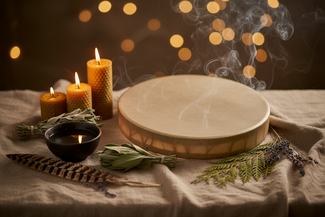
Frame drums, shamanic-style drums and hand drums are often chosen for grounding, journeying practices, rhythmic meditation and ceremonial work. Rhythm is physical. It can give the mind less room to race because the body has something steady to follow.
Drumming traditions are diverse and culturally specific. A drum sold for spiritual practice does not grant someone a role within an Indigenous, shamanic or ceremonial lineage. It can, however, be used respectfully within a personal practice: perhaps a slow beat before journalling, a rhythm to support movement, or a deliberate closing signal after energy work.
Choose a drum that feels manageable rather than intimidating. Larger drums can create a deeper voice, but a smaller frame drum may be easier to hold, transport and play with control. Natural hide drums can be beautifully responsive, although humidity and temperature may affect their tone. Synthetic heads are often more predictable for regular use and changing British weather.
Rattles for movement and energy-clearing rituals
A rattle is direct, portable and wonderfully unpretentious. Its sound is textured rather than sustained, making it useful for moving around a room, accompanying a spoken intention, or breaking up the heaviness of a stagnant-feeling space. Some people use rattles alongside incense, sacred sprays or open windows as part of a home-clearing ritual.
Because a rattle responds to movement, it can suit people who struggle with seated meditation. Walk slowly from room to room, shake gently, pause, and notice what changes in your own attention. The aim need not be to prove that a room has been cleared. The practical value may be the reset itself: you have made time to air the space, put things in order and return to it deliberately.
Bells and tingsha for clear beginnings and endings
Hand bells, altar bells and tingsha cymbals create an immediate, bright sound. They are especially useful when you want a clear marker rather than a long soundscape. Ring a bell before tarot reading, at the start of a treatment, or when finishing a few minutes of meditation. That small act tells the mind that something has shifted.
Tingsha are traditionally associated with Tibetan Buddhist practice and are commonly used in sound work and meditation settings. Their high tone may feel wonderfully clarifying in a quiet room, though it can be too sharp for anyone sensitive to high frequencies. If you live with others, a softer hand bell or meditation chime may be the more considerate choice.
Chimes for gentleness and everyday ritual
Meditation chimes offer a softer entry point for people who want sound without the learning curve of a bowl or drum. Their tones can be clean, light and easy to place within a daily routine. A chime by your yoga mat, reading chair or workspace can become a reminder to pause between tasks.
Wind chimes work differently because the weather becomes part of the instrument. In a garden, porch or open window, they can bring a sense of movement and seasonal change. Consider your setting carefully, though. What feels peaceful to one household may become constant noise to another, particularly in a built-up area.
Choose for Your Space, Sensory Needs and Practice
The spiritual associations of an instrument matter, but practical details matter too. Before choosing, think about where and when it will be played. A large gong or deep drum may be inspiring in a therapy room or dedicated studio, but not ideal in a small flat with thin walls. A bell, small bowl or chime can offer just as much ritual purpose in a compact home.
Your sensory response is equally important. If you are sensitive to sound, begin with a quieter instrument and use it briefly. Keep volume low around children, pets and anyone who may be startled or overwhelmed. Sound healing can be a supportive well-being practice, but it is not a replacement for medical care, hearing support or professional mental health help.
For therapists and experienced practitioners, consistency may shape the choice. You may need an instrument that travels well, is easy to clean, and produces a reliable sound in different rooms. For personal use, emotional connection may matter more. You might be drawn to a particular wood, finish, symbol or tone because it helps you show up for your practice. That is a valid reason, provided the instrument is also well made and enjoyable to use.
A Simple Way to Begin
Choose one instrument and give it a clear job. Keep a small singing bowl beside your meditation cushion. Use a bell to open and close your altar practice. Play a gentle drum rhythm for five minutes before writing in a journal. Repetition creates familiarity, and familiarity is often where meaning grows.
You do not need to fill a room with sound or build a collection overnight. At Sacred Essence, instruments are best approached as practical companions to intentional living, whether your path includes Reiki, yoga, Pagan ritual, sound healing or simply a wish for a calmer home.
The right sacred instrument is the one that invites you to pause, listen and take part in your own life with a little more care.