Altar Manta Cloths - Large Ceremonial Altar Textiles
Peruvian Manta Altar Textile Cloths are large ceremonial fabrics traditionally used as the foundation of altars, ritual spaces, and meditation settings. Known as Mantas or Altar Cloths, these expansive textiles play a central role in spiritual practice, often serving as the focal point of ceremony.
Larger than mesa cloths, manta cloths may be used to cover ritual altars, form a base for prayer bundles and offerings, or even act as the altar itself. They are also commonly used as a seat for meditation or personal ritual, helping to define and ground sacred space.
Within the traditions of the Q’ero people, manta cloths embody both practical function and deep symbolic meaning, supporting ceremonial work while honouring Pachamama, the elements, and the living world.
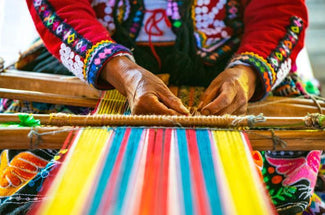
Manta Altar Cloths are large ceremonial textiles handcrafted by Q’ero Paqo Shamans of Peru, carrying ancient Andean traditions, cosmology, and storytelling within their intricate patterns. Each cloth reflects a deep relationship with the natural world and the spiritual principles that guide Andean life.
Designs often symbolise family heritage, regional identity, and natural forces such as water, the sun, and the stars, while also expressing the guiding principle of Ayni — reciprocity and harmony with Pachamama (Mother Earth). Traditionally woven from fine alpaca or sheep wool and naturally dyed, each manta is both a spiritual tool and a work of art, infused with the intention and energy of its maker.
Uses & Symbolism
Mantas serve as the foundation of sacred spaces, acting as centre-piece altar cloths for ceremony, meditation, and ritual work. Their generous size — typically from 1 metre upwards — makes them especially suited for group rituals, large altar arrangements, and communal ceremonies.
While sometimes referred to locally as “table cloths,” this does not simply ordinary use. Instead, the term reflects their role as the table or platform of the altar itself. Each manta carries symbolic meaning through its colours, patterns, and construction, supporting spiritual balance, grounding intention, and deepening connection during ritual practice.
Working Together in Ceremony
Sacred textiles work together to form a complete ceremonial system. Manta cloths act as the altar itself, creating the base or foundation for sacred items, offerings, and prayer bundles, or serving as a seat for meditation and ceremony.
Alongside the manta, a mesa cloth forms the outer wrapping of the ceremonial bundle, visible during ritual and representing the external world. Inside, the Unkuna or inner cloth protects and holds the inner spiritual world. A mesa tie or Watana secures these layers together, uniting inner and outer aspects of ceremony.
Ponchos provide personal protection and are worn during rituals, fire ceremonies, and initiations, completing the circle of ceremonial tools used within Andean spiritual practice.
Frequently Asked Questions About Manta Altar Cloths
What is a Manta altar cloth used for?
A Manta altar cloth is used as the foundation of a sacred space. It may serve as the altar itself, a centre-piece covering for ritual work, a base for offerings, or a seat for meditation and ceremony.
How is a Manta different from a Mesa cloth?
Manta cloths are larger, centre-piece textiles used as altar foundations or ceremonial bases. Mesa cloths are smaller and used as working ritual surfaces within the mesa, alongside an inner cloth.
What size are Manta altar cloths?
Manta cloths are typically 1 metre or larger, making them suitable for large altars, group ceremonies, and communal ritual spaces.
Are Manta cloths used in Q’ero tradition?
Yes. Within Q’ero and Andean traditions, manta cloths are used to create sacred space, support offerings, and hold ceremonial focus during rituals and meditation.
Can a Manta cloth be used for meditation?
Yes. Manta cloths are often used as a meditation seat or ground covering, helping to define and ground a sacred space for personal or group practice.
Are Manta cloths the same as ordinary tablecloths?
No. While sometimes referred to locally as “table cloths,” this describes their role as the altar platform, not an everyday household item.
See Associated Products
Manta altar cloths are traditionally used alongside other sacred textiles to form a complete ceremonial system:
Mesa Cloths – Working ritual cloths used within the mesa, paired with inner cloths for healing and ceremony
Unkuna / Wachala – Inner cloths representing the inner spiritual world, used to hold medicine bundles and sacred items
Ponchos – Worn for personal protection during rituals, fire ceremonies, and initiations
Explore the Manta | Altar Cloths
Manta Altar Cloths are large ceremonial textiles handcrafted by Q’ero Paqo Shamans of Peru, carrying ancient Andean traditions, cosmology, and storytelling within their intricate patterns. Each cloth reflects a deep relationship with the natural world and the spiritual principles that guide Andean life.
Designs often symbolise family heritage, regional identity, and natural forces such as water, the sun, and the stars, while also expressing the guiding principle of Ayni — reciprocity and harmony with Pachamama (Mother Earth). Traditionally woven from fine alpaca or sheep wool and naturally dyed, each manta is both a spiritual tool and a work of art, infused with the intention and energy of its maker.
Uses & Symbolism
Mantas serve as the foundation of sacred spaces, acting as centre-piece altar cloths for ceremony, meditation, and ritual work. Their generous size — typically from 1 metre upwards — makes them especially suited for group rituals, large altar arrangements, and communal ceremonies.
While sometimes referred to locally as “table cloths,” this does not simply ordinary use. Instead, the term reflects their role as the table or platform of the altar itself. Each manta carries symbolic meaning through its colours, patterns, and construction, supporting spiritual balance, grounding intention, and deepening connection during ritual practice.
Working Together in Ceremony
Sacred textiles work together to form a complete ceremonial system. Manta cloths act as the altar itself, creating the base or foundation for sacred items, offerings, and prayer bundles, or serving as a seat for meditation and ceremony.
Alongside the manta, a mesa cloth forms the outer wrapping of the ceremonial bundle, visible during ritual and representing the external world. Inside, the Unkuna or inner cloth protects and holds the inner spiritual world. A mesa tie or Watana secures these layers together, uniting inner and outer aspects of ceremony.
Ponchos provide personal protection and are worn during rituals, fire ceremonies, and initiations, completing the circle of ceremonial tools used within Andean spiritual practice.
Frequently Asked Questions About Manta Altar Cloths
What is a Manta altar cloth used for?
A Manta altar cloth is used as the foundation of a sacred space. It may serve as the altar itself, a centre-piece covering for ritual work, a base for offerings, or a seat for meditation and ceremony.
How is a Manta different from a Mesa cloth?
Manta cloths are larger, centre-piece textiles used as altar foundations or ceremonial bases. Mesa cloths are smaller and used as working ritual surfaces within the mesa, alongside an inner cloth.
What size are Manta altar cloths?
Manta cloths are typically 1 metre or larger, making them suitable for large altars, group ceremonies, and communal ritual spaces.
Are Manta cloths used in Q’ero tradition?
Yes. Within Q’ero and Andean traditions, manta cloths are used to create sacred space, support offerings, and hold ceremonial focus during rituals and meditation.
Can a Manta cloth be used for meditation?
Yes. Manta cloths are often used as a meditation seat or ground covering, helping to define and ground a sacred space for personal or group practice.
Are Manta cloths the same as ordinary tablecloths?
No. While sometimes referred to locally as “table cloths,” this describes their role as the altar platform, not an everyday household item.
See Associated Products
Manta altar cloths are traditionally used alongside other sacred textiles to form a complete ceremonial system:
Mesa Cloths – Working ritual cloths used within the mesa, paired with inner cloths for healing and ceremony
Unkuna / Wachala – Inner cloths representing the inner spiritual world, used to hold medicine bundles and sacred items