



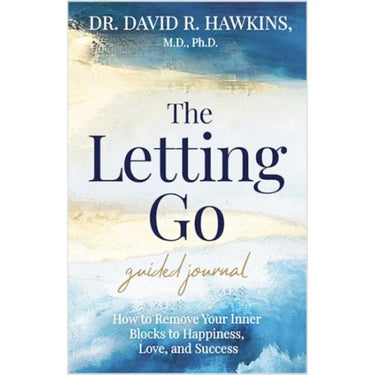
The Letting Go Guided Journal • Self-Reflection Book Inspired by Dr David R. Hawkins

The Letting Go Guided Journal is a 128-page paperback journal inspired by the teachings of Dr David R. Hawkins and his bestselling book Letting Go.

Designed as a practical companion for reflection, the journal uses guided prompts, quotations and exercises to explore emotional awareness, mindfulness, gratitude, resistance, resentment and the idea of surrender.

Rather than promising emotional healing or freedom from anxiety, it is best approached as a structured self-reflection tool for readers who want to slow down, notice recurring patterns and create more space for thoughtful personal practice.

Product Details:

  • Title: The Letting Go Guided Journal
  • Inspired By: The teachings of Dr David R. Hawkins
  • Type: Guided self-reflection journal
  • Format: Paperback
  • Print Length: 128 pages
  • Includes: Guided prompts, reflective quotes and exercises
  • Themes: Letting go, mindfulness, gratitude, emotional reflection and self-awareness
  • Ideal For: Journalling, meditation, personal reflection and mindful daily practice

About the Author – Dr David R. Hawkins

David R. Hawkins, M.D., Ph.D., was an author, psychiatrist and spiritual teacher whose work explored consciousness, emotional experience, spirituality and personal transformation.

His books and recorded teachings discuss themes such as surrender, compassion, self-awareness, acceptance and spiritual development.

The supplied biography also describes his work in terms of consciousness research and the “verification of spiritual realities”. I would frame those ideas as part of Hawkins’ own spiritual and philosophical system rather than as established scientific findings.

The Letting Go Guided Journal draws on themes associated with his wider body of work and adapts them into a structured journalling format.

A Practical Companion to Letting Go

The journal takes ideas associated with Letting Go and translates them into prompts that can be worked through slowly.

Rather than simply reading about surrender, acceptance or emotional awareness, you are invited to write.

That shift from reading to reflection can make the material feel more personal.

You may find yourself noticing what you avoid, what you keep replaying, what still carries emotional weight or where you are resisting something you cannot control.

What Does “Letting Go” Mean?

Within Hawkins’ framework, letting go is connected with allowing emotions to be acknowledged rather than suppressed or fought against.

In practical journalling terms, that might mean recognising what you feel, naming it more clearly and exploring what sits underneath it.

The process is not about pretending difficult experiences do not matter.

It is about creating a little more space between the experience itself and the story you continue to carry around it.

Mindfulness, Gratitude & Self-Awareness

The journal also incorporates themes of mindfulness and gratitude.

Mindfulness can help bring attention back to what is happening now, while gratitude practices may encourage you to notice supportive or meaningful aspects of daily life.

These ideas fit naturally into reflective journalling, especially when the aim is to become more aware of habits, reactions and emotional patterns.

The journal should not be presented as a treatment for anxiety, depression or trauma, but it may sit comfortably alongside a broader personal wellbeing routine.

Working with Resentment & Resistance

Some prompts focus on resentment, resistance and emotional suppression.

These can be difficult themes, which is why a slower pace may be more useful than trying to complete the journal quickly.

You might spend time with questions such as:

“What am I still holding onto?”

“What am I resisting?”

“What changes when I stop trying to force this situation to be different?”

The purpose is not to reach one perfect answer, but to create space for more honest self-observation.

A Journal for Daily Reflection

The 128-page format makes this easy to use as part of a regular routine.

You may prefer to work through one prompt at a time, write for ten minutes in the evening or return to the journal whenever a particular theme feels relevant.

Because the prompts are structured, it can also suit people who like the idea of journalling but do not always know what to write.

Gratitude Without Forced Positivity

The journal includes gratitude as one of its themes, but gratitude does not have to mean ignoring difficulty.

A balanced practice might involve recognising something supportive or meaningful while still acknowledging grief, frustration or uncertainty.

That makes the journal more useful as a reflective tool than as a simple positivity exercise.

Emotional Healing Language

The original description refers to emotional healing, emotional freedom and releasing negativity.

I would keep those ideas aspirational rather than guaranteed.

A guided journal may support reflection, awareness and a sense of perspective, but it should not be presented as proven to heal trauma, resolve mental-health conditions or produce emotional freedom.

For significant or persistent distress, professional psychological or medical support may be appropriate alongside journalling.

A Simple Way to Begin

Choose one prompt and give yourself a few uninterrupted minutes.

Write without trying to make the response polished.

If a question feels difficult, begin with:

“What am I noticing right now?”

You can return to the same prompt more than once.

The value is often in what changes between one reflection and the next.

Ideal For

The Letting Go Guided Journal may especially appeal to readers interested in mindfulness journals, gratitude journals, self-reflection, spiritual development and the teachings of David R. Hawkins.

It may also make a thoughtful gift for someone who enjoys guided journalling and personal-development books.

Quick FAQs

What is The Letting Go Guided Journal?
It is a 128-page paperback guided journal inspired by the teachings of Dr David R. Hawkins.

Does it contain writing prompts?
Yes. The journal includes guided prompts, reflective quotes and exercises.

Is this the same as the book Letting Go?
No. It is a guided journal inspired by the ideas associated with Letting Go.

What themes does it cover?
Themes include emotional awareness, surrender, resentment, resistance, mindfulness, gratitude and self-reflection.

Can I use it as a gratitude journal?
Yes. Gratitude is one of the themes, although the journal covers much more than gratitude alone.

Is it an anxiety journal?
It may appeal to people looking for reflective journalling around difficult emotions, but it should not be presented as a treatment for anxiety.

How many pages are there?
The supplied product information lists 128 pages.

Is it suitable for daily use?
Yes. The guided format lends itself well to regular reflection.

Please Note

The Letting Go Guided Journal explores spiritual and personal-development ideas associated with surrender, emotional release, consciousness and self-awareness.

These concepts reflect the teachings and framework associated with Dr David R. Hawkins and should not be treated as established medical or psychological treatment.

The journal is intended for personal reflection and spiritual development and should not replace professional medical or psychological care.

Orders & Shipping
Orders placed before 3:00pm are processed and shipped the same day. We ship worldwide.

Tracking Information
Please monitor your parcel using the tracking details provided in your shipping confirmation email. Tracking is usually updated within 24 hours of dispatch and continues until delivery is confirmed.

Duties & Taxes
EU and international duties and taxes are the responsibility of the customer and must be paid locally where applicable. For non-UK customers, UK tax is automatically removed at checkout once the shipping destination is selected.

Customs Delays
Some international orders may be delayed due to customs checks, which are outside our control. Delays may be longer during busy periods.

Returns
For orders that qualified for free delivery, returned items may be subject to the original shipping fee and any collection costs.

Refused or Cancelled International Orders
International orders that are refused, returned, and then cancelled may be subject to a 10% surcharge. Parcels can be re-shipped on request, although an additional charge may apply.