


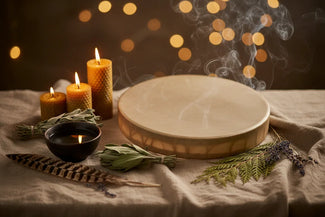
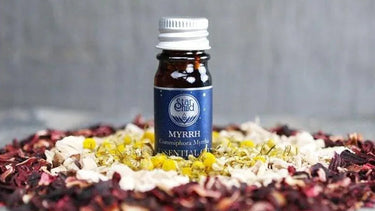
Star Child Myrrh Essential Oil 5ml • Grounding, Sacred & Resinous

Myrrh Essential Oil is a deep, balsamic aromatic oil with a dark resinous character and one of the longest sacred-fragrance histories of the ancient world.

This 5ml Star Child oil is produced from Commiphora myrrha, with the supplied product information giving Kenya as the country of origin. Its aroma is rich, woody, spicy and slightly acrid, making it especially suited to meditation blends, sacred-space fragrance, natural perfumery and ritual work centred on grounding, purification and remembrance.

Myrrh has been valued for thousands of years as an aromatic resin in ceremonial, funerary and devotional contexts, particularly in parts of North-East Africa and the Near East.

Product Details

  • Product: Myrrh Essential Oil
  • Brand: Star Child
  • Botanical Name: Commiphora myrrha
  • Size: 5ml
  • Origin: Kenya
  • Aromatic Source: Myrrh resin
  • Aroma: Dark, spicy, rich, balsamic, woody and slightly acrid
  • Character: Deep, grounding and resinous
  • Use: Diffusion, aromatic blending, natural perfumery, ritual fragrance and appropriately diluted topical preparations
  • Blends Well With: Frankincense, Benzoin, Elemi, Cypress, Juniper, Mandarin, Orange, Geranium, Patchouli, Lavender, Pine, Cinnamon, Clove and Bay
  • Also Known As: Oleo gum Myrrh
  • Internal Use: No

The supplied source does not specify the extraction method, so it is better not to state one unless the current label confirms it.

Aroma & Blending Character

Myrrh has a substantially darker aromatic profile than many brighter essential oils.

Its fragrance is resinous, balsamic and woody, with spicy and slightly bitter facets that give it weight and persistence.

Frankincense is a natural partner, creating a classic resinous pairing with a brighter, more lifted character. Benzoin adds sweetness, while Cypress and Juniper reinforce the dry woody side.

Orange or Mandarin can soften the blend with citrus brightness, while Patchouli creates an earthier, deeper composition.

Myrrh vs Frankincense

Myrrh and Frankincense are often paired, but they have distinct aromatic identities.

Myrrh is generally darker, warmer, more bitter-balsamic and earthy.

Frankincense tends to feel brighter, clearer and more citrus-resinous.

Together they create a balanced sacred-fragrance profile, but either can also be used independently.

About Star Child Glastonbury

Star Child Glastonbury is a UK brand known for essential oils, incense, carrier oils and ritual preparations inspired by traditional plant lore and contemporary magical practice.

Its essential-oil range includes both familiar aromatics and materials with long ceremonial histories.

Myrrh belongs to the deeper, more contemplative side of the collection, with an aroma especially suited to sacred-space work, meditation and grounding ritual.

Myrrh Essential Oil • Ancient Resin, Sacred Fragrance & Grounding Ritual

Myrrh is an aromatic resin obtained from trees in the Commiphora genus.

The resin forms when the bark is naturally damaged or deliberately cut, producing droplets that harden as they are exposed to air.

Its distinctive scent and preservative qualities made Myrrh highly valued in the ancient world.

In modern aromatic practice, the essential oil retains that same dark resinous character in a concentrated form.

Myrrh in Ancient Egypt

Myrrh was important in ancient Egyptian ritual and funerary practice.

It was used in incense, perfumed preparations and embalming traditions, and was also included among aromatic materials used in religious offerings.

Myrrh also appears in discussions of Kyphi, the complex Egyptian incense preparation whose recipes varied across different periods.

This history gives the oil genuine ceremonial depth without needing to imply one single continuous spiritual meaning.

Sacred Fragrance Across the Ancient World

Myrrh was traded widely across parts of Africa, Arabia and the Mediterranean.

Its value came from both its fragrance and the difficulty of obtaining and transporting aromatic resins over long distances.

Over time it became associated with sacred offering, purification, burial rites and devotional fragrance in several traditions.

That long history helps explain why it remains strongly connected with sacred-space practice today.

The Myth of Myrrha

The Greek and Roman literary tradition includes the tragic story of Myrrha, a woman transformed into the Myrrh tree after a destructive and taboo relationship with her father.

Later retellings connect her tears with the resin of the tree.

The story is best treated as mythology rather than as evidence for medicinal properties or reproductive uses.

It adds a powerful layer of symbolism around grief, transformation and sorrow, but should not be used to justify claims about menstruation, pregnancy or reproductive health.

Grounding & Reflection

In contemporary spiritual practice, Myrrh is often associated with grounding, stillness and inward reflection.

Its dark, slow-moving aroma makes it particularly suited to evening ritual, meditation or practices where the aim is to create a more solemn and deliberate atmosphere.

That is an aromatic and symbolic quality rather than a guaranteed emotional effect.

Purification & Sacred Space

Myrrh is frequently used symbolically in purification rituals.

A few drops in a suitable diffuser blend can help create a deeper ceremonial atmosphere before meditation, prayer or ritual.

Its role is to mark the space through fragrance rather than literally remove harmful energy.

Remembrance & Funeral Symbolism

Because of its long association with funerary traditions, Myrrh may also be used in contemporary remembrance rituals.

This can include memorial practice, ancestor work or quiet reflection around loss.

It should not be presented as treating grief or changing the grieving process.

Its value lies in symbolism, fragrance and ritual structure.

Myrrh for Blending

Myrrh is powerful and should generally be used in small amounts.

Frankincense gives it lift and clarity.

Benzoin adds warmth and sweetness.

Cypress and Juniper strengthen the dry woody character.

Orange or Mandarin can brighten the blend, while Patchouli creates a heavier earthy base.

Lavender softens the overall profile and can make Myrrh easier to use in more balanced aromatic compositions.

Diffuser & Ritual Use

Add a small amount to a suitable diffuser or oil burner according to the appliance instructions.

Because Myrrh has a deep and persistent aroma, begin with fewer drops than you might use with a lighter citrus or floral oil.

Maintain good ventilation and avoid prolonged heavy diffusion.

A Simple Myrrh Ritual

Diffuse a small amount of Myrrh and sit quietly for several minutes.

You might ask:

What needs greater steadiness?

or

What deserves to be approached with more patience?

Use the fragrance as a marker for deliberate reflection rather than as a shortcut to a particular state.

Quick FAQs

What is Myrrh Essential Oil?
A concentrated aromatic oil derived from the resin of Commiphora myrrha.

What does Myrrh smell like?
Dark, rich, balsamic, woody, spicy and slightly acrid.

Where does this Myrrh come from?
The supplied product information lists Kenya as the country of origin.

How is Myrrh different from Frankincense?
Myrrh is typically darker and more bitter-balsamic, while Frankincense is brighter and more citrus-resinous.

What oils blend well with Myrrh?
Frankincense, Benzoin, Elemi, Cypress, Juniper, citrus oils, Geranium, Patchouli, Lavender and Pine all work well.

Can Myrrh be used for meditation?
Yes. Its deep resinous aroma is especially well suited to contemplative and sacred-space fragrance.

Can it be used for grief?
It may be used symbolically in remembrance or mourning rituals, but it should not be presented as treating grief.

Can it be applied directly to the skin?
No. Essential oils should be appropriately diluted before topical use.

Can it be taken internally?
No.

Care & Safety

For external aromatic use only.

Do not ingest.

Do not apply undiluted to the skin.

Avoid contact with eyes, mucous membranes and broken or irritated skin.

Patch test properly diluted preparations before wider use.

Keep out of reach of children and pets.

The supplied source gives a strong pregnancy warning, so avoid topical use during pregnancy unless specifically advised otherwise by an appropriately qualified professional.

Use diffusers in a well-ventilated space and avoid prolonged heavy exposure.

Store tightly closed in a cool, dark place away from direct sunlight and excessive heat.

Please Note

Historic uses of Myrrh in medicine, embalming or reproductive practice should not be transferred automatically to the concentrated essential oil.

References to purification, grounding, protection, grief, remembrance or sacred space describe historical context, fragrance and contemporary ritual symbolism.

They are not guarantees of medical, psychological or supernatural effects.

Orders & Shipping
Orders placed before 3:00pm are processed and shipped the same day. We ship worldwide.

Tracking Information
Please monitor your parcel using the tracking details provided in your shipping confirmation email. Tracking is usually updated within 24 hours of dispatch and continues until delivery is confirmed.

Duties & Taxes
EU and international duties and taxes are the responsibility of the customer and must be paid locally where applicable. For non-UK customers, UK tax is automatically removed at checkout once the shipping destination is selected.

Customs Delays
Some international orders may be delayed due to customs checks, which are outside our control. Delays may be longer during busy periods.

Returns
For orders that qualified for free delivery, returned items may be subject to the original shipping fee and any collection costs.

Refused or Cancelled International Orders
International orders that are refused, returned, and then cancelled may be subject to a 10% surcharge. Parcels can be re-shipped on request, although an additional charge may apply.