Pachamama, the Living Earth
Pachamama is often translated as Mother Earth, although her meaning reaches beyond the physical land alone. Within Andean worldviews, she is connected with nourishment, fertility, reciprocity, planting, harvest and the living relationship between people and place.
The egg shape deepens this symbolism. It can represent the womb, the seed and the hidden stages of growth before something new takes form. This makes the stone especially meaningful for work around:
- fertility and conception
- creative beginnings
- family and home
- abundance and livelihood
- personal renewal
- patience during change
- protection of what is still developing
Fertility here can be understood broadly. It may relate to pregnancy and birth, but also to ideas, relationships, business, healing journeys and the slow return of possibility after a difficult period.
A Grounding Stone for Sacred Work
There is something naturally grounding about the weight of this piece. Held securely in both hands, or placed at the centre of an altar, it draws attention back to the body, the breath and the support beneath you.
Its presence may be especially suited to moments of grief, uncertainty or change, where the need is not to force an answer but to hold steady while something unfolds.
The Mother Egg may be used as a focus for:
- grounding and stability
- ancestral reflection
- Earth-honouring ritual
- feminine spiritual work
- protection and containment
- intention holding
- group or family ceremony
Its rounded form suggests holding rather than pressure. It can become a symbolic place for what is still forming, what is not yet ready to be spoken or what needs protection while it grows.
Sacred Andean Motifs
Each Mother Egg is individually carved, so the symbols, composition and depth of the design will vary.
The otorongo, or jaguar, is often associated with courage, instinct and embodied power. The kuntur, or condor, is linked with prayer, higher vision and spiritual perspective. The amaru, or serpent, may represent transformation, renewal and wisdom, while the chakana, or Andean cross, speaks of balance and relationship between different levels of existence.
These images are sometimes understood through the Andean three-world model:
- Ukhu Pacha: the inner or lower world, connected with roots, ancestors, gestation and what lies beneath the visible surface
- Kay Pacha: the present world of embodied life, community and everyday relationship
- Hanan Pacha: the upper world, linked with expanded vision and spirit
The egg form naturally resonates with Ukhu Pacha through its connection with the womb, hidden growth, roots and transformation before emergence.
Some stones may carry one symbol more strongly than another, giving each piece a different visual and energetic character.
Q’ero Paqo Tradition
The Q’ero are Indigenous people of the high Andes in Peru, known for maintaining distinctive ceremonial, textile and agricultural traditions.
Within Q’ero and wider Andean contexts, a paqo is a ritual specialist or spiritual practitioner who works within relationships involving people, land, mountains, ancestors and sacred beings.
Their role is more specific than the broad Western term “shaman”, although this piece may still be described commercially as a shamanic altar stone because of its ceremonial use.
This Mother Egg is offered as a hand-carved spiritual object connected with Andean symbolism. Owning it does not confer ceremonial authority or reproduce the full depth of Q’ero practice.
Llama Wool Blessing & Guided Prayer
The Mother Egg comes with llama wool to support a simple blessing practice.
Within Andean settings, llama wool may carry associations with:
- livelihood
- warmth
- reciprocity
- protection
- the highland landscape
- the close relationship between people, animals and land
The wool may be placed beneath or beside the stone as part of an altar arrangement, or held during the guided prayer as a symbolic offering of gratitude and respect.
The included prayer offers a gentle starting point for personal ritual while keeping the focus on grounding, gratitude and right relationship with the Earth.
Altar, Mesa & Ceremonial Use
The Mother Egg works well as a central altar or mesa piece. Its size and weight allow it to anchor the surrounding space without needing many additional objects.
It may be placed on a woven cloth with the included llama wool, dried flowers, stones, written intentions, ancestor photographs or other sacred items.
In personal practice, it may be used for:
- meditation
- prayer
- fertility or abundance intention work
- women’s circles
- family blessings
- ancestral reflection
- grounding during transition
- group ceremony
A mesa has a specific ceremonial meaning within Andean practice and may be connected with lineage and training. Those without that background can still use the Mother Egg respectfully as a personal altar stone, grounding object or symbol of Pachamama.
The Mother Egg Story
A creation account recorded during the early Spanish colonial period tells of the Sun sending three eggs to populate the Earth: a golden egg, a silver egg and a copper egg.
In one version, gold gives rise to male rulers, silver to their female counterparts and copper to ordinary people. The story carries themes of birth, order, mortality and the emergence of life into the world.
Because the account comes through colonial records, it should be understood as one recorded version rather than a single definitive Andean creation story.
Even so, the egg remains a powerful symbol of potential, gestation and life held within the unseen.
How to Use
Place the Mother Egg on a stable altar, mesa or low ceremonial table, with the llama wool beneath or beside it if desired.
Sit with the stone in front of you or hold it securely in both hands. Notice its weight, temperature and carved surface. Bring one clear intention to mind, then rest your hands around the egg and follow the guided prayer slowly.
For group work, the stone may be placed at the centre while each person contributes:
- a spoken intention
- a flower
- a thread
- a written prayer
- a small natural offering
Because the piece may weigh up to 1kg, always support it with both hands and keep it away from shelf edges.
A Simple Pachamama Ritual
Place the Mother Egg on a woven cloth and arrange the llama wool beside it as a blessing offering.
Rest both hands around the stone and take three slow breaths.
Repeat quietly:
“Pachamama, hold what is growing, nourish what is becoming and guide me into grounded abundance.”
Remain in silence for a few moments, allowing the intention to settle.
Use the included guided prayer for a fuller ritual, or keep the practice simple and centred on gratitude, reciprocity and respect for the Earth.
Natural Variation & Craftsmanship
Every Mother Egg is individually carved from natural stone, so differences in colour, veining, shape, surface texture, engraving depth, weight and motif placement are expected.
Design variations will occur, and the combination of symbols may differ from the example shown. One piece may feel more grounding or protective, while another may feel more closely connected with fertility, abundance, transformation or ancestral work.
These energetic impressions are personal and symbolic rather than fixed or guaranteed.
Natural mineral lines, hand-carved marks and small irregularities reflect the making process and are not considered faults. The llama wool may also vary in colour, texture and amount.
Quick FAQs
What is a Q’ero Paqo Pachamama Mother Egg?
It is a large hand-carved Peruvian altar stone shaped like an egg and associated symbolically with Pachamama, fertility, abundance, grounding, protection and Earth connection.
Why is it shaped like an egg?
The egg represents the womb, gestation, protection, potential and the emergence of new life or new beginnings.
What is included with the stone?
The Mother Egg comes with llama wool for blessing and a guided prayer to support personal ritual.
What is it used for?
It may be used as a large altar stone, mesa centrepiece, shamanic ritual object, grounding focus or symbol of Pachamama.
Can it be used for fertility and abundance work?
Yes. It is often chosen symbolically for fertility, nourishment, prosperity, creative growth and abundance, although no specific result is guaranteed.
Will every Mother Egg have the same design?
No. Each piece is individually carved, so the symbols, arrangement, depth and placement of the design will vary.
Will the energy feel the same from every stone?
Not necessarily. Because the stone, carving and symbolism differ, each piece may be experienced in its own way.
Safety
This is a heavy stone object weighing up to 1kg. Handle it with both hands and place it on a stable, level surface away from shelf edges.
Keep away from young children unless closely supervised. Avoid dropping it onto feet, floors or fragile surfaces.
Clean with a soft, dry cloth and avoid harsh chemicals or prolonged moisture. Keep the llama wool away from flame, candles, incense and excessive heat.
Disclaimer
This is a hand-carved ceremonial and altar object connected with living Andean symbolism and practice. Cultural meanings vary between Q’ero communities, paqos, families and lineages. Symbolic associations are not guaranteed to produce medical, fertility, financial, psychological or supernatural results.


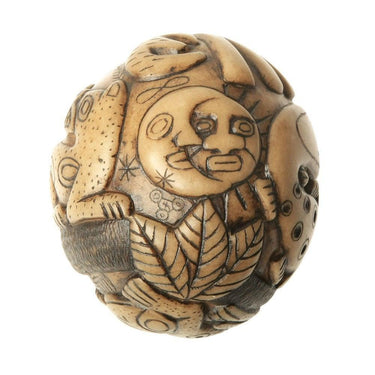


 Peruvian Pachamama Mother Egg 9cm × 8cm – Shamanic Andean Altar Stone
£350.00
/
Peruvian Pachamama Mother Egg 9cm × 8cm – Shamanic Andean Altar Stone
£350.00
/