The Meaning of the 10-Point Stone
Traditional Chumpi sets are commonly made with one to seven points, each corresponding symbolically with one of the seven primary chakras. Stones with eight to twelve points belong to later expanded systems that place additional energetic centres beyond the physical body.
The 10-point stone is often associated with themes such as:
- higher awareness
- planetary connection
- expanded consciousness
- ancestral or collective memory
- spiritual perspective
- the relationship between personal and universal experience
Interpretations differ significantly. Some practitioners connect the tenth point with planetary consciousness, while others associate it with a wider field of soul memory, collective responsibility or guidance beyond the individual self.
It is best approached as a symbolic tool rather than a fixed map. The stone offers a point of contemplation, but its meaning may develop differently according to the lineage, teacher or practitioner.
Expanded Chakra Context
The chakra system comes from Indian spiritual and philosophical traditions, especially yoga and Tantra. The familiar seven-chakra model includes the root, sacral, solar plexus, heart, throat, brow and crown centres.
Expanded eight-to-twelve-chakra systems are more modern and are not universally recognised within Indian or Andean traditions. They often describe additional centres such as the Earth Star, Soul Star or Stellar Gateway, although names and placements vary.
The use of a 10-point Andean Chumpi Stone within this framework is therefore a contemporary blending of systems. It brings Andean ceremonial stonework into relationship with a modern expanded-chakra model.
This does not lessen its meaning, but it should be described clearly and respectfully rather than presented as one ancient universal teaching.
Sacred Symbols & Carved Meaning
Each stone is marked with hand-carved symbols that may vary from one piece to another.
Possible motifs include:
- Inti: The Sun, associated with life, warmth and illumination
- Serpent: Renewal, wisdom and Earth-based transformation
- Jaguar: Courage, power and embodied authority
- Eagle or Condor: Vision, perspective and Upper World connection
- Pachamama: Mother Earth, nourishment and balance
- Chaska Kuna: Star beings or celestial connection
- Sacred leaf forms: Relationship with land, offering and ceremonial practice
The symbols are not always arranged in the same way. Some stones may carry one motif more strongly than another, and this may change how the piece is experienced.
Variations are intentional and natural to the hand-carved process. The design should not be expected to match the photograph exactly.
The Three Carved Rings
Many Chumpi stones are surrounded by three carved bands. These are commonly linked with the three realms of Andean cosmology:
- Ukhu Pacha — the inner or lower world of roots, ancestors and what lies beneath the visible surface
- Kay Pacha — the present world of daily life, relationship and embodied experience
- Hanaq Pacha — the upper world of spirit, stars and expanded vision
The same three rings are also sometimes interpreted through:
- Munay — love or heart
- Yachay — wisdom or knowledge
- Llank’ay — work, service or purposeful action
Together, the rings suggest that insight is strongest when feeling, understanding and action are brought into relationship.
Q’ero Paqo & Ceremonial Use
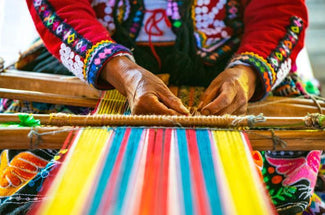
The Q’ero are Indigenous people of the high Andes of Peru, known for maintaining distinctive ceremonial, agricultural and textile traditions.
Within Q’ero and wider Andean practice, a paqo is a ritual specialist who works in relationship with people, mountains, land, ancestors and sacred beings. Their role is more specific than the broad Western word “shaman”.
Chumpi stones may be used within practices connected with rites of passage, Bands of Protection, mesa work, symbolic cleansing and lineage relationship. These formal practices can involve training and initiation.
Those without that background may still work respectfully with the stone as a personal altar Khuya, meditation focus or symbol of expanded awareness without claiming traditional authority.
Altar, Mesa & Personal Practice
The 10-point stone works well as an individual altar piece or as part of a larger Chumpi collection.
It may be placed:
- above a seven-stone set to represent a higher centre
- at the upper point of an altar
- beside ancestor photographs or celestial symbols
- near a written prayer or long-term intention
- within a travel or home mesa
- beside a Condor stone for vision and Upper World work
Its size allows it to sit comfortably in the hand without feeling too small, while still carrying enough weight to feel grounded and substantial.
The stone may be used when reflecting on the relationship between personal life and wider responsibilities, or when seeking perspective beyond the immediate situation.
How to Use
Place the Chumpi Stone on a woven cloth, altar or stable surface.
Hold it in both hands and notice the weight, temperature, carved points and symbols. Bring one clear intention to mind.
Rather than asking for a fixed prediction, consider questions such as:
“What wider pattern am I being asked to recognise?”
“How can I bring higher understanding into grounded action?”
Sit quietly for several minutes, then place the stone back on the altar.
For ceremonial or lineage-based use, follow the methods taught by your own teacher or paqo.
A Simple 10-Point Reflection
Place the stone above your existing altar arrangement or at the top of a vertical line of sacred objects.
Take three slow breaths.
Rest your hands around the stone and repeat:
“May higher vision remain grounded. May wisdom become service, and may insight return as right action.”
Remain in silence and notice what shifts in your attention.
Close by offering gratitude to the stone, the land and the people whose traditions inform its making.
Llama Wool Blessing & Andean Pouch
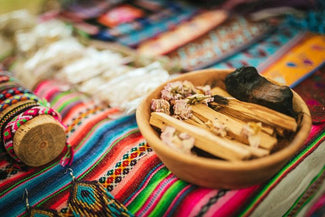
The stone is supplied in a local Q’ero-style Andean pouch with a small amount of llama wool included as a blessing.
Llama wool may carry associations with warmth, livelihood, endurance, protection and relationship with the highland landscape.
It may be placed beneath the stone, kept within the pouch or held briefly while setting an intention.
The colour, weave and pattern of the pouch will vary, and the amount and shade of the llama wool may also differ.
Natural Variation & Craftsmanship
Each 10-point Chumpi is hand-carved from natural Andean stone, so differences in size, weight, colour, pattern, engraving depth and point shape are expected.
Please allow approximately ±5% variation in size and weight. The carved symbols may differ from the example shown, and no two stones will carry exactly the same arrangement.
The belief within this product tradition is that the carving may change according to season, stone and the energy the artisan is working with. One piece may feel more connected with ancestry, another with vision, balance, stars or protection.
These energetic impressions are personal and symbolic rather than fixed or guaranteed.
Natural mineral lines, tool marks and slight irregularities are part of the hand-carved character and are not considered faults.
Quick FAQs
What is a 10-point Chumpi Stone?
It is an individual hand-carved Andean ritual stone with ten points, often used within modern expanded-chakra and ceremonial frameworks.
Is this a complete Chumpi set?
No. This listing is for one 10-point stone only. Traditional one-to-seven-point sets and other higher-point stones are separate products.
What is a Khuya?
A Khuya is a sacred or beloved stone held in ceremonial relationship and used with care and intention.
What does the tenth point represent?
Interpretations vary, but it is often associated with expanded awareness, planetary consciousness, collective memory or spiritual perspective beyond the personal field.
Is the 10-point chakra traditional to Andean culture?
The stone and its carving come from Andean-inspired practice, while the expanded chakra interpretation is a contemporary blending with modern chakra systems.
Will every stone have the same symbols?
No. Carved motifs, point shape, stone colour and engraving depth will vary from piece to piece.
What is included?
The stone comes with a local Andean-style pouch and llama wool offered as a blessing.
Is a Chumpi belt included?
No. Chumpi belts are sold separately.
Safety
Handle the stone carefully and use it over a soft surface. Natural stone may chip if dropped.
Keep the stone, pouch and llama wool away from babies, young children and pets.
Avoid prolonged moisture, abrasive cleaners and harsh chemicals. Wipe gently with a soft, dry cloth.
Keep the pouch and llama wool away from candles, incense, charcoal and open flame.
Disclaimer
This is a hand-carved ceremonial and altar object connected with Andean-inspired symbolism and living Q’ero traditions. Expanded chakra meanings are modern interpretations and vary between teachers and practices. No medical, psychological or supernatural result is guaranteed.


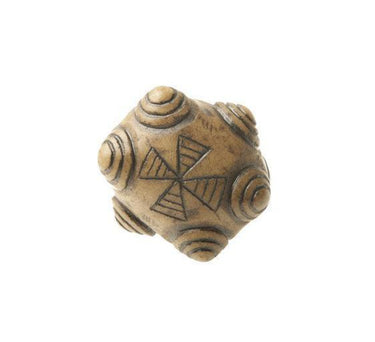

 Andean Chumpi 10-Point Chakra Stone 7-8cm – Shamanic Altar Khuya
£80.00
/
Andean Chumpi 10-Point Chakra Stone 7-8cm – Shamanic Altar Khuya
£80.00
/