Sweetgrass, Sacred Grass & Traditional Ceremonial Use
What Is Sweetgrass?
Sweetgrass is a fragrant perennial grass known botanically as Hierochloe odorata.
It grows across parts of the Northern Hemisphere and has particular cultural importance within a number of Indigenous communities in North America.
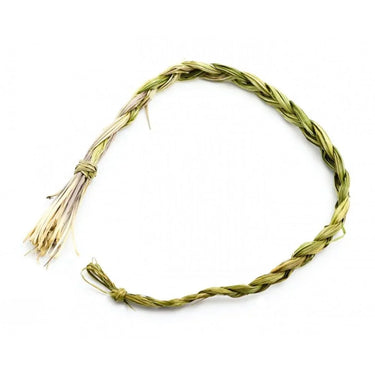
Its long blades are traditionally gathered, dried and braided, creating the familiar sweetgrass braid used for ceremonial, practical and aromatic purposes.
Why Is Sweetgrass Braided?
Braiding helps gather the long dried leaves into a practical form for storage, handling and ceremonial use.
The braid itself can also carry cultural meaning depending on the community or tradition.
Because these meanings are not identical across all Indigenous peoples, it is best not to assign one fixed symbolic interpretation to every sweetgrass braid.
What Does Sweetgrass Smell Like?
Sweetgrass is widely known for its naturally sweet fragrance.
Its aroma is often described as:
sweet • grassy • hay-like • soft vanilla • warm • earthy
The scent comes from naturally occurring aromatic compounds within the plant.
Older braids may develop a drier, earthier or less intense fragrance over time, which is normal for a natural herb.
Sweetgrass in Indigenous Traditions
Sweetgrass is regarded as sacred within a number of Indigenous North American cultures.
Depending on the Nation or community, it may be associated with prayer, ceremony, gratitude, purification, relationship, respect or welcoming.
There is no single universal sweetgrass ceremony, and traditional teachings vary considerably.
For this reason, sweetgrass should not be presented as though all Indigenous peoples use it in the same way.
Sweetgrass & Smudging
The word smudging is often used commercially to describe burning herbs for smoke cleansing.
However, smudging is also the name of specific Indigenous ceremonial practices with cultural and spiritual significance.
Where sweetgrass is used outside those traditions, terms such as aromatic burning, ritual incense or personal cleansing practice can sometimes be more respectful and precise.
People who wish to learn about traditional Indigenous use should seek teachings from the relevant communities rather than relying on generic commercial instructions.
Is Sweetgrass Burned After Sage?
Some modern spiritual practices use white sage first and sweetgrass afterwards, often describing one as clearing and the other as welcoming.
That sequence should not be presented as a universal Indigenous rule.
Different communities have different plant traditions, ceremonial protocols and teachings, and some do not use these plants together at all.
If you follow a particular cultural tradition, use the teachings appropriate to that tradition.
Spiritual Meaning of Sweetgrass
Sweetgrass is commonly associated with themes such as:
- respect
- prayer
- gratitude
- renewal
- connection
- welcome
- harmony
- relationship with nature
These meanings vary across communities and should be understood as cultural and spiritual associations rather than guaranteed energetic effects.
How to Burn Sweetgrass
If you choose to burn the braid:
- Place the braid over a suitable heat-resistant dish.
- Light the very end briefly.
- Allow it to catch for a moment.
- Gently extinguish the flame so the tip smoulders.
- Let the aromatic smoke rise naturally.
- Extinguish thoroughly after use.
Only a small section needs to be burned at a time.
Never leave smouldering sweetgrass unattended.
Can Sweetgrass Be Reused?
Yes.
A braid may be used over multiple occasions if only a small section is burned each time.
Once finished, make sure the ember is completely extinguished before storing the braid.
Using a Heat-Resistant Bowl
A ceramic incense bowl, metal dish or other heat-resistant container can be used beneath smouldering sweetgrass.
A layer of sand can help protect the dish from heat and provide a safe place to extinguish the ember.
About Abalone Shells
Abalone shells are sometimes sold as incense or herb-burning bowls in contemporary spiritual practice.
However, their use should not automatically be described as part of one universal Indigenous ceremonial system.
If using an abalone shell, place it on a stable heat-resistant surface and consider adding sand or another insulating material, as shells can become hot.
Sweetgrass for Meditation & Reflection
Sweetgrass can be used as part of a personal reflective or meditative routine.
Its fragrance may help mark the beginning of a quiet practice or create a distinctive atmosphere.
Possible settings include:
- meditation
- journalling
- prayer
- altar spaces
- seasonal rituals
- personal reflection
These are experiential uses rather than claims that sweetgrass changes mood, energy or health.
Sweetgrass as Natural Incense
Sweetgrass can also be appreciated simply for its aroma.
Unlike manufactured incense sticks or cones, a braid is a dried botanical material with natural variation in scent and burn characteristics.
Its fragrance tends to be softer and more herbaceous than heavily perfumed incense.
Can Sweetgrass Be Kept Unburned?
Yes.
Many people keep sweetgrass unburned as a symbolic, decorative or aromatic botanical.
It can be placed in a sacred space, displayed on an altar or kept somewhere dry where its natural scent can be appreciated.
Natural Variation
Sweetgrass is a natural harvested plant material rather than a factory-made item.
Individual braids may vary in:
- length
- thickness
- colour
- tightness of braid
- fragrance
- dryness
These differences are normal and make each braid slightly individual.
Harvesting & Sourcing
The supplied product information describes the sweetgrass as hand-harvested and traditionally braided.
It also states that the supply includes Indigenous and First Nations families and that some suppliers have maintained harvesting traditions across generations.
Sweetgrass harvesting can carry cultural and ecological importance, so respectful sourcing matters.
How to Store Sweetgrass
Keep the braid:
- somewhere cool and dry
- away from excessive humidity
- away from direct prolonged sunlight
- away from open flames when not in use
- out of reach of children and pets
Avoid sealing damp plant material in an airtight container, as retained moisture can encourage deterioration.
Safe Burning
When burning sweetgrass:
- use a heat-resistant holder
- keep away from curtains and other flammable materials
- ensure good ventilation
- never leave it unattended
- keep away from children and pets
- extinguish completely after use
- avoid inhaling smoke directly
Anyone with asthma, respiratory sensitivity or smoke intolerance should avoid exposure to burning herbs.
Quick FAQs
What is sweetgrass?
Sweetgrass is a fragrant grass, Hierochloe odorata, with cultural significance in a number of Indigenous North American traditions.
How long is the braid?
Approximately 45–55cm / 18–22".
What does sweetgrass smell like?
Naturally sweet and grassy, often compared with fresh hay and vanilla.
Is sweetgrass the same as sage?
No. Sweetgrass and sage are different plants with different aromas and cultural uses.
What is sweetgrass traditionally used for?
Uses vary between Indigenous Nations and communities and may include ceremony, prayer, purification, gratitude and other sacred practices.
Can I burn it like incense?
Yes, it can be burned carefully in small amounts for its fragrance, provided appropriate fire safety is followed.
Do I need to burn the whole braid?
No. Usually only a small end section is burned at one time.
Can it be reused?
Yes, once fully extinguished it can be stored and used again.
Does sweetgrass always smell strongly of vanilla?
No. Natural fragrance varies, and some braids may smell more grassy, hay-like or earthy.
Can I keep it without burning it?
Yes. It can be kept as a natural aromatic, symbolic or decorative botanical.
Is sweetgrass always used after white sage?
No. That is not a universal Indigenous practice. Traditions and ceremonial protocols vary considerably between communities.
Please Note
Sweetgrass has deep cultural significance within a number of Indigenous North American traditions.
References to purification, blessing, prayer, harmony or spiritual meaning describe cultural and traditional associations rather than guaranteed effects.
Sacred practices differ between Nations and communities, so this product should not be presented as representing one universal Indigenous ceremony.
Always burn botanical materials responsibly in a well-ventilated area and extinguish completely after use.




 Sweetgrass Braid 45–55cm - Hierochloe odorata -Traditional Sacred Grass
£12.50
/