What Is a Pi Stone?
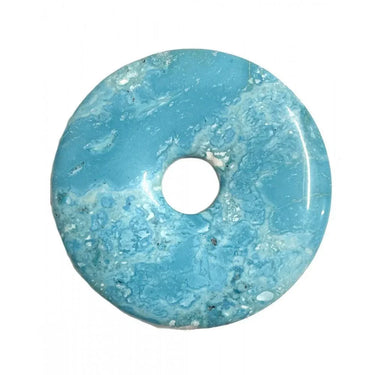
A Pi Stone is a polished circular stone with a hole through the centre, sometimes also called a gemstone donut or torus-style stone.
Its simple geometry has made it popular in spiritual and symbolic practice.
Within contemporary Munay-Ki traditions, the outer circle may represent continuity, wholeness and the cyclical movement of life, while the open centre may symbolise unity, space or the point through which change and transformation can pass.
This interpretation is symbolic rather than a scientifically established energetic property of the shape.
Pi Stone Symbolism • Life, Death & Renewal
The circle is one of humanity’s oldest symbols of continuity and return.
Within contemporary spiritual practice, a Pi Stone may represent:
- wholeness
- unity
- continuity
- life, death and renewal
- transformation
- personal growth
- cycles and change
- interconnectedness
The open centre can also be understood as a reminder that transformation requires space — something must open before something new can emerge.
For this reason, Pi Stones are often chosen for ritual, meditation and rites of passage.
Dyed Howlite • Turquoise Appearance & Symbolism
This particular Pi Stone is made from dyed Howlite.
Howlite is naturally pale or white with characteristic veining, making it especially suitable for dyeing to create the vivid blue-green appearance commonly associated with turquoise.
The result is an attractive polished stone that carries the visual language of turquoise without being sold as natural turquoise.
Within contemporary crystal traditions, turquoise symbolism is commonly associated with:
- communication
- friendship
- expression
- calm
- protection symbolism
- self-awareness
- Throat Chakra practice
These meanings are metaphysical associations rather than medical or therapeutic effects.
What Is the Munay-Ki?
The Munay-Ki is a contemporary system of nine initiatory rites popularised through the work of Alberto Villoldo and the Four Winds Society.
It draws inspiration from Andean and Amazonian spiritual traditions and is commonly presented as a pathway centred on personal transformation, wisdom, stewardship and spiritual development.
Within Munay-Ki practice, Pi Stones may be used symbolically during initiation and personal ritual as objects that hold meaning, intention and memory connected with the practitioner’s journey.
The nine rites are commonly named:
- Healer’s Rite
- Bands of Power
- Harmony Rite
- Seer’s Rite
- Daykeeper’s Rite
- Wisdomkeeper’s Rite
- Earthkeeper’s Rite
- Starkeeper’s Rite
- Creator Rite
Descriptions of these rites vary between teachers and lineages.
Claims that the Munay-Ki physically alter DNA, heal inherited trauma or change how the body ages should be understood as spiritual or metaphoric teachings rather than scientifically established effects.
Munay, Ki & “Energy of Love”
Within contemporary Munay-Ki teaching, “Munay” is commonly interpreted through Quechua ideas of love, intention and will, while “Ki” is often explained using the Japanese concept of life energy.
Together, the phrase is frequently rendered as “energy of love”.
This is a modern cross-cultural interpretation rather than one original Quechua phrase, so it is best understood within the contemporary Munay-Ki system itself.
Wearing Your Pi Stone
The central opening allows the Pi Stone to be worn on a suitable cord, leather thong or necklace fitting.
Worn this way, it can function as:
- meaningful crystal jewellery
- a ritual object
- a personal reminder of transformation
- a Munay-Ki symbol
- a meditation focus
A cord or necklace fitting may be purchased separately where required.
How to Use Your Pi Stone
Hold the stone during meditation or personal ritual and allow its circular form to become a simple visual or tactile focus.
You may wish to work with an intention around completion, transition, renewal or unity.
For Munay-Ki practice, use the stone according to the teachings or guidance of your facilitator or lineage.
For personal meditation, you might use an intention such as:
“May I honour what has passed, remain present with what is, and make space for what is becoming.”
Care & Storage
Avoid dropping the stone onto hard surfaces.
Keep away from harsh chemicals, prolonged water exposure and abrasive cleaners.
Clean gently with a soft, dry or slightly damp cloth.
Because the colour has been introduced through dyeing, prolonged exposure to water, chemicals or strong sunlight may affect the finish over time.
Quick FAQs
What is a Pi Stone?
A Pi Stone is a polished circular gemstone with a central hole, also known as a gemstone donut.
Is this natural turquoise?
No. This piece is made from dyed Howlite that has been coloured to resemble turquoise.
Why is Howlite dyed turquoise?
Howlite has a naturally pale colour and distinctive veining, making it well suited to producing an attractive turquoise-style appearance at a lower cost than natural turquoise.
What is a Munay-Ki Pi Stone?
Within contemporary Munay-Ki practice, a Pi Stone may be used as a symbolic ritual object connected with initiation, transformation and personal spiritual development.
Can I wear it as jewellery?
Yes. The central opening allows it to be worn on a suitable cord or necklace fitting.
What does the circle symbolise?
Within contemporary spiritual symbolism, the circle is commonly associated with unity, wholeness, continuity and cycles of life, death and renewal.
Is this connected with the Four Winds Society?
The Four Winds Society, founded by Alberto Villoldo, played a major role in popularising the modern Munay-Ki system. This product is suitable for personal Munay-Ki practice but should not be presented as an official Four Winds Society product unless that relationship is specifically documented.
Does the stone transmit healing energy?
Energy transmission and crystal healing belong to spiritual and metaphysical traditions and are not scientifically established effects of the stone.
NB:
As this item is made from natural Howlite that has been dyed and individually polished, variations in colour, veining, thickness, shape and surface finish are to be expected.
Natural mineral markings and slight undulations may be visible in the polished surface. These variations give each piece its own character and are not considered faults.
Please Note
References to Munay-Ki, energetic fields, chakras, transformation, protection, life-force symbolism and turquoise crystal meanings reflect contemporary spiritual, shamanic and metaphysical traditions.
This product is dyed Howlite and should not be described or sold as natural turquoise.
The Munay-Ki is a contemporary spiritual system influenced by Andean and Amazonian traditions. It should not be presented as one single ancient or universally Indigenous practice.
Disclaimer
For decorative, jewellery, spiritual and ritual use. Crystal and Munay-Ki meanings are symbolic and metaphysical in nature and are not medical, psychological or scientific claims.




 Turquoise Healing Crystal Pi Stone 50mm (Dyed Howlite) – Munay Ki Donut
£10.98
/
Turquoise Healing Crystal Pi Stone 50mm (Dyed Howlite) – Munay Ki Donut
£10.98
/