13-Note Peruvian Antara for Andean-Inspired Sound
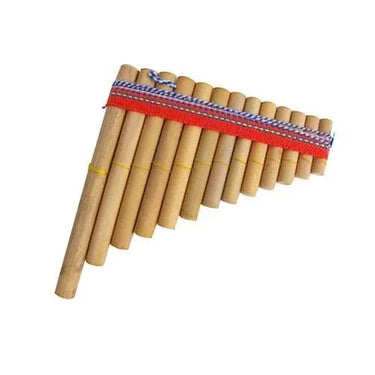
The 13-note layout gives this smaller pan flute a useful spread of pitches while keeping the instrument compact and easy to hold.
Each bamboo tube is cut to a different length, so each produces a different note when blown correctly across the top opening.
The result is the familiar airy, breath-led sound associated with panpipes across the Andes.
What Is an Antara?
“Antara” is a term used for certain Andean panpipe traditions and instruments, particularly in Peru.
Like “zampoña”, it belongs to a much broader family of Andean multi-pipe wind instruments.
Different regions and communities use different forms, arrangements and tuning systems, so antara should not be treated as one fixed universal design.
This Sacred Essence version is a compact handmade 13-note Peruvian bamboo pan flute.
Antara, Zampoña or Pan Flute?
All three terms are related, but they are not always interchangeable in every cultural or musical context.
“Pan flute” and “panpipes” are broad English descriptions for instruments made from multiple pipes of different lengths.
“Zampoña” is widely used as a broad term for Andean panpipes.
“Antara” is used for particular Andean and Peruvian forms of panpipe.
For this product, 13-note Peruvian antara is the most specific description, while panpipes and pan flute remain the clearest general search terms.
Compact 15 × 16.5cm Design
This is a noticeably smaller instrument than the large curved Sacred Essence zampoña.
Its compact scale makes it easier to handle, carry and display, while the 13-note arrangement still gives it a visually substantial spread of bamboo tubes.
The woven bands help hold and decorate the instrument, while the woollen neck cord adds a practical and traditional-style finishing detail.
How Panpipes Produce Sound
Panpipes are played by directing a narrow stream of air across the open top of each tube.
Shorter tubes generally produce higher pitches, while longer tubes produce lower ones.
The player moves the instrument across the lips to shift between notes and create simple melodies or repeated phrases.
Beginners may need a little practice to find the correct angle, but once a clean tone is produced the instrument becomes intuitive to explore.
Handmade Folk Instrument & Tuning
This is a handmade Peruvian folk-style pan flute.
Unless a specific musical scale or concert tuning is supplied for the individual instrument, it should not be assumed to have the precision tuning of a professional orchestral pan flute.
Natural bamboo varies in diameter, wall thickness and internal structure, so handmade instruments can differ slightly in pitch, response and tone.
That variation is part of the character of the piece.
Bamboo & Woven Decoration
Bamboo is naturally suited to panpipe construction because its hollow form creates resonant air chambers.
Each tube has its own grain, colouring and surface character.
The woven bands add colour and visual identity, while the woollen neck cord makes the instrument easier to carry or hang when not in use.
Because the textile work is handmade, colour combinations and pattern placement will vary.
Panpipes in Andean Music
Panpipes have deep roots across the Andes and remain closely associated with traditional and folk music in Peru, Bolivia and neighbouring regions.
They may be played alone or as part of larger ensembles alongside drums, flutes, stringed instruments and other wind instruments.
Different communities have their own musical forms and traditions, so there is no single universal Andean panpipe style.
Musical, Ceremonial & Reflective Use
The breath-led quality of panpipes gives them a very different presence from drums or rattles.
Rather than producing rhythm through impact, the player works with airflow, pitch and tone.
This antara may be used for:
- folk-inspired music
- musical improvisation
- breath-led sound practice
- meditation
- storytelling
- cultural workshops
- contemporary ceremonial settings
- personal sound exploration
Its value lies in breath, sound, expression and cultural character rather than guaranteed healing, trance or spiritual effects.
A Simple Way to Begin Playing
Hold the panpipes so the open tube ends sit close to your lower lip.
Choose one tube and blow a narrow stream of air across the top edge rather than directly down into it.
Once you find a clear tone, move slowly between neighbouring tubes.
Experiment with breath strength, angle, sustained tones and simple repeated patterns.
The instrument usually becomes easier to play as you learn the most effective position for each tube.
Care
Keep the bamboo panpipes dry and away from prolonged moisture or high humidity.
Do not soak or wash the instrument in water.
Wipe the exterior gently with a soft dry cloth.
Avoid crushing or placing heavy objects on the bamboo tubes.
Store away from strong direct sunlight and excessive heat to help protect both the bamboo and woven decoration.
Quick FAQs
How large are these panpipes?
They measure approximately 15cm × 16.5cm.
How many notes do they have?
This version has 13 bamboo pipes / notes.
What is an antara?
Antara is a term used for certain traditional Andean panpipe forms, particularly in Peru.
Is an antara the same as a zampoña?
They belong to the same broad family of Andean panpipes, but the terms can refer to different regional forms and should not always be treated as identical.
How do you play them?
Blow across the open top of each bamboo tube rather than directly down into it. Moving between tubes produces different pitches.
Are they suitable for beginners?
Yes for musical exploration, although it can take a little practice to produce a clear tone consistently.
Are they professionally tuned?
No specific concert tuning or scale has been supplied, so this should not be assumed.
What are they made from?
Natural bamboo with colourful handwoven bands and a woollen neck cord.
Can they be used for meditation or sound work?
Yes. Their soft breathy tone can be incorporated into meditation and contemporary sound practice, although no therapeutic or spiritual effect is guaranteed.
Will mine look exactly like the photograph?
No. Bamboo colour, grain, tube dimensions, woven colours and handmade detail will vary.
NB
As this item is made from natural bamboo and individually finished by hand, slight variations in bamboo colour, grain, tube dimensions, textile colour, decorative detail, sound and finish are to be expected. These natural and handcrafted differences give each piece its own character and are not considered faults.
Please Note
Andean panpipe traditions vary between regions, communities and musical contexts. References to antara, zampoña, Andean music, ceremony or spiritual sound should not be understood as describing one universal Peruvian or Indigenous tradition.
No particular professional tuning standard has been supplied for this handmade instrument, and references to meditation, sound work or ceremonial use do not represent guaranteed physical, psychological, healing or spiritual effects.



 Panpipes – 13-Note Peruvian Antara 16.5cm - Andean Handmade Bamboo Pan Flute
£7.50
/
Panpipes – 13-Note Peruvian Antara 16.5cm - Andean Handmade Bamboo Pan Flute
£7.50
/