What Is Citrine?
Citrine is a yellow to golden variety of quartz.
Like other quartz crystals, its primary chemical composition is silicon dioxide, SiO₂. Citrine may range in appearance from soft pale yellow and warm cream through to deeper golden, honey and amber-like tones.
Its polished surface creates a smooth tactile finish while allowing its internal colour, translucency and natural mineral character to remain visible.
Every tumblestone is different, which is part of the appeal of choosing natural mineral pieces.
Citrine Meaning
The meaning of Citrine centres strongly on abundance, prosperity, confidence and opportunity.
Within contemporary crystal traditions, it is one of the stones most closely associated with success, optimism and constructive personal growth.
Its sunny colouring naturally supports this symbolism, giving Citrine a bright and uplifting character that has helped make it one of the most recognisable crystals used in abundance and manifestation work.
Rather than viewing Citrine as something that guarantees wealth or success, it can be used as a symbolic reminder of intention, optimism and the willingness to recognise opportunities when they arise.
The Merchant’s Stone • Abundance & Prosperity
Citrine is often known as the Merchant’s Stone.
This name comes from its long-standing metaphysical association with commerce, prosperity, opportunity and financial success.
It is also sometimes called the Success Stone or Money Stone.
Some people place Citrine near a workspace, business area or cash box, while others use it within abundance crystal grids and intention-setting rituals.
Its purpose within these practices is symbolic: representing prosperity, confidence and purposeful forward movement rather than guaranteeing a particular financial outcome.
Citrine & the Solar Plexus Chakra
Citrine is one of the crystals most strongly associated with the Solar Plexus Chakra.
Within contemporary chakra practice, the Solar Plexus represents confidence, identity, motivation, determination and personal power.
Its traditional colour is yellow, making Citrine an especially natural fit within Solar Plexus crystal work.
A Citrine tumblestone may be held during meditation, placed nearby during chakra practice or included in a crystal layout focused on confidence and direction.
This strong Solar Plexus connection is one of the reasons Citrine is frequently chosen for practices centred on self-belief and constructive action.
Confidence, Positivity & Personal Power
Citrine's bright golden appearance has long encouraged associations with warmth, optimism and vitality.
Within crystal traditions, it is often selected when confidence, motivation or a clearer sense of direction is the focus.
It can serve as a symbolic reminder to approach new situations with greater openness and belief in your own abilities.
Its connection with personal power does not mean controlling outside events. Instead, it fits more naturally with recognising your choices, setting direction and taking purposeful action.
Manifestation & Intention Setting
Citrine has become particularly popular within manifestation practice.
In this context, manifestation can be understood as defining an intention clearly, focusing attention on a desired direction and then taking realistic steps towards it.
A Citrine crystal may be held while writing intentions, placed beside a journal or vision board, or positioned within an abundance crystal grid.
Its association with opportunity and prosperity makes it particularly suited to intentions involving work, creativity, business, confidence and personal development.
The crystal acts as a symbolic focus rather than a guarantee that a particular result will occur.
Astrology, Zodiac & Birth Sign Associations
Citrine has an especially strong connection with astrology because it is one of the recognised November birthstones.
November spans the zodiac signs Scorpio and Sagittarius, giving Citrine a natural birthstone connection with both.
For Scorpio, Citrine is sometimes linked symbolically with confidence, renewal and bringing greater lightness to a sign traditionally associated with depth and transformation.
For Sagittarius, its warm golden character fits naturally with themes of optimism, expansion, enthusiasm and forward movement.
Citrine is also frequently associated with Leo in contemporary crystal astrology because of its solar colouring and symbolic links with confidence, personal power and self-expression.
Crystal-to-zodiac correspondences vary between traditions, so these should be understood as symbolic associations rather than fixed astrological rules.
Citrine & the Fire Element
Citrine is most closely associated with the Fire element.
Fire represents warmth, vitality, transformation, creativity, action and illumination.
These qualities mirror many of Citrine's traditional associations with confidence, success, motivation and personal power.
Its yellow and golden colouring also evokes sunlight and warmth, reinforcing the elemental connection.
Within elemental crystal practice, Citrine may be used in Fire-focused grids, altars or intention work centred on courage, creativity, ambition and forward momentum.
This Fire correspondence also complements its strong Solar Plexus Chakra association.
Citrine Healing Crystal
Citrine is frequently described as a healing crystal within contemporary spiritual and wellbeing traditions.
Its strongest metaphysical themes include abundance, confidence, prosperity, motivation, Solar Plexus symbolism and personal growth.
These associations belong to spiritual and metaphysical practice rather than established medical treatment.
Citrine can therefore be enjoyed during meditation, chakra work, intention setting or simply as a beautiful polished crystal.
Crystal Grids & Everyday Use
Its compact 1–2cm size makes this Citrine tumblestone especially useful for smaller crystal grids, pocket carrying and crystal pouches.
It can be held during meditation, kept beside a workspace or positioned within an abundance-focused layout.
Because Citrine is associated with prosperity, confidence and opportunity, it pairs naturally with crystal practices centred on business, creative projects, new beginnings and personal goals.
Its smaller size also makes it easy to combine with other crystals without overwhelming a grid or altar.
A Grade Citrine
A Grade is a commercial grading description used within the crystal trade to distinguish the general appearance and finish of a batch.
It is not a universal geological grading system.
Individual pieces can still show differences in colour intensity, translucency, internal inclusions and shape.
Those natural variations are part of the character of each tumblestone rather than imperfections.
Natural Citrine Character
Every Citrine tumblestone will have its own individual appearance.
Some may be pale and translucent, while others may show richer golden tones, cloudy areas, internal markings or mineral inclusions.
Shape and polish will also vary slightly between stones.
This variation gives each crystal its own individual character.
Care
Citrine belongs to the quartz family and is relatively durable, but care should still be taken to protect its polished finish.
Clean gently with a soft damp cloth and dry afterwards.
Avoid harsh chemical cleaners and hard impacts.
Prolonged exposure to strong direct sunlight is best avoided, as colour may change or fade over time.
Store separately from rougher or harder minerals where practical.
Quick FAQs
What is Citrine traditionally used for?
Within crystal practice, Citrine is associated with abundance, prosperity, success, confidence, opportunity and positive forward movement.
What is the meaning of Citrine?
Its strongest symbolic meanings centre on abundance, prosperity, personal power, confidence, optimism and opportunity.
Why is Citrine called the Merchant’s Stone?
The name reflects its traditional association with trade, prosperity, business success and abundance.
What chakra is Citrine associated with?
Citrine is most strongly associated with the Solar Plexus Chakra.
What zodiac signs are associated with Citrine?
As a November birthstone, Citrine is naturally associated with Scorpio and Sagittarius. It is also commonly connected with Leo in contemporary crystal astrology.
Is Citrine a November birthstone?
Yes. Citrine is one of the recognised birthstones for November.
What element is Citrine associated with?
Citrine is most closely associated with the Fire element because of its symbolic links with warmth, motivation, confidence, creativity and personal power.
Is Citrine a manifestation crystal?
It is commonly used symbolically in manifestation and intention-setting practices, particularly those focused on abundance, opportunity and success.
How large is the tumblestone?
Approximately 1–2cm.
How much does each stone weigh?
Up to approximately 10g.
What does A Grade mean?
A Grade is a commercial quality description relating to the general appearance and finish of the stones. It is not a universal geological grading standard.
Will every Citrine crystal look identical?
No. Colour, clarity, inclusions, shape and polish naturally vary between individual pieces.
NB
As this item is made from Citrine quartz and individually polished, variations in colour, clarity, mineral patterning, inclusions, shape and finish are to be expected.
These natural differences give each tumblestone its own individual character and are not considered faults.
Please Note / Disclaimer
Crystal meanings, chakra associations, zodiac correspondences, elemental associations and references to healing, abundance, manifestation, prosperity, confidence or positivity describe traditional and contemporary metaphysical beliefs.
Astrological and elemental crystal correspondences can vary between different spiritual and metaphysical traditions.
Citrine does not guarantee financial success, wealth, physical vitality or specific emotional outcomes and should not be used to diagnose, treat or manage any medical or psychological condition.
Small object. Not suitable for children. Keep out of reach of children and pets.





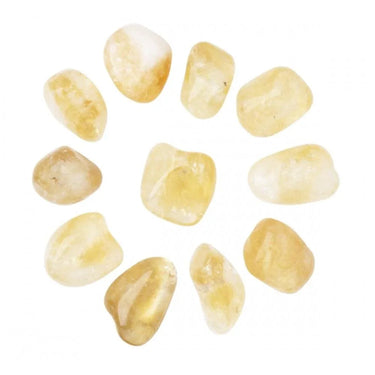


 Citrine Crystal Tumblestone 1–2cm - A Grade Healing Crystal - Abundance & Solar Plexus
£0.68
/
Citrine Crystal Tumblestone 1–2cm - A Grade Healing Crystal - Abundance & Solar Plexus
£0.68
/