Kokopelli • Growth, Fertility & Renewal
Kokopelli is one of the most recognisable figures associated with the Indigenous cultures and archaeological traditions of the American Southwest.
Usually depicted as a humpbacked flute player, the figure has been interpreted in different communities and periods in connection with fertility, agriculture, abundance, music, storytelling, seasonal change and renewal.
These meanings are not identical across every Indigenous nation or tradition.
For contemporary personal practice, the Kokopelli image may therefore be approached symbolically through themes such as:
- growth
- fertility
- creativity
- abundance
- music
- storytelling
- joy
- transition
- renewal
- the continuing cycles of life
Rather than presenting Kokopelli as one universal Native American deity, it is more respectful to recognise that meanings vary across Southwestern cultures and historical contexts.
A Handcrafted Rawhide Rattle
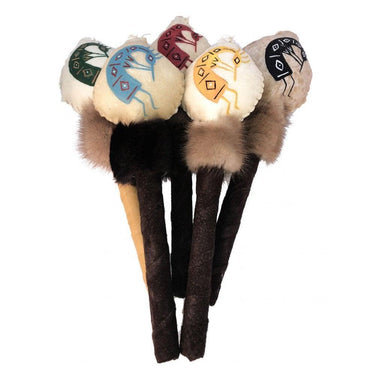
This rattle is made from natural rawhide and filled with corn.
Rawhide gives the instrument an earthy, organic character, while the internal filling creates a textured sound that is softer and less sharp than some seed-filled gourd rattles.
The sound can be worked with gently or rhythmically depending on the pace and movement of the hand.
Because the material is natural and each rattle is handmade, differences in surface texture, shape, colour and sound are expected.
Shamanic & Ceremonial Use
Rattles are used in many different ceremonial and spiritual traditions around the world, although their meanings and methods of use vary significantly between cultures.
Within contemporary shamanic and personal ritual practice, a rattle may be used to:
- establish rhythm
- accompany meditation
- mark the opening or closing of ceremony
- support journeying
- focus attention
- accompany prayer or intention
- create a steady sacred-sound pattern
- mark transitions within ritual
The rhythm may help provide a consistent auditory focus, but the rattle itself does not create a trance, healing or spiritual outcome.
Sound, Rhythm & Presence
This rawhide rattle has a soft, textured sound with an earthy quality rather than a bright metallic attack.
Played slowly, it can provide a gentle pulse for meditation or reflective work.
Played more steadily, it can create a repeating rhythmic pattern suited to journeying, ceremony or group practice.
Each rattle will sound slightly different because of natural variation in the rawhide, filling, shape and construction.
That individuality is part of the character of a handmade instrument.
Hand-Painted Kokopelli Design
Each rattle is individually painted with a Kokopelli motif.
Colours and decorative details vary, so the piece you receive may differ from photographs or previous batches.
If you have a preferred colour, you are welcome to request it and Sacred Essence will do its best to match your preference from available stock.
A specific colour cannot be guaranteed.
Natural Rawhide & Salt Residue
Salt is used as part of the rawhide drying and curing process.
Very occasionally, a small amount of residual salt may shake loose during the first few uses. If this happens, it is usually only a light trace and should quickly diminish.
This is a normal part of working with traditionally prepared natural rawhide and does not indicate damage or a fault with the rattle.
How to Use a Shamanic Rattle
Hold the handle comfortably and begin with a slow, gentle movement.
Listen to the tone before increasing the speed.
For meditation, a slow repeating rhythm can be enough to create a steady focus.
For journeying or ceremonial work, some practitioners use a more continuous pulse.
The rhythm does not need to be loud.
A consistent, intentional sound is often more useful than force.
A Simple Rattle Ritual
Hold the rattle for a moment before beginning.
Set an intention connected with the symbolism that speaks to you — perhaps growth, renewal, creativity or transition.
Begin with a slow rhythm.
Allow the sound to settle into the space.
You might hold a simple intention:
“May what is ready to grow be given space.”
Continue for as long as feels appropriate, then gradually slow the rhythm before bringing the practice to a close.
What Is a Shamanic Rattle?
“Shamanic rattle” is a broad contemporary term for rattles used within shamanic, ceremonial and journeying practices.
Rattles themselves occur in many distinct cultures and traditions, and there is no single universal shamanic rattle design or method of use.
This Kokopelli rawhide rattle is a handcrafted ceremonial instrument with Southwestern-inspired symbolism, while its use in contemporary shamanic practice is broader and personal.
It should not be presented as representing every Indigenous tradition or as reproducing a specific ceremony unless that provenance is explicitly documented.
Quick FAQs
What is this Kokopelli rattle made from?
It is handcrafted from natural rawhide and filled with corn.
How large is the rattle?
Approximately 300mm / 12" overall including the handle and around 115mm / 4½" wide.
What does the Kokopelli symbol mean?
Kokopelli is associated with Indigenous traditions of the American Southwest and has been interpreted in connection with fertility, agriculture, abundance, music, storytelling and renewal. Meanings vary between cultures and historical contexts.
Is Kokopelli a fertility symbol?
Fertility is one of the best-known associations connected with Kokopelli, particularly alongside agriculture, abundance and renewal, but the figure has different meanings across Southwestern traditions.
What does the rattle sound like?
It has a textured, relatively soft and earthy rhythmic sound.
Is this a shamanic rattle?
It is suitable for contemporary shamanic, ceremonial and journeying practice. “Shamanic rattle” is a broad modern category rather than one universal traditional design.
Can it be used for meditation?
Yes. Its repeating rhythm may be used as an auditory focus during meditation or reflective practice.
Can it be used for sound healing?
It may be used within contemporary sound practices, but no medical or therapeutic healing result is guaranteed.
Are all the rattles the same colour?
No. Each piece is hand-painted and colours and decorative details vary.
Can I request a particular colour?
Yes. You may request a preferred shade and Sacred Essence will do its best to select from available stock, although colour cannot be guaranteed.
Why might a little salt come out of the rattle?
Salt is used to help complete the drying and curing of the rawhide. Occasionally, a very small amount of residual salt may shake loose during initial use. If it occurs, it is usually minimal and should quickly reduce.
Is every rattle unique?
Yes. Natural rawhide, hand-painting and handmade construction mean that colour, shape, finish and tone will vary slightly between pieces.
NB:
As this item is made from natural rawhide and individually finished by hand, slight variations in colour, painted detail, shape, sound and finish are to be expected. These natural and handcrafted differences give each piece its own character and are not considered faults.
Please Note
Kokopelli belongs to specific Indigenous cultural and historical contexts of the American Southwest, and meanings vary between communities and traditions.
References to fertility, abundance, growth, renewal, shamanic practice, journeying and ceremony describe cultural symbolism and contemporary spiritual use rather than guaranteed physical, psychological or supernatural effects.





 Kokopelli Rawhide Rattle 12" • Hand-Painted Shamanic & Ceremonial Rattle - Fertility
£48.50
/
Kokopelli Rawhide Rattle 12" • Hand-Painted Shamanic & Ceremonial Rattle - Fertility
£48.50
/