


Wild Remedies — Foraging, Herbal Recipes & Everyday Plant Wisdom

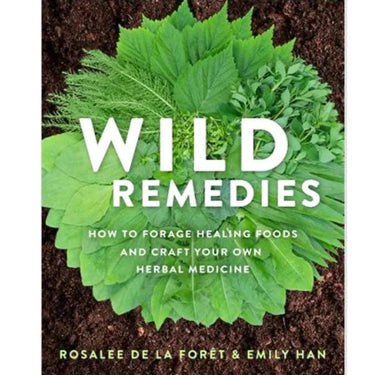
Wild Remedies by Rosalee de la Forêt and Emily Han is a richly illustrated guide to working with commonly found wild plants for food, traditional herbal preparations and everyday connection with nature.

Written by two experienced herbalists, the book introduces around two dozen useful plants that may be found growing in gardens, green spaces and other suitable environments. Each plant is explored through detailed guidance, photography and illustrations, alongside recipes and practical ideas for bringing wild foods and herbal traditions into the home.

Across 75 recipes, readers can discover everything from Dandelion Maple Syrup Cake, Nettle Frittata and Chickweed Pesto to herbal oils, salves, teas and other traditional preparations.

Part foraging book, part herbal medicine book and part seasonal kitchen companion, Wild Remedies is especially suited to readers who want to understand useful plants more deeply rather than simply learning their names.

Product Details:

  • Product: Wild Remedies
  • Authors: Rosalee de la Forêt & Emily Han
  • Format: Paperback
  • Pages: 400
  • Publisher: Hay House
  • Contents: Illustrated guide to around two dozen commonly found wild plants
  • Recipes: 75 food and herbal preparation recipes
  • Themes: Foraging, edible wild plants, herbalism, plant identification and seasonal living
  • Preparations include: Foods, teas, oils, salves and other traditional herbal recipes
  • Suitable for: Readers interested in wild food, herbal traditions, gardening and nature connection

About the Authors — Rosalee de la Forêt & Emily Han

Rosalee de la Forêt, RH, is a Registered Herbalist with the American Herbalists Guild and has worked extensively in herbal education. She has also served as Education Director at Learning Herbs and created a number of courses exploring practical herbalism and plant-based traditions.

Emily Han is a naturalist, herbalist, writer and educator whose work explores the connections between nature, culture and food. She is the author of Wild Drinks & Cocktails, co-author of Wild Remedies and has worked with Learning Herbs. She is also a Certified California Naturalist and Master Food Preserver.

Together, their complementary backgrounds in herbalism, food, education and nature writing give Wild Remedies a practical and approachable style.

Wild Remedies for Foraging, Food & Traditional Herbal Practice

What Is Wild Remedies?

Wild Remedies is a practical guide to identifying, harvesting and using a selection of common wild plants.

Rather than treating plants simply as weeds, the book encourages readers to look more closely at the species growing around them and to learn which may have culinary or traditional herbal uses.

The emphasis is on practical knowledge: identifying plants correctly, harvesting them appropriately and turning them into food or simple home preparations.

A Foraging Book with a Practical Focus

Foraging can seem intimidating at first, particularly when it comes to identifying plants accurately and understanding which parts may be used.

Wild Remedies is designed to make this process more accessible through detailed illustrations, photography and clear guidance.

The book does not simply list edible plants. It shows how they may be gathered, prepared and incorporated into recipes, making it useful for readers who want to move from curiosity into practical experience.

Some of the featured plants may also be grown intentionally in a garden, providing another option for readers who prefer cultivation to wild foraging.

Edible Wild Plants & Everyday Recipes

Food is one of the strongest themes running through Wild Remedies.

The book contains 75 recipes designed around wild and commonly found plants, helping readers discover how familiar species can be incorporated into meals and seasonal cooking.

Examples include:

  • Dandelion Maple Syrup Cake
  • Nettle Frittata
  • Chickweed Pesto

These recipes help show that learning about edible wild plants can be as much about flavour, seasonality and creativity as it is about traditional plant knowledge.

Herbal Oils, Salves, Teas & Traditional Preparations

Alongside food recipes, the book also explores traditional herbal preparations.

Readers can learn how plants may be used to make items such as herbal teas, infused oils and salves, following the authors' guidance and herbal framework.

These preparations form part of longstanding herbal traditions and are presented as practical ways to work with plants at home.

Rather than treating herbs as guaranteed treatments, Wild Remedies is best approached as a guide to plant knowledge, traditional preparation methods and responsible personal practice.

Learning to Identify Wild Plants

Correct plant identification is one of the most important aspects of foraging.

Wild Remedies includes illustrations and photography intended to help readers become more familiar with the plants covered in the book, but visual similarity between species means careful identification remains essential.

Readers should never eat or prepare a wild plant unless they are completely certain of its identity and suitability for use.

For beginners, combining a trusted guidebook with instruction from an experienced local forager or botanist can provide an additional layer of confidence.

Harvesting Wild Plants Responsibly

Foraging is not only about identifying what can be gathered, but also understanding when and how to harvest responsibly.

Good practice includes taking only what you need, leaving enough of a plant population to regenerate and respecting the habitat in which it grows.

It is also important to understand local access rules and permissions before collecting plants from land that is not your own.

This more mindful approach fits closely with the wider message of Wild Remedies: developing a more attentive and respectful relationship with the plants growing around us.

Growing Useful Plants at Home

Foraging is not the only way to work with the species featured in the book.

Many useful herbs and traditionally gathered plants can also be cultivated in a garden or suitable growing space.

Growing your own plants can make identification simpler and provides more control over how they have been cultivated, while still allowing you to explore seasonal recipes and herbal preparations.

For some readers, this can be an easier introduction to plant-based practice than gathering from the wild.

A Herbal Medicine Book for Curious Beginners

Wild Remedies sits comfortably within the wider tradition of the herbal medicine book, but its approach is broader than a simple catalogue of remedies.

It combines plant identification, food, recipes, herbal preparations and ecological awareness, helping readers understand plants as part of everyday life rather than only as ingredients in a remedy.

This makes it particularly approachable for readers whose interest begins with cooking, gardening or nature and gradually expands into herbalism.

Reconnecting with Nature Through Plants

One of the underlying themes of Wild Remedies is learning to notice what is growing nearby.

A plant seen every day in a garden, park or roadside verge can become far more interesting once you understand its name, history, traditional uses and ecological role.

That shift in attention can turn a familiar green space into somewhere worth observing more closely.

The book therefore works not only as a practical guide, but also as an invitation to become more curious about local plants and seasonal change.

Who Is Wild Remedies For?

Wild Remedies may appeal to readers interested in:

  • Foraging and wild food
  • Herbalism and traditional plant use
  • Edible wild plants
  • Seasonal cooking
  • Home herbal preparations
  • Gardening and useful plants
  • Nature connection
  • Botanical identification

It is particularly well suited to readers who want a visually engaging and practical introduction rather than a purely academic plant reference.

Frequently Asked Questions

Is Wild Remedies a foraging book?
Yes. The book includes guidance on identifying, harvesting and using commonly found wild plants, although it also covers cooking, gardening and traditional herbal preparations.

How many recipes are included in Wild Remedies?
The book contains 75 recipes, including both food recipes and herbal preparations.

Does Wild Remedies cover edible wild plants?
Yes. The book explores a selection of commonly found plants that the authors use for food and traditional herbal preparations.

Does the book include plant identification guidance?
Yes. It includes detailed illustrations and photography designed to support identification of the featured plants.

Is Wild Remedies suitable for beginners?
Yes. The authors present the material in an accessible way, although safe plant identification is essential and beginners should use additional expert guidance whenever they are uncertain.

Does the book include herbal remedies?
The book includes traditional herbal preparations such as teas, infused oils and salves. These are presented within the authors' herbal framework rather than as guaranteed medical treatments.

Can I use the book if I do not want to forage?
Yes. Some of the plants covered can be grown in a garden, and many readers may choose to explore the recipes and herbal preparations using cultivated or reliably sourced plants.

Please Note

Wild plant identification must be approached with care. Some edible plants have toxic lookalikes, and not every plant is suitable for every person.

Never consume or prepare a wild plant unless you are completely certain of its identity and suitability for use. Consider allergies, medications, pregnancy, existing health conditions and other individual factors before using herbs internally.

Traditional herbal preparations should not be treated as substitutes for qualified medical advice, diagnosis or treatment. The information in Wild Remedies is best approached as educational guidance on plant identification, food, herbal traditions and responsible nature-based practice.

Orders & Shipping
Orders placed before 3:00pm are processed and shipped the same day. We ship worldwide.

Tracking Information
Please monitor your parcel using the tracking details provided in your shipping confirmation email. Tracking is usually updated within 24 hours of dispatch and continues until delivery is confirmed.

Duties & Taxes
EU and international duties and taxes are the responsibility of the customer and must be paid locally where applicable. For non-UK customers, UK tax is automatically removed at checkout once the shipping destination is selected.

Customs Delays
Some international orders may be delayed due to customs checks, which are outside our control. Delays may be longer during busy periods.

Returns
For orders that qualified for free delivery, returned items may be subject to the original shipping fee and any collection costs.

Refused or Cancelled International Orders
International orders that are refused, returned, and then cancelled may be subject to a 10% surcharge. Parcels can be re-shipped on request, although an additional charge may apply.