


Sacred Mestana Mesa Cloth M70-Q - Red - Shamanic Altar & Ceremonial Cloth
 Sacred Mestana Mesa Cloth M70-Q - Red - Shamanic Altar & Ceremonial Cloth
£170.00
/
Sacred Mestana Mesa Cloth M70-Q - Red - Shamanic Altar & Ceremonial Cloth
£170.00
/
RRP£170.00

products.product.pickup_availability.unavailable
Your payment information is processed securely. We do not store credit card details nor have access to your credit card information.
Q'ero Mestana Mesa Cloth M70-Q • Red, Purple, Green & Yellow • Shamanic Altar & Ceremonial Cloth
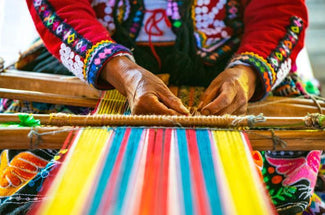
Newly handwoven in the Peruvian Andes, this Q'ero Mestana Mesa Cloth M70-Q is a vivid ceremonial textile created for use as the outer cloth of a personal mesa, altar or medicine bundle.
Its palette moves through reds, purple-pinks, green and yellow, giving the cloth a bright, expressive character while retaining the depth and texture of traditional handwoven wool and alpaca. The colours sit together in the distinctive rhythm of Andean weaving, where pattern, fibre, landscape and inherited knowledge are closely connected.
A mestana commonly forms the outer cloth of a personal mesa. Within it, a smaller unkuna or wachala may hold more intimate stones and objects. Together, these inner and outer layers can symbolise the relationship between the world we carry within and the wider world through which we move.
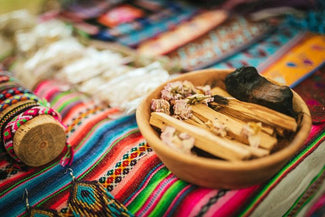
Khuyas, altar stones, offerings and other personally meaningful objects may be gathered inside over time, then wrapped and secured with a mesa tie or decorative beaded tie. In this way, the cloth becomes more than a textile. It becomes the container for a personal spiritual landscape.
Product Details
- Product: Q'ero Mestana Mesa Cloth
- Reference: M70-Q
- Primary Use: Outer cloth for a personal mesa, altar or medicine bundle
- Approx. Dimensions: Around 67 × 70cm / 26.5 × 27"
- Natural Batch Variation: Please allow approximately 10% variation in size and colour from batch to batch
- Colour Palette: Reds, purple-pinks, green and yellow
- Material: Hand-spun mixture of sheep's wool and alpaca
- Construction: Handwoven
- Dyes: Natural / traditionally dyed
- Inner Cloth Pairing: May be used with an unkuna or wachala
- Closure: May be wrapped and secured with a mesa tie or decorative beaded tie
- Origin: Peruvian Andes
- Condition: Newly handwoven
- Sourcing: Supplied through Q'ero and Andean weaving families rather than factory production
- Sold: Individually
Each cloth is handmade, so individual dimensions, colour balance, fibre texture, weave tension and pattern placement will vary. These differences are part of the character and story of the textile.
A Brightly Woven Personal Altar Cloth
This M70-Q has a more luminous character than many earth-toned mestanas.
Reds and purple-pinks bring warmth and intensity. Green introduces a living, natural note, while yellow adds flashes of brightness through the weave.
The overall effect is vibrant without becoming chaotic.
Like a personal mesa itself, the cloth feels layered: colour, pattern, memory and meaning held together in one form.
Mestana Mesa Cloths, Personal Altars & Andean Weaving Tradition
What Is a Mestana Mesa Cloth?
A mestana is a ceremonial textile used within some Andean spiritual traditions as the outer cloth of a personal mesa or medicine bundle.
When opened, it can define the altar space.
When folded, it gathers the contents back into one portable bundle.
The cloth is therefore both practical and symbolic.
It does not simply sit beneath the altar.
It becomes part of the altar itself.
Building a Personal Mesa
A personal mesa can begin very simply.
Perhaps with one stone.
One object connected with a teacher.
One piece gathered from a meaningful place.
From there, the bundle may grow through lived experience.
It may eventually hold:
- khuyas or sacred stones
- objects connected with mountains or rivers
- offerings
- inherited pieces
- personal symbols
- gifts from teachers
- ceremonial objects
- items connected with important transitions
Over time, the mesa becomes less a collection of things and more a record of relationships.
Outer Mestana & Inner Unkuna or Wachala
The larger mestana commonly forms the outer layer of the bundle.
Within it, a smaller unkuna or wachala may be used to hold more intimate or particularly significant objects.
In contemporary Andean ceremonial teachings, this layered structure is often understood through the relationship between the inner and outer worlds.
The outer cloth may reflect body, family, community, landscape and the visible world of everyday life.
The inner cloth may hold memory, intention, prayer and the quieter personal world.
One sits within the other.
The inner world is not separate from the outer world; it is carried within it.
Holding the Worlds Together
Once the inner cloth and altar objects are gathered inside the larger mestana, the bundle may be wrapped and tied.
A mesa tie or decorative beaded tie can gather together:
outer cloth • inner cloth • khuyas • altar stones • offerings • personal objects
Within some contemporary teachings, this is described as holding the worlds together.
The phrase suits the physical act beautifully.
Many separate elements are gathered into one contained form.
What Are Khuyas?
Khuyas are sacred or personally significant stones and objects used within some Andean ceremonial traditions.
A khuya may be connected with:
- a mountain
- a river
- a teacher
- an ancestor
- a journey
- an important place
- a ceremony
- a period of personal transformation
Their significance often comes from relationship rather than appearance.
A simple stone may become important because of where it came from, who gave it or what happened around it.
The mestana gives these objects a place to remain together.
Reds, Purple-Pinks, Green & Yellow
This M70-Q cloth has a particularly lively palette.
Reds bring warmth and visual strength.
Purple-pinks add richness and softness.
Green introduces a connection with land and living colour.
Yellow brings brightness and contrast.
These colours can be appreciated both aesthetically and within the wider symbolic richness of Andean textile traditions.
Their exact meanings should not be reduced to a fixed chart, because colour associations vary by family, village, lineage and individual textile.
Colour in Andean Weaving
Colour is one of the most expressive elements of Andean textile tradition.
Some cloths are intensely bright.
Others are muted and earth-toned.
The choice and arrangement of colour can reflect:
- community
- family
- region
- landscape
- available dye materials
- ceremonial context
- individual weaving tradition
A broad band, a narrow line or a sudden flash of colour can change the entire feeling of a cloth.
The relationship between colours matters as much as the colours themselves.
Two Halves & Complementarity
Some Andean ceremonial textiles are woven in two sections that are joined together.
Within contemporary interpretation, this construction may resonate with ideas of complementarity:
left and right • inner and outer • feminine and masculine • giving and receiving
The deeper theme is not opposition but relationship.
Two parts become one cloth.
The exact symbolism varies by textile and lineage.
A Cloth of Birth, Protection & Becoming
Woven cloth has long accompanied Andean life through important transitions.
Textiles have been used to wrap, carry, protect and receive.
In some communities, woven cloths have also been associated with childbirth and the receiving or wrapping of newborn children.
That gives cloth a powerful relationship with birth, protection and becoming.
Within contemporary mesa practice, the same imagery can carry symbolic meaning.
A personal altar can become a place that holds what is changing, what is being carried forward and what is being brought into a new stage of life.
Specific traditions vary between communities and should not be understood as one universal Andean custom.
Hand-Spun Sheep's Wool & Alpaca
This cloth combines sheep's wool and alpaca.
The sheep's wool gives structure and body.
The alpaca contributes softness and flexibility.
Together they create a textile substantial enough to wrap stones and ritual objects while remaining workable and responsive in the hands.
Because the yarn is hand-spun, small variations in thickness and texture are natural.
They are part of the making process rather than faults.
Natural Dyes
This cloth is described as naturally dyed.
Natural colour has depth and variation that factory production rarely reproduces.
A red may lean warmer in one batch.
A purple-pink may appear softer or more saturated.
Green and yellow accents may shift slightly in tone.
Please allow approximately 10% variation in colour and overall dimensions from batch to batch.
These changes are characteristic of handmade weaving and natural dyeing.
Q'ero & the Living Weaving Tradition
The Q'ero are an Indigenous Andean people associated with the highlands of the Cusco region and with distinctive ceremonial and textile traditions.
Their weaving belongs to a living cultural practice in which cloth can carry relationships with:
land • family • mountain • community • ceremony • memory
In contemporary spiritual writing, the Q'ero are sometimes described poetically as Rainbow Children, language that reflects the powerful role of colour, landscape and cosmology within Andean traditions.
Such descriptions are best understood symbolically rather than as formal titles used identically by every Q'ero community.
Weaving as Story
A textile can carry story without writing it down.
A colour may recall place.
A repeated form may belong to a family or village tradition.
A pattern may echo landscape, animals or ceremonial relationships.
A joined seam may speak of complementarity.
The cloth is therefore more than patterned fabric.
It is woven within a cultural world.
Landscape, Apus & the Andean World
The mountains of the Andes hold profound cultural and spiritual importance.
Sacred mountains may be understood as apus, living presences connected with particular places and communities.
For someone building a personal mesa, stones or objects connected with mountains, rivers or significant journeys may become part of the bundle.
In this way, a mesa can become a portable relationship with landscape.
A stone is no longer simply a stone.
It may hold memory, place and connection.
Personal Altars & Medicine Bundles
A mestana can be opened as a temporary or portable sacred space.
Khuyas and other meaningful objects may be arranged upon it during:
prayer • meditation • ceremony • offerings • reflection • personal spiritual practice
When the work is complete, the contents are gathered back into the cloth.
The same textile becomes both altar and bundle.
Opening & Closing the Mesa
The act of opening and wrapping a mesa can itself become part of the practice.
The smaller inner cloth is opened.
Khuyas and personal objects are arranged.
The larger mestana defines the wider altar space around them.
At the end, the objects are gathered, wrapped and tied together again.
Over time, the repeated movement becomes familiar.
The cloth softens.
The folds settle.
Its story develops through use.
Mesa Ties & Beaded Ties
A mesa tie keeps the complete medicine bundle securely closed.
It may be woven, braided, textile or beaded.
A decorative beaded tie can add another layer of colour and symbolism while serving the practical role of holding the cloths and altar objects together.
The tie visually completes the bundle.
Newly Handwoven
This M70-Q is described as newly handwoven.
It has not been presented as carrying another person's ceremonial history.
For someone beginning a new personal altar or rebuilding an existing mesa, that can be especially meaningful.
The textile begins its working life with its new keeper.
Fair Exchange & Direct Sourcing
The supplied information describes these textiles as sourced directly through Q'ero and Andean families rather than conventional factory production.
Fair exchange helps support weaving knowledge, family livelihoods and cultural continuity.
The value of the textile therefore lies not only in the finished cloth, but in the time, skill and inherited knowledge behind its making.
Cleaning & Care
Because this cloth contains wool, alpaca and natural dyes, cleaning should remain light and gentle.
Suitable care includes:
- specialist gentle dry cleaning where appropriate
- careful hand washing in cool to slightly warm water
- mild wool-safe or natural soap
- minimal agitation
- gentle rinsing
- drying flat
Avoid:
- hot water
- bleach
- strong detergents
- abrasive stain removers
- vigorous rubbing
- wringing
- machine washing
- tumble drying
Natural dyes can move or soften under aggressive cleaning.
If wax or ceremonial residue is present, avoid scraping or applying strong direct heat.
Steam & Pressing
If the cloth needs freshening, use only gentle warmth.
Avoid high temperatures and direct pressing that might damage natural fibres or dyes.
Minimal treatment is usually safest.
Storage
Store the cloth completely dry.
If used as a medicine bundle, keep the wrapped mesa somewhere protected from damp, excessive heat and prolonged direct sunlight.
Natural-fibre textiles benefit from occasional checking if stored for long periods.
Quick FAQs
What is a mestana?
A ceremonial Andean textile commonly used as the outer cloth of a personal mesa or medicine bundle.
What colours does this M70-Q cloth contain?
Reds, purple-pinks, green and yellow.
What is it made from?
A hand-spun mixture of sheep's wool and alpaca.
Is the exact size fixed?
No. Handmade production means dimensions can vary by approximately 10% from batch to batch.
Will the colours match the photograph exactly?
No. Natural dyes and individual weaving create variation in tone and colour balance.
What is a mesa?
A portable personal altar containing khuyas, stones and other personally meaningful or sacred objects.
What is an unkuna or wachala?
A smaller inner ceremonial cloth that may sit inside the outer mestana.
What do the inner and outer cloths represent?
Within some contemporary Andean teachings, they can symbolise the relationship between inner and outer worlds.
What are khuyas?
Sacred or personally significant stones and objects used within some Andean ceremonial traditions.
How is the medicine bundle closed?
The inner and outer cloths are wrapped together and may be secured with a mesa tie or decorative beaded tie.
Is this cloth newly woven?
Yes. The supplied information describes M70-Q as newly handwoven.
Are natural dyes used?
Yes, according to the supplied product information.
Can it be used as a personal altar?
Yes. It may be opened as an altar surface and wrapped again around the objects of a medicine bundle.
Were Andean textiles used around childbirth?
Textiles have been used for wrapping, carrying and receiving infants in some Andean communities. Specific customs vary.
How should it be cleaned?
Very gently, using specialist dry cleaning or careful hand washing in cool to slightly warm water with mild soap.
Can it be machine washed?
No. Machine washing and abrasive cleaning may damage the fibres and natural dyes.
Please Note
This textile belongs to a living Andean weaving and ceremonial tradition.
Descriptions of mesas, khuyas, inner and outer cloths, duality, colour symbolism, Q'ero identity and ceremonial use reflect broad and contemporary understandings of Andean practice. Meanings and teachings vary between communities, individual weavers and ceremonial lineages.
Its significance lies not only in the cloth itself, but in what may eventually be gathered inside it — stones, places, memories, offerings and personal meaning held together over time.
Orders & Shipping
Orders placed before 3:00pm are processed and shipped the same day. We ship worldwide.
Tracking Information
Please monitor your parcel using the tracking details provided in your shipping confirmation email. Tracking is usually updated within 24 hours of dispatch and continues until delivery is confirmed.
Duties & Taxes
EU and international duties and taxes are the responsibility of the customer and must be paid locally where applicable. For non-UK customers, UK tax is automatically removed at checkout once the shipping destination is selected.
Customs Delays
Some international orders may be delayed due to customs checks, which are outside our control. Delays may be longer during busy periods.
Returns
For orders that qualified for free delivery, returned items may be subject to the original shipping fee and any collection costs.
Refused or Cancelled International Orders
International orders that are refused, returned, and then cancelled may be subject to a 10% surcharge. Parcels can be re-shipped on request, although an additional charge may apply.