Tibetan Prayer Flags, Lungta & the Wind Horse Tradition
What Are Tibetan Prayer Flags?
Tibetan prayer flags are coloured cloth panels printed with prayers, mantras, sacred syllables and symbolic imagery.
They are commonly hung outdoors where wind can move through them.
Within Tibetan Buddhist cultural traditions, the movement of the flags is associated with spreading prayers and beneficial intentions into the surrounding environment.
They are therefore not simply banners or decorations.
Their significance lies in the relationship between:
cloth • prayer • wind • space • impermanence
What Does Lungta Mean?
Lungta is commonly translated as Wind Horse.
The Tibetan words combine the ideas of wind and horse, creating an image of movement, vitality and upliftment.
The Wind Horse is an important symbol in Tibetan culture and is traditionally associated with qualities such as:
- vitality
- confidence
- auspiciousness
- good fortune
- positive life energy
Its appearance on prayer flags gives the design both visual and spiritual significance.
The Five Traditional Colours
Tibetan prayer flags are traditionally arranged in five colours:
Blue • White • Red • Green • Yellow
These colours are commonly associated with a five-element system:
- Blue: sky or space
- White: air or wind
- Red: fire
- Green: water
- Yellow: earth
Together, they express balance rather than one colour standing apart from the others.
The sequence creates a moving field of colour in which the individual elements belong to a greater whole.
A Moving Mandala of the Elements
When hung together, the five colours can be understood as more than decoration.
They form a visual reminder of interdependence.
Sky does not exist separately from air.
Water moves through earth.
Fire transforms.
Wind moves through everything.
The prayer flags bring those relationships into visible motion.
Mantras, Prayers & Sacred Symbols
Prayer flags may include printed mantras, invocations and sacred imagery.
The exact text and iconography can vary from one design to another.
Their purpose is traditionally connected with prayer, auspiciousness and the spreading of beneficial intention.
Because the precise printed Tibetan text on this particular batch has not been individually translated here, it is better not to assign a specific mantra unless verified from the actual print.
Lungta as a Symbol of Upliftment
The Wind Horse is often shown carrying sacred or auspicious imagery.
Its symbolism connects the grounded strength of the horse with the movement of wind.
That combination gives Lungta its distinctive character:
strength that moves
intention that travels
energy that rises
It is a powerful image precisely because it combines earth and sky.
Prayer Flags & Impermanence
Outdoor prayer flags are not meant to remain pristine forever.
Wind, sunlight and weather gradually change them.
Colours fade.
Edges soften.
Fabric may eventually fray.
Within Buddhist thought, this can serve as a reminder of impermanence — the understanding that all conditioned things change.
The ageing of the cloth does not necessarily diminish its beauty.
It changes its beauty.
Hanging Prayer Flags Outdoors
Prayer flags are traditionally placed where air can move through them.
Suitable locations may include:
- between trees
- across a garden
- along a balcony
- beneath a sheltered outdoor structure
- around a meditation space
- near a shrine
- across a courtyard
Choose a position where the flags can move without constantly snagging against rough surfaces.
Indoor Use
Although strongly associated with outdoor wind, prayer flags can also be displayed indoors.
They work especially well in:
- meditation rooms
- yoga spaces
- therapy rooms
- spiritual study areas
- home shrines
- contemplative corners
Indoors, the symbolism remains present even if the fabric moves only occasionally.
Respectful Placement
Because prayer flags may carry sacred texts and imagery, they are traditionally treated respectfully.
Avoid placing them directly on the floor or in locations where they are routinely stepped over or treated casually.
A higher position allows them to hang freely and reflects their traditional use.
Polyester & Modern Prayer Flags
Historically, prayer flags have been made from natural fibres such as cotton.
Modern versions are also commonly produced in polyester because it is lightweight, dries quickly and withstands outdoor exposure better than many fine natural-fibre flags.
This particular set is made from polyester.
That gives it practical durability, particularly in damp or changeable weather.
It is still best to expect gradual fading and fraying if displayed outdoors for extended periods.
Cotton vs Polyester Prayer Flags
Cotton and polyester offer different qualities.
Cotton has a natural hand and will generally break down more quickly outdoors.
Polyester usually lasts longer, especially in damp conditions.
Neither material should be used to judge the sincerity of someone's practice. What matters more is understanding what the flags represent and treating sacred texts and symbols with respect.
When Prayer Flags Begin to Fade
Fading is normal.
Outdoor flags will gradually be changed by sunlight, rain and wind.
There is no need to replace them simply because the colours have softened.
Some people prefer to allow flags to age substantially before renewal, seeing the gradual weathering as part of the symbolism of impermanence.
Replacing Old Prayer Flags
When the flags have become too worn to remain safely displayed, they can be taken down respectfully.
Traditions surrounding the disposal of old prayer flags vary, and sacred texts are generally treated with care.
Because this particular product is polyester, burning it is not recommended: synthetic materials can release harmful fumes when burned.
A respectful modern approach is to remove the flags carefully, keep them off the ground where practical, and dispose of or recycle the material according to local facilities while maintaining the intention of respectful handling.
Losar & Auspicious Times
Prayer flags are often associated with auspicious occasions and seasonal renewal within Tibetan culture.
New flags may be raised around times such as Losar, the Tibetan New Year, although customs and timing vary between communities and traditions.
For personal use, they may also simply be hung at a meaningful time.
Prayer Flags Are More Than Decoration
The colours are beautiful.
The movement is beautiful.
But the cultural meaning matters too.
Prayer flags belong within a Tibetan Buddhist and Himalayan cultural context in which prayer, sacred text, wind and landscape are closely connected.
Displaying them respectfully means appreciating that tradition rather than treating them only as colourful garden bunting.
Care
Polyester prayer flags need very little maintenance.
For best longevity:
- hang where they can move freely
- avoid sharp branches or rough metal edges
- allow wet flags to dry naturally
- avoid machine washing
- do not iron directly over printed sacred imagery
- expect gradual fading outdoors
- bring indoors during extreme weather if you wish to prolong their life
Outdoor weathering is normal and forms part of how prayer flags change with time.
Quick FAQs
What does Lungta mean?
Lungta means Wind Horse and is an important Tibetan symbol associated with vitality, auspiciousness and upliftment.
How long is this string?
Approximately 3 metres.
How large is each flag?
Approximately 8 × 10cm.
What material are the flags made from?
Polyester.
Where are they made?
They are described as handmade in Nepal.
What do the five colours represent?
They are commonly associated with sky or space, air, fire, water and earth.
Can I hang them outdoors?
Yes. They can be hung outdoors where the wind can move through them.
Will they fade?
Yes. Prolonged sunlight and weather will gradually soften the colours and edges.
Is fading considered a problem?
No. Natural weathering is commonly associated with the Buddhist teaching of impermanence.
Should prayer flags touch the ground?
Traditionally, sacred texts and prayer flags are treated respectfully, so allowing them to drag on the ground is generally avoided.
Can they be displayed indoors?
Yes. They are suitable for meditation rooms, shrines, yoga spaces and other contemplative areas.
Should old polyester prayer flags be burned?
No. Although burning sacred texts has historical ceremonial contexts, polyester should not be burned because synthetic material can produce harmful fumes. Retire them respectfully using an appropriate modern disposal or recycling method.
Are these decorative flags?
They are visually decorative, but they also carry Tibetan Buddhist cultural and religious symbolism and are best displayed with that context in mind.
Please Note
Prayer flags belong to a living Tibetan Buddhist cultural tradition. Meanings, texts, rituals and practices can vary between communities, monasteries and lineages.
The flags themselves should not be understood as automatically producing a guaranteed spiritual effect. Their deeper significance comes through prayer, symbolism, respectful intention and the tradition in which they are used.
What makes them beautiful is not only the colour moving in the air, but the idea behind them: prayer carried beyond the self and released into the wider world.

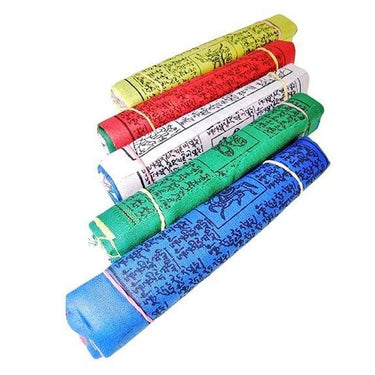

 Tibetan Prayer Flags 3m - Lungta Wind Horse - 8cm × 10cm Flags - Handmade in Nepal
£4.00
/