What Is Amber?
Amber is fossilised tree resin rather than a mineral or geological crystal.
Millions of years ago, resin produced by ancient trees became buried and preserved in sediment. Over extremely long periods, chemical and physical changes transformed this resin into the material we know today as Amber.
Its organic origin makes Amber quite different from Quartz, Jasper or other mineral stones.
It is also noticeably lightweight, which is one of the easiest ways to distinguish it from many similarly coloured mineral gemstones.
Natural Amber can appear transparent, translucent or opaque and may contain tiny internal markings, bubbles, plant material or other natural features.
Amber Meaning
Amber meaning centres around warmth, comfort, positivity and clarity.
Its rich golden colour has naturally encouraged associations with sunlight, vitality and warmth across many spiritual and symbolic traditions.
Within contemporary crystal practice, Amber is often chosen when someone wants a stone associated with optimism, steady confidence and a lighter emotional atmosphere.
Rather than suggesting that Amber directly removes negative emotions, it can be used as a symbolic reminder to focus on warmth, perspective and the things that create a sense of comfort and stability.
Warmth, Comfort & Calm
Warmth is perhaps Amber's most distinctive symbolic quality.
Its honey and golden tones visually resemble sunlight, firelight and glowing embers.
For this reason, Amber is often associated with comfort, reassurance and creating a warmer emotional atmosphere.
Its extremely light weight also gives it a gentler physical presence than many mineral stones.
A polished Amber chip can be kept nearby during quiet reflection, carried in a pouch or used as a small tactile reminder of calm and steadiness.
Clarity & Positive Perspective
Amber is also associated with mental clarity and positive perspective.
Within metaphysical practice, this is often framed as seeing a situation more clearly and shifting attention away from repetitive or unhelpful thoughts.
This should not be interpreted as a medical or psychological effect.
Instead, Amber can be used symbolically during meditation, journalling or reflective practice where the intention is to gain perspective or approach something with a calmer outlook.
Confidence & Personal Warmth
The golden tones of Amber naturally connect it with symbolism around confidence, self-belief and personal warmth.
Its Solar Plexus Chakra association reinforces these themes.
Some people choose Amber during periods when they want to feel more assured in their own decisions or reconnect with a sense of personal optimism.
The stone itself does not create confidence, but it can serve as a meaningful visual and tactile reminder of those qualities.
Amber & the Solar Plexus Chakra
Amber is strongly associated with the Solar Plexus Chakra.
Within contemporary chakra traditions, the Solar Plexus represents confidence, identity, motivation and personal direction.
Amber's golden-yellow colouring creates a particularly natural visual correspondence with this chakra.
A polished Amber chip may be carried, placed on an altar or used within a Solar Plexus crystal grid as a symbolic focus for warmth and personal confidence.
Amber & the Sacral Chakra
Amber's richer orange and cognac tones also connect it with the Sacral Chakra.
Within chakra practice, the Sacral Chakra represents creativity, movement, enjoyment and emotional expression.
This gives Amber an additional symbolic connection with warmth, pleasure and creative vitality.
Together, its Solar Plexus and Sacral associations create a combination of confidence, creativity and emotional warmth.
Astrology, Zodiac & Birth Sign Associations
Amber is commonly associated with Leo in contemporary crystal astrology.
Leo symbolism centres around warmth, vitality, confidence, generosity and personal expression, making it a natural match for Amber's golden, sun-like appearance.
Some traditions also connect Amber with Aquarius, particularly where themes of clarity and individuality are emphasised.
As with many crystal-zodiac correspondences, these associations vary between metaphysical systems and should not be treated as fixed astrological rules.
Amber is not generally recognised as a traditional modern calendar birthstone, although it has long held cultural and symbolic significance as a personal stone.
Amber & the Fire Element
Fire is Amber's strongest elemental correspondence in many contemporary metaphysical systems.
Fire represents warmth, vitality, motivation, transformation and light.
Amber's golden and orange colouring strongly reinforces this symbolism.
Its connection with the Sun and Solar Plexus Chakra also makes Fire a natural elemental match.
Some traditions additionally associate Amber with Earth because it is an ancient organic material formed through long natural processes.
For this polished Amber chip, Fire is the closest primary correspondence, with Earth as a secondary association.
Amber Healing Crystal
Amber is often grouped with healing crystals in spiritual and retail contexts, although scientifically it is fossilised tree resin rather than a mineral crystal.
Its strongest contemporary metaphysical themes include warmth, calm, clarity, positivity, comfort and confidence.
These meanings belong to symbolic and spiritual practice rather than established medical treatment.
Amber can therefore be enjoyed during meditation, chakra work, altar practice, crystal grids or simply as a beautiful ancient organic gemstone.
Lightweight Polished Amber
One of Amber's most noticeable physical characteristics is how light it feels.
At approximately 1–2cm and only around 1–3g, these polished pieces are much lighter than similarly sized Quartz, Jasper or other mineral stones.
Their small size and smooth rounded shape make them particularly suitable for carrying in a pouch.
They may also be used as small supporting stones in crystal grids or altar layouts.
Because the pieces are thin, lightweight slivers rather than heavy tumblestones, care should be taken to avoid crushing or scratching them.
Personal Carrying Stone
This small polished Amber piece can be carried in a soft pouch as a personal stone.
Its very light weight makes it particularly practical where a heavier crystal would feel cumbersome.
Some people carry Amber during meditation, travelling or everyday reflective practice simply because of its warm colour and symbolic associations.
If carried around the neck, it should be safely contained in a secure pouch designed for that purpose.
Natural Amber Character
Every Amber piece will look different.
Some chips may be pale honey yellow and relatively translucent, while others may be deeper orange, cognac or brown.
Cloudy areas, small internal markings, bubbles or natural inclusions may also be visible.
Individual pieces will also vary in thickness, shape and polish.
These natural differences are part of the character of genuine Amber and are not considered faults.
Care
Amber is softer and more delicate than many mineral gemstones and should be handled gently.
Wipe with a soft dry or slightly damp cloth and dry afterwards.
Avoid harsh chemicals, perfumes, hairspray, alcohol-based cleaners and abrasive surfaces.
Do not expose Amber to high heat or prolonged strong sunlight.
Store separately from harder crystals and jewellery to help prevent scratching.
Because these are small, lightweight chips, avoid placing heavy objects on top of them.
Quick FAQs
What is Amber?
Amber is fossilised tree resin formed over millions of years. It is organic rather than a mineral crystal.
What is Amber traditionally used for?
Within contemporary crystal practice, Amber is associated with warmth, comfort, calm, clarity, positivity and confidence.
What is Amber meaning?
Its strongest symbolic themes centre on warmth, light, comfort, clarity and positive perspective.
Is Amber a crystal?
Scientifically, no. Amber is fossilised tree resin. It is commonly grouped with crystals and gemstones in jewellery and metaphysical retail.
What chakras are associated with Amber?
Amber is most commonly associated with the Solar Plexus and Sacral Chakras.
What zodiac sign is associated with Amber?
Leo is one of its strongest contemporary associations. Some traditions also connect Amber with Aquarius.
Is Amber a birthstone?
Amber is not generally recognised as a traditional modern calendar birthstone, although it has longstanding cultural and symbolic significance.
What element is associated with Amber?
Fire is its strongest elemental association because of its warmth, solar colouring and symbolism. Earth is sometimes used as a secondary association.
Why is Amber so lightweight?
Amber is fossilised organic resin rather than dense mineral material, so it feels much lighter than many gemstones of a similar size.
How large is each piece?
Approximately 1–2cm.
How much does each piece weigh?
Approximately 1–3g.
Can Amber be carried in a pouch?
Yes. Its small size and light weight make it particularly suitable as a personal carrying stone.
Will every Amber piece look the same?
No. Colour, transparency, internal markings, thickness and shape vary naturally from piece to piece.
NB
As this item is made from natural Amber and individually polished, variations in colour, translucency, internal markings, shape, thickness, size and finish are to be expected.
These natural differences give each polished chip its own individual character and are not considered faults.
Please Note / Disclaimer
Amber is fossilised tree resin and is not technically a mineral crystal, although it is commonly grouped with crystals and gemstones in spiritual and retail settings.
Crystal meanings, chakra associations, zodiac correspondences, elemental associations and references to healing, calm, clarity, positivity or emotional balance describe traditional and contemporary metaphysical beliefs.
Astrological and elemental correspondences can vary between different metaphysical traditions.
Amber should not be used to diagnose, treat or manage stress, phobias, anxiety, emotional difficulties or any other medical or psychological condition.
Small object. Not suitable for children. Keep out of reach of children and pets.


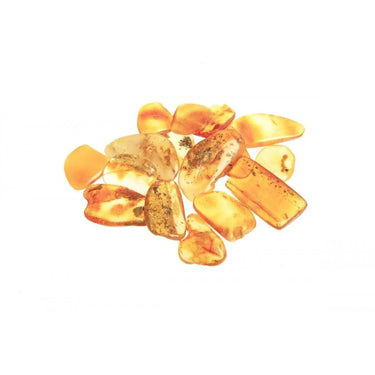

 Amber Polished Chip 1cm - Healing Crystal - Warmth, Comfort & Calm
£6.00
/
Amber Polished Chip 1cm - Healing Crystal - Warmth, Comfort & Calm
£6.00
/