

A practical guide to ayni, sacred reciprocity and living in balance through everyday spiritual practice.

Ayni in everyday life can sound like a beautiful spiritual idea until Monday morning arrives, the kettle is on, your inbox is full and someone needs something from you before you have even found your footing. That is exactly where ayni belongs. That is exactly where ayni belongs. Not only in ceremony, study or moments set aside for reflection, but in ordinary routines, relationships and choices that shape the tone of a day.
In Andean wisdom, ayni is often understood as sacred reciprocity - a living exchange between people, community, nature and spirit. It is not a rigid scorecard and it is not a demand to give until you are empty. At its heart, it is about right relationship. There is giving, receiving, tending and returning. There is awareness that life moves in cycles, and balance is something we practise rather than something we permanently achieve.
Ayni and the Andean way of reciprocity
Ayni is a Quechua word often translated as sacred reciprocity, mutual exchange or right relationship. Quechua is one of the Indigenous languages of the Andes and remains strongly connected to mountain communities, oral tradition and everyday cultural life. Although Quechua has written forms today, it has long been carried through speech, memory, teaching, song and lived practice.
In Andean ways of life, ayni is not just a spiritual idea. It can be seen in how people relate to family, community, land, animals, harvests, mountains and spirit. The principle is simple but deep: life is sustained through giving and receiving. You offer care, labour, gratitude or prayer, and you remain open to receiving support in return.
For Q’ero Paqos and other Andean wisdom keepers, ayni is often spoken of as a foundation of right relationship with Pachamama, the Apus and the living world. It reminds us that balance is not something we own. It is something we practise through attention, humility and respect.

Ayni and the Andean way of life
Ayni is a Quechua word often translated as sacred reciprocity, mutual exchange or right relationship. Quechua is one of the Indigenous languages of the Andes and remains closely connected with mountain communities, living tradition and everyday life. Although Quechua is written today, its wisdom has long been preserved through spoken teaching, storytelling, ceremony and lived experience.
For the Q'ero people of the Peruvian Andes, and for many Andean Paqos, ayni is far more than a spiritual principle. It is a way of living. Reciprocity is woven into relationships with family, neighbours, animals, the land, Pachamama (Mother Earth), the Apus (the sacred mountain spirits) and the unseen world.
Rather than seeing people as separate from nature, the Andean worldview understands everything as living in relationship. We receive constantly from the Earth and from one another, and ayni reminds us to respond with gratitude, respect and conscious participation. It is this continual exchange that helps maintain harmony within both community and the natural world.
Ayni in ceremony and spiritual practice
Within Andean ceremonial traditions, ayni is often expressed through simple acts of gratitude and offering. A despacho ceremony, for example, is not simply about placing symbolic items onto a cloth. It is an offering made in reciprocity with Pachamama, the Apus and the living energies that support life.
The same spirit can be found within mesa practice. Before asking for guidance, healing or clarity, many practitioners first acknowledge the relationship itself through gratitude, prayer or offering. The emphasis is not on asking for more, but on participating in an ongoing exchange.
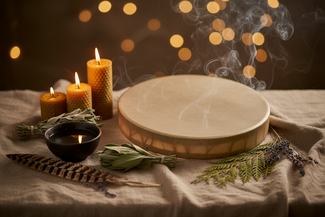
This understanding can also enrich modern spiritual practice. Lighting a candle, tending an altar, cleansing a room with incense or spending a few moments in quiet reflection can all become expressions of reciprocity rather than routine. The ritual becomes less about requesting something from the universe and more about consciously entering into relationship with it.

What ayni in everyday life really asks of us
When people first meet the concept, they sometimes assume ayni means constant generosity or unending service. In practice, it is subtler than that. Ayni asks whether the energy moving through your life is respectful, conscious and mutual. It invites you to notice where there is nourishment and where there is depletion.
That can show up in very practical ways. You might ask whether a friendship allows space for both speaking and listening. You might look at your home and wonder if the way you use a room supports calm or drains it. You might notice that you happily care for everyone else yet resist receiving help, rest or kindness yourself. Reciprocity includes allowing yourself to be supported.
This is why ayni feels so relevant to holistic wellbeing. Many spiritual practices focus on clearing, grounding, manifesting or protecting energy. Ayni adds another layer. It asks about exchange. What are you taking in from your environment? What are you offering back through your actions, attention and presence? That question can turn even small rituals into something more connected and meaningful.
Ayni is not about keeping score
One of the most helpful ways to approach ayni is to let go of the idea that balance always looks equal in the moment. Real life is more fluid than that. In some seasons you may be the one giving more - caring for family, supporting a friend, holding a team together or tending your own healing with great discipline. In other seasons you may need to receive more than you give.
That does not mean reciprocity has failed. It may simply mean the cycle is still moving. Balance over time is often truer than balance in a single day.
This matters because spiritual language can sometimes be taken too literally. If you are trying to measure every interaction, ayni becomes stressful. If you use it to judge yourself for being tired, stretched or in need, it loses its warmth. A gentler approach is to ask whether your exchanges feel fundamentally life-giving. Are you moving towards harmony, even if things are temporarily uneven?
Ayni in everyday life through simple practice
For most people, ayni becomes real through repetition rather than theory. A simple morning ritual can hold this beautifully. Lighting a candle, sitting with incense, taking a few breaths with a crystal in your palm, or pulling a tarot or oracle card can become an exchange rather than a task. You pause, offer your attention and receive clarity in return.
The same is true of space clearing. When you use incense sticks, a cleansing spray, resins or sound from a singing bowl, you are not only removing stagnant energy. You are tending the atmosphere that holds your daily life. In reciprocal terms, you care for the space that cares for you.
Crystals can also support this way of living when they are used intentionally. A grounding stone on your desk, a bracelet worn as a touchpoint through the day, or a carefully chosen tumbleset for meditation can act as a reminder to stay in right relationship with your own energy. The object matters, but the relationship matters more. You are not asking a tool to do everything for you. You are meeting it with presence, care and purpose.

Reciprocity in relationships and boundaries
Perhaps the clearest place to practise ayni is in human relationships. Many people are very comfortable with giving and far less comfortable with receiving. Others have learnt to protect themselves by withholding, even when connection is available. Ayni asks for honesty here.
If you are always the listener and never the one held, the exchange may need rebalancing. If you expect emotional support but disappear when others are in difficulty, that too deserves attention. Reciprocity is not about guilt. It is about maturity.
Boundaries belong in this conversation. Saying no can be part of ayni if it prevents resentment and protects the integrity of what you genuinely can offer. Equally, saying yes to help, rest, nourishment or practical support can restore flow where pride or habit has created blockage. In this sense, balance is not only outward. It is internal.
The home as a place of exchange
A spiritually attuned home is often described as peaceful, grounded or uplifting, but those qualities do not appear by accident. The home is one of the clearest places where ayni in everyday life can be practised. We receive shelter, comfort and containment from our surroundings. In return, we tend them.
This does not require a large altar or a dedicated ritual room. It may be as simple as keeping one meaningful corner with a candle, a crystal, an oracle deck and a small cloth that marks the space as intentional. It may mean diffusing essential oils in the evening rather than letting the day linger unprocessed. It may mean using sound, smoke or prayer to reset the energy after conflict, illness or heavy news.
Objects chosen for sacred space curation can help because they make the intangible feel easier to work with. A bowl for offerings, a textile for grounding a practice, flower essences for emotional support, or ceremonial cacao for heart-led reflection all offer ways to enter relationship with your day more consciously. The key is not collecting endlessly. It is choosing what genuinely supports your practice and using it well.
Ayni and the natural world
Perhaps nowhere is ayni more visible than in our relationship with nature. The Andean tradition reminds us that the Earth is not simply a resource to be used, but a living presence to be respected. Water, mountains, forests, animals and the changing seasons all become part of an ongoing conversation rather than something separate from ourselves.
Practising ayni can be remarkably simple. It may mean caring for a garden, walking thoughtfully through the countryside, reducing waste, supporting ethical craftspeople, or simply pausing to offer gratitude before a meal or after spending time outdoors.
These small acts reflect a wider understanding that balance is created not through grand gestures but through many thoughtful exchanges. Over time, they become part of the rhythm of everyday life.

When practice becomes too performative
There is a trade-off worth naming. Spiritual practice can become another form of pressure if every ritual is expected to be profound, photogenic or perfectly consistent. Ayni offers a corrective. Reciprocity is living, not performative. It values sincerity over display.
On some days, your practice may be ten quiet breaths with a palm stone before leaving the house. On others, it may be a fuller meditation, divination session or ceremonial moment. Both can be valid. What matters is whether the exchange is real.
This is especially helpful for beginners who feel they need the right words, the right lineage knowledge or an elaborate set-up before they begin. Start where you are. A candle lit with intention, a moment of gratitude before sleep, or a respectful pause before working with tarot can all be part of a reciprocal life.
Ayni, consumption and conscious choice
For spiritually minded shoppers, ayni also has something to say about how we buy. It encourages discernment. Rather than purchasing for the sake of novelty, we can ask whether an item supports a genuine need, deepens an existing practice or helps create a more intentional space.
That does not make spiritual tools less valuable. Quite the opposite. It gives them more meaning. A single well-chosen incense blend, a trusted deck, a crystal bracelet worn daily, or a meditation accessory that helps you return to yourself can do far more than a scattered collection with no relationship behind it.
This is where a curated spiritual retailer can be genuinely helpful. When products are organised by intention, ritual use and practice area, it becomes easier to choose with clarity rather than impulse. Sacred Essence speaks to that need by making both everyday wellbeing essentials and more specialist ceremonial tools feel accessible, grounded and easy to explore.

Living the principle gently
Ayni is not a rule to master. It is a rhythm to remember. You notice where energy is flowing, where it is stalled, where you are overextending and where you are refusing to receive. Then you make a small adjustment.
You return the borrowed kindness. You thank the space that holds you by tending it. You offer care to your body before asking it for more. You work with your spiritual tools as companions in practice, not quick fixes. You let balance be alive rather than perfect.
If that sounds modest, it is because the deepest practices often are. Ayni asks for attention, humility and consistency more than spectacle. And in ordinary life, that may be exactly what makes it powerful.
I really like the direction you're taking, but I'd avoid phrases like "internal demon" because it introduces a very different psychological or religious concept that doesn't fit with the gentle tone of the rest of the article. I'd also be careful not to imply that all Q'ero people, monks, yogis or Buddhists are the same—they're different traditions with different practices.

Living in Ayni: Balance in Everyday Life
Ayni is a Quechua word, rooted in the living traditions of the high Andes. The Q'ero Paqos and many Andean communities speak Quechua, carrying wisdom through language, ceremony, oral teaching and everyday life. In remote mountain villages, ayni is not just an idea to read about. It is a way of understanding relationship, balance and how life is held together through giving and receiving.
There is something we can all learn from that, even if our lives look very different. We may not be Q'ero Paqos, monks, Buddhists, yogis or ceremonial practitioners, but many of us are still looking for the same thing: a little more harmony, a little more presence and a way of living that feels less hurried and more balanced.
You do not need to follow a particular spiritual path to begin. A moment of reflection each day is free, and it can be a real gift to yourself. Lighting a candle, holding a stone, cleansing your space, sitting quietly or simply pausing to breathe can all become small ways of noticing where you are and what you need.
Perhaps that is where ayni offers its greatest gift. It reminds us to listen honestly, to recognise when life feels out of balance and to respond with kindness rather than judgement. Sometimes balance means action. Sometimes it means rest. Sometimes it simply means pausing long enough to hear what your own heart has been trying to say.
Explore Related Collections
- Shop Shamanic Sacred Textile Weavings
- Shop Q'ero Mesa & Inner Cloths (Unkuna, Wachala & Despacho Cloths)
- Shop Shamanic Ritual Tools
- Shop Chumpi Stones & Shaman Stones
- Shop Shamanic Bells, Rattles & Sound Healing
- Shop Healing Crystals, Sacred Space Sprays & Florida Water
Brand Collections
Related Reading
- Q'ero Shaman Altar Guide: The Andean Mesa & Ritual Tools
- Shamanic Journeying for Beginners
- How to Create a Spiritual Altar at Home
- Sound Healing for Beginners Made Simple
- Charging vs Cleansing Crystals: What's the Difference?
FAQs
What does ayni mean?
Ayni is a Quechua word often translated as sacred reciprocity, mutual exchange or right relationship. It reflects the understanding that life is sustained through giving, receiving, gratitude and balance.
Is ayni only part of the Q'ero tradition?
Ayni is deeply rooted within the Q'ero and wider Andean traditions, where it shapes relationships with family, community, Pachamama, the Apus and the natural world. Yet its principles of gratitude, respect and reciprocity can inspire people from many different backgrounds.
How can I practise ayni in everyday life?
You might begin with simple acts of awareness: expressing gratitude, caring for your home, spending time in nature, tending relationships, accepting help when you need it, or creating quiet moments with a candle, incense, meditation or prayer.
Is ayni the same as balance?
Not quite. Balance grows from ayni, but ayni is about relationship. It asks us to notice how energy, kindness, time, gratitude and care move between ourselves, other people and the living world.
Do I need ritual tools to live with ayni?
No. Ritual tools such as candles, crystals, sacred textiles or incense can support mindful moments, but ayni begins with awareness. It is expressed through how we choose to live, care, give and receive each day.
Visit Us or Explore Online
You are always welcome to visit our shop in Coniston, in the heart of the Lake District, where we are happy to help you explore Q'ero textiles, ritual tools, healing crystals, incense, sacred space sprays and mindful living products in person.
Or browse online and discover our carefully chosen collection of Andean ceremonial textiles, shamanic tools, crystals, incense and holistic wellbeing products.
Visit us in Coniston or explore online at Sacred Essence
You can also follow along on Instagram and Facebook for inspiration, new arrivals and updates from our Coniston shop.

A Final Thought
Balance is rarely a destination we arrive at and keep forever. It is something we return to through conscious choices, thoughtful relationships and everyday moments of awareness.
Whatever path you follow, or whether you follow no spiritual path at all, those quiet moments of presence can help you rediscover the rhythm that feels right for you, here and now.
Sacred Essence 🌈