Peruvian Ceremonial Textiles & Ritual Tools
The Q’ero Paqo tradition comes from the high Andes of Peru, where spiritual practice, community, landscape and relationship with Pachamama are closely interwoven.
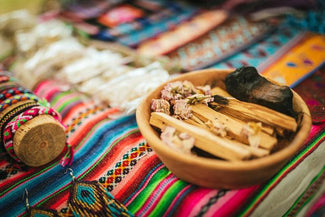
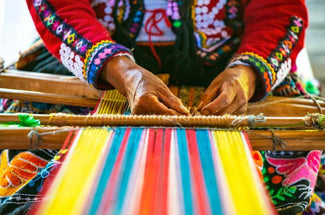
The ceremonial textiles and ritual objects within this collection reflect that relationship through colour, pattern, symbolism and traditional craft. Many pieces are created for practical ceremonial use as well as for their beauty, carrying meanings connected with the mountains, the natural world and Andean spiritual traditions.
For a more focused exploration of Q’ero ceremonial pieces, visit our sister brand collection, Q’ero Paqo’s.
Sacred Essence is delighted to offer a varied collection of Peruvian ceremonial textiles and ritual tools sourced through artisan and community relationships, including:
- Ponchos, Mestanas & traditional woven cloths
- Mesa cloths, altar cloths & Mesa ties
- Colourful bags, pouches & Chuspas
- Hand-beaten ceremonial bells & jungle rattles
- Q’ero ceremonial hats & Huayra Sacha Chacapa ritual fans
- Altar stones, Mesa stones, Kuyas & Chumpi Stones
- Power animal figurines & sacred carved objects
- Peruvian incense & altar offerings
Mestanas, Mesa Cloths & Altar Textiles
Mestanas and other Peruvian ceremonial textiles are among the most distinctive pieces within the collection.
These woven cloths may be used around a Mesa, altar or ceremonial bundle and often feature vivid colour, traditional geometric patterning and strong regional character.
Their designs can reflect relationships with landscape, community, ancestry and spiritual tradition, with meanings varying between regions, makers and individual pieces.
Because many of these textiles are handmade, no two are completely identical. Differences in weave, colour, pattern and finish are part of their character and reflect the hands and traditions behind their creation.
Explore Mestana Mesa Cloths for outer ceremonial wrappings, Unkuna Mesa Inner Cloths for the inner layer of a mesa, Manta Altar & Ritual Cloths for larger ceremonial foundations, and Inti Watana Wraps & Mesa Ties to wrap and secure your bundle.
Chumpi Stones, Kuyas & Mesa Stones
Chumpi Stones, Kuyas and Mesa Stones form an important part of the wider Andean ritual-tool collection.
Within Q’ero and contemporary Andean-inspired spiritual practice, these stones may be incorporated into a personal Mesa, ceremonial work, altar arrangements and practices connected with relationship, intention and the sacred landscape.
Chumpi Stones are particularly distinctive and may feature carved points, symbols or forms according to the individual set and its intended use.
They are best understood as culturally specific ritual objects rather than simply as generic healing crystals. Their meaning and use can vary according to lineage, teacher, practitioner and tradition.
Where individual Chumpi Stone sets or Mesa Stones are offered, their own product pages can provide more detail about the number of stones, carving, material, symbolism and supplied ceremonial context.
For further reading, explore our article What Are Chumpi Stones? Meaning and Uses.
Altar Stones & Sacred Objects
Alongside Chumpi Stones and Kuyas, the collection may include altar stones, carved ritual objects, power-animal figures and other pieces intended for personal ceremonial or spiritual spaces.
Some may be incorporated into a Mesa or altar, while others are chosen for their symbolism, craftsmanship or personal significance.
The emphasis at Sacred Essence is on describing each piece clearly through its material, form, provenance and supplied cultural context rather than making universal claims about what a ritual object is expected to do.
For practical ideas on arranging a personal sacred space, explore our How to Create an Altar guide.
Ceremonial Bells, Rattles & Ritual Sound
Hand-beaten ceremonial bells, jungle rattles and other sound tools bring another dimension to the collection.
These pieces may be used within ceremony, rhythmic practice, procession, altar work or personal spiritual practice.
The handmade construction gives each bell or rattle its own individual sound and finish. Small differences in tone, surface texture, shape and decoration are part of their artisan character.
Q’ero Ceremonial Hats & Chacapa Ritual Fans
Traditional Q’ero-style hats and Huayra Sacha Chacapa ritual fans also form part of the wider ceremonial collection.
Chacapas are traditionally associated with bundles of leaves used as ritual sound and movement tools in parts of Amazonian and Andean-influenced practice. Contemporary versions may vary in construction and cultural context.
As with the other ceremonial pieces, these objects are best approached respectfully and with an understanding that practices can differ between communities and teachers.
Q’ero Paqo Tradition & Contemporary Practice
Q’ero ceremonial tools and textiles belong within living Andean traditions and are also studied by people following contemporary teachings inspired by Peruvian shamanic practice.
Some customers may be familiar with Alberto Villoldo, founder of the Four Winds Society and Light Body School, whose teachings draw on his interpretation of Andean and Amazonian spiritual traditions.
These contemporary systems should not be treated as identical to the living traditions of Q’ero communities themselves.
The objects within this collection are best approached with respect for the cultures, people and spiritual practices from which they originate.
Pachamama, Apus & the Living Landscape
Within Andean traditions, Pachamama is commonly understood in relation to the living Earth, while the Apus are sacred mountain beings or presences associated with particular peaks and landscapes.
Ceremonial textiles, stones, offerings and ritual tools may form part of practices centred around reciprocity, gratitude, relationship with place and respect for the natural world.
These ideas belong within specific cultural and spiritual contexts and are presented here as part of those traditions rather than as universal claims.
Read our Despacho Ceremony guide for further context on Andean sacred offerings, gratitude and reciprocity.
Supporting Peruvian Artisan Communities
The Peruvian textiles and ritual tools offered through Sacred Essence help support the makers and communities who continue these traditional skills.
By choosing handcrafted ceremonial pieces, you are also helping sustain artisan livelihoods and the continuation of weaving, metalwork, carving and ritual craft traditions passed through generations.
Each piece carries its own character, and differences in colour, weave, pattern, stone shape, carving, sound and finish are part of the handmade nature of the work rather than faults.
Authenticity, Provenance & Handmade Character
Where we describe a piece as traditionally made, artisan-made or originating from Peruvian ceremonial communities, that description reflects the sourcing information supplied with the item.
Sacred Essence aims to present provenance as clearly as possible and to distinguish traditional ceremonial objects from modern decorative pieces inspired by Peruvian or Andean aesthetics.
Because these are handmade objects, exact colours, motifs, dimensions and finishes may vary from one piece to another.
That individuality is part of what makes these textiles, stones and ritual tools so special.
Associated Collections
Visit Sacred Essence in the Lake District
Visit Sacred Essence in Coniston and explore our wider collection of ritual tools, sacred textiles, incense, Palo Santo, White Sage, oils, crystals and spiritual gifts in person.
Set between the mountains and lake, our shop offers a calm space to browse, handle selected pieces and receive friendly guidance from the Sacred Essence team.
If you are travelling specifically to see a particular Mestana, Mesa cloth, Chumpi Stone set, ceremonial bell, altar stone or other Peruvian ritual tool, we recommend contacting us before your visit so we can confirm availability.
Visit our Lake District shop
Please Note
The information on this page is offered for cultural, spiritual and educational context.
Q’ero, Andean and Peruvian ceremonial traditions are living traditions with their own cultural histories, meanings and practices. References to Pachamama, Apus, ritual practice, energy, sacred stones or spiritual development should be understood within those cultural and symbolic frameworks rather than as medical, psychological or scientifically established claims.
Sacred Essence encourages respectful use of ceremonial objects and acknowledgement of the communities, makers and traditions from which they come.