Green Man Meaning, Folklore & Nature Symbolism
What Is the Green Man?
The Green Man is usually depicted as a human face surrounded by, emerging from or formed from leaves and vegetation.
Similar foliate-head imagery appears in churches, buildings and decorative carving across Europe and beyond.
The exact historical meaning of these images is not always certain, and the modern term “Green Man” was applied comparatively recently to a much older artistic motif.
Today, however, the figure has become strongly associated with nature, vegetation, renewal and seasonal cycles.
What Does the Green Man Symbolise?
SpyFu shows particularly strong question interest around this topic.
Modern interpretations commonly connect the Green Man with:
growth • renewal • vegetation • rebirth • seasonal change • fertility symbolism • connection with nature
The leaves surrounding or emerging from the face create an immediate relationship between the human figure and the plant world.
This makes the Green Man a particularly powerful visual symbol for the recurring pattern of growth, decline and renewal seen throughout nature.
What Do Green Man Plaques Signify?
A Green Man plaque can be displayed simply as decorative woodland art, but many people choose the image because of its wider symbolic associations.
Within contemporary Pagan and nature-based traditions, it may represent the vitality of the natural world, respect for the land, the turning seasons or the idea that people remain part of nature rather than separate from it.
The meaning can therefore be personal rather than fixed.
Green Man, Growth & Renewal
Renewal is one of the Green Man's strongest contemporary themes.
Leaves die back and return, trees move through seasonal cycles, and landscapes continually change while remaining part of the same larger rhythm.
The Green Man visually captures that relationship between continuity and change.
For this reason, the image is frequently used in homes and spiritual spaces as a symbol of new growth, changing seasons and returning vitality.
Is the Green Man Pagan?
The Green Man has become strongly associated with modern Paganism and nature spirituality, but it is worth making the distinction carefully.
Foliate faces appear in many historic contexts, including medieval Christian architecture, and their original meanings are not always known.
Modern Pagan and Wiccan traditions have adopted the Green Man as a particularly fitting symbol of vegetation, seasonal renewal and the living landscape.
So describing the figure as important within contemporary Pagan symbolism is more accurate than claiming every historic Green Man image was originally Pagan.
Celtic Associations
The Green Man is also frequently connected with Celtic-inspired spirituality.
Nature, forests and seasonal change are important themes within many modern Celtic and Pagan interpretations, which makes the Green Man a natural fit.
However, the familiar foliate-head motif should not be presented as having one single documented ancient Celtic meaning.
Its symbolism has developed across different periods, artistic traditions and modern spiritual interpretations.
The Green Man & the Forest
The older phrase “Man of the Woods” captures one of the reasons the figure has remained so appealing.
The Green Man seems to sit somewhere between human and vegetation, with leaves becoming hair, beard or even part of the face itself.
This makes him an effective symbol of humanity's dependence on and relationship with the natural environment.
In modern spiritual décor, that relationship can represent respect for woodland, seasonal awareness or simply affection for the wild landscape.
Fertility & Life-Cycle Symbolism
The Green Man is also sometimes linked with fertility.
In this context, fertility is broader than reproduction. It can refer to fertile land, plant growth, springtime abundance and the return of vegetation after winter.
That makes fertility symbolism part of the wider Green Man themes of growth and renewal rather than something that needs to dominate the page.
Circular Design & Seasonal Cycles
The circular shape of this plaque works particularly well with Green Man symbolism.
Circles commonly represent cycles, continuity and return.
Together, the plaque creates a coherent visual relationship:
Green Man → leaves → growth → seasons → circle → renewal
This reinforces the nature symbolism without needing additional decorative elements.
Bronze-Effect Terracotta
The plaque is made from terracotta and finished with bronze and copper-effect paint.
The earthy terracotta base works naturally with the Green Man theme, while the metallic finish highlights the raised leaf and facial detailing.
It should be described as bronze-effect terracotta, rather than solid bronze.
This distinction keeps the product description accurate while still communicating the antique metallic appearance.
Pagan & Wiccan Home Décor
The Green Man fits naturally into Pagan, Wiccan and nature-inspired interiors.
It can be displayed alongside:
candles • botanical décor • crystals • altar cloths • seasonal decorations • woodland artwork
It can equally work as a purely decorative piece for someone who simply enjoys folklore, rustic interiors or garden-inspired design.
Indoor Display
At approximately 20cm across, the plaque is suitable for:
- living rooms
- hallways
- reading spaces
- meditation areas
- altar spaces
- bedrooms
- garden rooms
- woodland-themed interiors
Its warm bronze colouring makes it relatively easy to combine with natural wood, greenery and earth-toned décor.
Sheltered Outdoor Display
The plaque is suitable for sheltered outdoor display.
A covered patio, garden room or protected wall is preferable to an exposed garden position.
Avoid prolonged exposure to heavy rain, frost, strong sunlight and persistent damp conditions, as these may affect the painted surface over time.
Gift for Nature & Folklore Lovers
The Green Man plaque makes a natural gift for someone interested in:
- folklore
- Pagan symbolism
- Wiccan décor
- woodland imagery
- gardening
- nature spirituality
- rustic home décor
- mystical artwork
Its symbolism is broad enough to appeal beyond specifically spiritual audiences.
Care & Display
Dust gently using a soft dry cloth.
Avoid abrasive cleaners and strong chemicals that may damage the painted surface.
Hang securely using an appropriate wall fixing and check the twine loop periodically, particularly if the plaque is displayed in a sheltered outdoor location.
Avoid prolonged exposure to moisture, frost and strong direct sunlight.
Quick FAQs
What is the Green Man?
The Green Man is a foliate-face motif showing a human face surrounded by or formed from leaves and vegetation.
What does the Green Man symbolise?
Modern interpretations commonly associate him with growth, renewal, nature, seasonal cycles, vegetation and rebirth.
What do Green Man plaques signify?
They are often displayed as symbols of nature, renewal, seasonal rhythm and humanity's relationship with the natural world.
Is the Green Man Pagan?
The Green Man is important within modern Pagan and nature-based spirituality, although historical foliate faces also appear in medieval Christian architecture and other contexts.
Is the Green Man Celtic?
He is frequently used in Celtic-inspired spiritual traditions, but the historic foliate-head motif does not have one single proven ancient Celtic meaning.
What is the plaque made from?
Terracotta with a bronze-effect painted finish.
Is it real bronze?
No. It is terracotta with an antique bronze and copper-effect finish.
How large is the plaque?
Approximately 20cm in diameter and around 1–1.5cm deep.
How heavy is it?
Up to approximately 450g.
How does it hang?
It has an attached twine hanging loop.
Can it be displayed outside?
Yes, in a sheltered outdoor position. Avoid prolonged rain, frost and strong direct sunlight.
Is it suitable as a gift?
Yes. It is particularly suited to people interested in nature, folklore, Pagan symbolism, gardening or mystical décor.
NB
This is a decorative terracotta plaque with a bronze-effect painted finish.
Minor differences in surface tone, texture and finish may occur as part of the decorative manufacturing process.
For outdoor display, use only in a sheltered position and avoid prolonged exposure to rain, frost, damp and strong sunlight.
Please Note / Disclaimer
References to Pagan, Celtic, Wiccan, folklore or spiritual symbolism describe historical associations and contemporary interpretations.
The precise original meaning of historic Green Man or foliate-head imagery is not universally agreed, and modern spiritual interpretations should not be presented as a single proven historical tradition.
This product is decorative and is not intended to create spiritual, emotional or therapeutic effects.


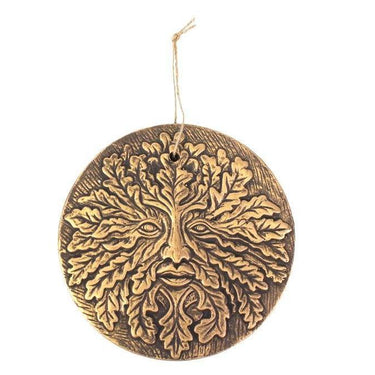

 Green Man Wall Plaque 20cm - Lisa Parker - Bronze Effect Terracotta
£5.98
/
Green Man Wall Plaque 20cm - Lisa Parker - Bronze Effect Terracotta
£5.98
/