What Are Tingsha Cymbals?
Tingsha, also written ting-sha or tingshas, are small paired metal cymbals associated with Tibetan and Himalayan Buddhist-inspired ritual and contemplative practice.
The two cymbals are joined by a strap or cord and sounded by gently bringing their edges together.
Although frequently sold as meditation bells, temple bells or prayer chimes, they are technically paired cymbals rather than bells.
Their clear, sustained tone makes them useful for marking transitions, opening or closing meditation and providing a precise sound cue during contemplative practice.
The Eight Auspicious Symbols
The Eight Auspicious Symbols, known in Sanskrit as the Ashtamangala, form an important group of Buddhist symbols found throughout Tibetan and Himalayan art.
They traditionally include:
- Parasol – associated with protection and spiritual shelter
- Pair of Golden Fish – associated with freedom and auspiciousness
- Treasure Vase – associated with abundance and inexhaustible spiritual riches
- Lotus – associated with purity and awakening
- Conch Shell – associated with the spreading of Buddhist teachings
- Endless Knot – associated with interconnection and continuity
- Victory Banner – associated with overcoming obstacles and ignorance
- Dharma Wheel – associated with Buddhist teaching and the path of practice
Interpretations can vary between Buddhist traditions, so these brief meanings are best understood as introductory rather than exhaustive.
Sacred Symbolism & Tingsha Design
Engraving the Eight Auspicious Symbols onto Tingsha combines visual Buddhist symbolism with the instrument's clear acoustic character.
For practitioners drawn to Buddhist art and meditation, the design may make the cymbals particularly meaningful for:
- altar placement
- prayer
- meditation
- mindful transitions
- contemplative ritual
- symbolic gifting
The symbols should be approached respectfully as living elements of Buddhist religious tradition rather than simply decorative motifs.
Tingsha Sound & Resonance
When gently struck together, the cymbals produce a bright, high and sustained ringing tone.
The sound may be used to:
- begin or close meditation
- mark transitions within practice
- accompany prayer or chanting
- return attention to the present moment
- complement other acoustic instruments
- create a clear cue during group mindfulness
Individual pairs may vary slightly in pitch, sustain and harmonic character.
Meditation, Prayer & Mindfulness
A single Tingsha strike can provide a simple focal point before, during or after meditation.
They may be used to:
- open a meditation session
- close a session
- mark a change in practice
- accompany mantra or prayer
- return attention to breath
- introduce a moment of stillness
Their compact size makes them particularly useful where a full singing bowl would be impractical or where a brighter, more immediate tone is preferred.
Buddhist-Inspired Ritual Use
Tingsha are widely associated today with Tibetan Buddhist-inspired ritual and contemplative settings, although specific historical and formal uses vary between traditions.
For personal practice, they can be used respectfully during meditation, prayer or altar work without presenting any one modern use as universal Buddhist tradition.
Where someone follows a particular Buddhist lineage, instruction from that lineage should take precedence over general retail guidance.
Contemporary Space-Clearing Practice
Tingsha are also commonly incorporated into modern holistic practice for symbolic space clearing.
Some practitioners sound them around a room before meditation, yoga or sound work as a way of marking a reset and creating an intentional atmosphere.
This is a contemporary spiritual practice rather than a scientifically established method of altering physical energy.
Tingsha for Sound Baths & Holistic Practice
Their clear upper-frequency tone can contrast effectively with deeper instruments such as:
- Tibetan and Himalayan singing bowls
- gongs
- frame drums
- rainsticks
- bells
- chimes
Within contemporary sound baths they may be used for openings, closings or transitions between different instruments.
References to sound healing describe holistic practice and should not be interpreted as medical treatment.
Feng Shui & Sacred-Space Use
Tingsha are sometimes used within modern Feng Shui-inspired space-clearing routines.
A contemporary practice may involve sounding them in different parts of a room to create an audible transition or intentional reset.
This should be understood as a modern application rather than a universal requirement of traditional Feng Shui.
How to Play Tingsha Cymbals
Hold the connecting cord or strap so that one cymbal hangs from each side.
Bring their outer edges gently together, then allow them to separate naturally so the tone can resonate.
For a clear sound:
- strike lightly rather than forcefully
- allow the resonance to fade naturally
- experiment with slight changes in striking angle
- avoid gripping the metal while it rings
A light controlled strike is normally enough to produce their characteristic clear tone.
Handmade Character
Each pair is individually cast and finished, so minor differences may occur in:
- symbol detailing
- surface colour
- dimensions
- cord or leather connection
- pitch
- sustain
These differences are part of the handmade character of the product.
Care & Respect
Keep the Tingsha clean and dry.
Wipe gently with a soft dry cloth and avoid abrasive cleaners that could affect the metal finish.
When not in use, wrapping them in soft cloth or storing them in a protective case can help prevent unnecessary scratching and knocks.
A case is not supplied unless otherwise stated.
Quick FAQs
What are the Eight Auspicious Symbols?
They are a group of eight Buddhist symbols known as the Ashtamangala, associated with different aspects of auspiciousness, Buddhist teaching and spiritual practice.
Are these Tingsha bells or cymbals?
Technically they are paired cymbals, although they are often called meditation bells, temple bells or prayer chimes.
What are Tingsha used for?
They may be used for meditation, prayer, mindfulness, ritual, contemporary sound practice and symbolic space clearing.
What size are these Tingsha?
Approximately 6.5cm in diameter.
What do they sound like?
They produce a bright, clear tone with sustained resonance.
Are they made in Tibet?
No. The supplied origin is India. They feature Tibetan Buddhist-inspired symbolism.
Can they be used for meditation?
Yes. Their clear tone works particularly well for marking beginnings, endings and transitions during meditation.
Can they be used for space clearing?
Yes, they are often incorporated into contemporary symbolic space-clearing practices.
Do they come with a case?
No. A protective case is sold separately where available.
Will every pair sound identical?
No. Small differences in casting and finishing can affect pitch, sustain and resonance.
Disclaimer
Buddhist symbolism, ritual use and contemporary energy-clearing references are provided for cultural and spiritual context. Practices and interpretations vary between Buddhist traditions, and symbolic energy-clearing uses are not scientifically established therapeutic effects.





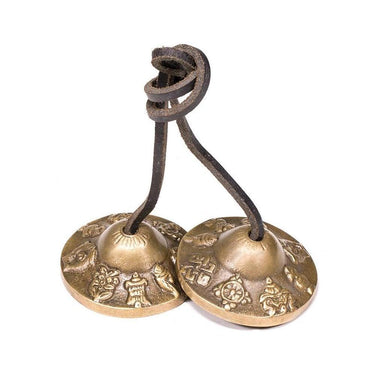


 Tibetan Tingsha Cymbals 6.5cm - 8 Auspicious Symbols Meditation Chimes
£32.00
/
Tibetan Tingsha Cymbals 6.5cm - 8 Auspicious Symbols Meditation Chimes
£32.00
/