What Are Tingsha Cymbals?
Tingsha, also written ting-sha or tingshas, are small paired metal cymbals associated with Tibetan and Himalayan Buddhist-inspired ritual and contemplative practice.
They are connected by a cord or strap and gently struck together at their edges to produce a clear, sustained ringing tone.
Although often called meditation bells, temple bells or prayer chimes in retail, they are technically paired cymbals rather than bells.
Their bright tone makes them useful for marking transitions, creating a distinct sound cue and bringing attention back to the present moment.
Dragon Tingsha Symbolism
The dragon motif gives this pair a particularly strong visual presence.
Dragon symbolism varies considerably between Asian cultures and religious traditions, so it is best not to assign one fixed meaning to every dragon design.
Within Tibetan and Himalayan art, dragons can appear in symbolic and decorative contexts associated with qualities such as power, vitality, protection and auspicious presence.
For contemporary spiritual users, the design may also be appreciated symbolically as a reminder of strength, awareness or transformation.
These interpretations should be understood as contextual associations rather than one universal Buddhist definition.
Tingsha Sound & Resonance
When gently struck together, the cymbals produce a bright, high and sustained tone.
They can be used to:
- begin or close meditation
- mark transitions during practice
- accompany prayer or chanting
- create a clear mindfulness cue
- complement sound baths
- add a high-frequency contrast to deeper instruments
Because each pair is cast and finished individually, pitch, sustain and resonance may vary slightly.
Meditation & Mindfulness Use
A single clear strike can provide a simple audible focus during meditation.
Tingsha may be used to:
- open a session
- close a session
- mark a change in practice
- return attention to breath
- introduce a moment of stillness
- support group mindfulness
Their small size makes them particularly practical where a full singing bowl would be too large or where a shorter, brighter tone is preferred.
Ritual & Buddhist-Inspired Practice
Tingsha are often associated with Tibetan Buddhist and Himalayan spiritual settings, although their exact use varies between traditions and contexts.
For personal practice, they may be incorporated respectfully into meditation, prayer, altar work or contemporary ceremony without presenting one modern use as universal Buddhist tradition.
Where a practitioner follows a particular Buddhist lineage, lineage-specific instruction should take precedence over general retail guidance.
Contemporary Energy-Clearing Use
Tingsha are also commonly used in modern holistic practice for symbolic space clearing.
Some practitioners sound them around a room before meditation, yoga or sound work as a way of marking a reset or creating an intentional atmosphere.
This is a contemporary spiritual application rather than a scientifically established method of altering physical energy.
Tingsha for Sound Baths & Holistic Practice
Their bright upper-frequency tone can contrast well with deeper instruments such as:
- Tibetan and Himalayan singing bowls
- gongs
- frame drums
- rainsticks
- bells
- chimes
Within contemporary sound baths, Tingsha may be used for transitions, opening and closing sequences or moments requiring a precise, focused tone.
References to sound healing describe holistic practice and should not be interpreted as medical treatment.
How to Play Tingsha Cymbals
Hold the connecting strap or cord so that one cymbal hangs from each side.
Bring the outer edges gently together and allow the cymbals to separate naturally after contact.
For a clear tone:
- strike lightly rather than forcefully
- allow the sound to fade before repeating
- experiment with slight changes in angle
- avoid gripping the metal while it rings
A controlled light strike is normally enough to produce the characteristic sustained resonance.
Handmade Design & Variation
Small differences may occur in:
- dragon detailing
- surface tone
- casting marks
- dimensions
- strap or cord
- resonance
These variations are normal for individually finished pieces and do not affect their intended use.
Care & Storage
Store the Tingsha somewhere dry when not in use.
Wipe gently with a soft dry cloth and avoid abrasive cleaners that may affect the metal finish.
Wrapping them in soft cloth or storing them in a protective case can help reduce knocks and scratching.
A case is not included unless otherwise stated.
Quick FAQs
What are Dragon Tingsha cymbals used for?
They may be used for meditation, mindfulness, prayer, ritual, contemporary sound practice and symbolic space clearing.
What does the dragon design mean?
Dragon symbolism varies by culture and tradition. In Tibetan and Himalayan contexts it can be associated with qualities such as power, vitality, protection and auspicious presence.
Are Tingsha bells or cymbals?
Technically they are paired cymbals, although they are often called meditation bells or prayer chimes.
What size are these Tingsha?
Approximately 6–7cm in diameter.
What do they sound like?
They produce a bright, clear, high-pitched tone with lingering resonance.
Are they made in Tibet?
No. The supplied origin is India. They are Tibetan-style / Tibetan-inspired Tingsha.
Can they be used for meditation?
Yes. They are particularly useful for marking beginnings, transitions or endings within meditation.
Can they be used in sound baths?
Yes. Their clear high tone can complement bowls, gongs, drums and other acoustic instruments.
Do they come with a case?
No. A protective case is sold separately where available.
Will every pair sound identical?
No. Small differences in casting and finish can affect pitch and sustain.
Disclaimer
Buddhist, ritual, dragon-symbolism and energetic-clearing references are provided for cultural and contemporary spiritual context. Practices and interpretations vary between traditions, and symbolic energy-clearing uses are not scientifically established therapeutic effects.





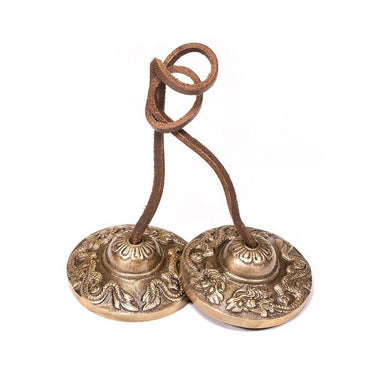

 Tibetan Dragon Tingsha Cymbals 6–7cm - Meditation Chimes & Prayer Cymbals
£32.00
/
Tibetan Dragon Tingsha Cymbals 6–7cm - Meditation Chimes & Prayer Cymbals
£32.00
/