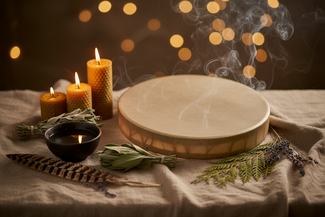
World Instruments for Ritual, Music & Sound Healing
Discover a thoughtfully curated collection of world instruments for ritual, meditation, music and sound healing. Explore shamanic drums and frame drums, singing bowls, flutes and panpipes, rattles, rainsticks, wind chimes, tingshas and ceremonial percussion, each offering a different way to work with rhythm, breath, resonance and sound.
Across many cultures and spiritual traditions, drums, bowls, bells, flutes and rattles have accompanied ceremony, meditation, storytelling, prayer and communal practice. From the steady pulse of a shamanic drum to the sustained tones of singing bowls or the gentle movement of chimes, each instrument brings its own character and atmosphere.
Whether you are exploring sound healing instruments, meditation instruments, ritual music or traditional world instruments, Sacred Essence brings together pieces for personal practice, ceremony and shared gatherings. Browse drums, singing bowls, panpipes, rainsticks and percussion instruments to find sounds that support focus, creativity, connection and mindful practice.
Our wider world instruments collection includes traditional and contemporary designs for meditation, sound work, ceremony and everyday musical exploration. Visit our Lake District shop or order online with same-day UK dispatch.
Explore World Instruments by Sound, Tradition & Practice
The Sacred Essence World Instruments collection brings together shamanic drums and frame drums, singing bowls, rattles, rainsticks, wind chimes, bells, flutes, panpipes and musical accessories from a range of traditions.
Some instruments centre on rhythm, others on sustained resonance, breath, melody or clear, lighter tones. Explore different instrument families to discover ways to work with sound in meditation, ceremony, music and shared practice.
Explore each specialist department for more about materials, playing style, cultural context, tuning, care and individual instrument characteristics.
Remo Buffalo Drums • Vegan & Synthetic
Remo Buffalo Drums offer a practical alternative to natural-skin frame drums.
Made with durable synthetic heads, they are well suited to regular use, group drumming, outdoor practice and situations where greater resistance to changes in humidity is useful.
They are popular with people exploring shamanic-style drumming, meditation, ceremonial rhythm and sound work while preferring a vegan or synthetic construction.
Their consistent build also makes them accessible for beginners who want a dependable drum without the extra care associated with natural hide.
Frame Drums • Shamanic & Bodhrán
Frame drums are among the oldest and most widely recognised drum forms.
This department includes natural-skin frame drums, shamanic-style drums and bodhrán-style instruments, each with its own construction, tone and cultural context.
A steady frame-drum pulse can be used for rhythm practice, meditation, ceremonial settings or group work, while bodhrán-style drums also connect strongly with traditional Irish musical practice.
Natural-skin drums respond to temperature and humidity, so they need more care than synthetic alternatives.
Maracas, Rattles & Rainsticks
Rattles, maracas and rainsticks bring texture, movement and rhythm into sound practice.
Rattles can create short percussive accents or continuous rhythmic patterns.
Rainsticks produce a flowing cascade of sound as their internal material moves through the instrument.
Maracas offer a familiar hand-held rhythm that works well for music, group practice and layered percussion.
These instruments can be especially useful for adding movement and contrast alongside drums, bowls or chimes.
Wind Chimes & Garden Bells
Wind chimes and garden bells create sound through movement and air.
They may be used outdoors in gardens, courtyards or sheltered spaces, or indoors where some designs can also be played by hand.
Different sizes, materials and constructions produce very different tonal qualities, from soft delicate notes to deeper resonant bell tones.
For meditation spaces, ritual areas or everyday garden sound, they offer a simple way to introduce movement and sound into the environment.
Koshi & Heola Wind Chimes
Koshi and Heola chimes form a more specialised part of the collection.
Koshi chimes are tuned melodic chimes with carefully arranged internal rods designed to create flowing note sequences when moved.
Heola chimes offer a different tonal character and are used within meditation, sound work and contemplative practice.
Tuning systems and note structures vary by model. Check the individual product details when comparing sounds, allowing Koshi and Heola to retain their own distinct musical identities.
Singing Bowls, Tingshas & Gongs
Singing bowls, tingshas and gongs centre on resonance.
Singing bowls may be struck or played around the rim to create sustained tones and overtones.
Tingshas produce a bright, clear metallic sound and are often used to mark the beginning or end of meditation or practice.
Gongs create a broader, more expansive field of sound and can suit larger rooms, group work or ceremonial settings.
These instruments are commonly used within meditation and contemporary sound practices, but their cultural histories, construction and playing techniques differ considerably.
Meditation Bells & Whistles
Meditation bells and ritual whistles create shorter, more focused sound cues.
A bell can mark a transition, open or close a meditation or punctuate a ceremony.
Whistles may be used musically, ceremonially or as part of particular regional traditions depending on the instrument.
These pieces can carry specific cultural meanings. Look for origin and context in the individual product details where available.
Flutes & Panpipes
Flutes and panpipes bring breath and melody into the World Instruments collection.
They offer a very different experience from percussion or resonant instruments, with sound shaped directly through airflow, embouchure and fingering.
The range may include wooden flutes, panpipes, ocarina-style instruments and other regional wind instruments.
These pieces can suit personal musical exploration, meditative playing or ceremonial settings where breath and melody are central.
Explore individual product details for cultural origin, regional style and maker stories where available.
Drum Bags & Accessories
Drum bags and accessories support the practical side of instrument ownership.
Protective bags help shield frame drums during transport and storage.
Mallets, beaters and other accessories can affect how an instrument responds, changing attack, volume and tone.
For natural-skin drums especially, careful storage matters because humidity and temperature can influence the drumhead.
Matching the right accessory to the instrument helps preserve both sound and condition.
Choosing a World Instrument
If you are unsure where to begin, think first about the kind of sound you are drawn to.
Rhythm → frame drums, Remo Buffalo Drums, rattles and maracas
The best instrument is usually the one whose tone, feel and playing method invite you to use it regularly.
A person drawn to pulse may connect immediately with a drum, while someone who prefers sustained sound may feel more at home with a singing bowl. Others may prefer the breath-led expression of a flute or the gentle movement of chimes.
World Instruments for Meditation
Many world instruments can be used during meditation, but they create very different experiences.
A drum offers rhythm.
A singing bowl offers sustained tone.
A tingsha gives a clear beginning or ending cue.
A flute connects sound directly with breathing.
A rainstick creates gentle movement and texture.
There is no single best meditation instrument. The right choice depends on whether you prefer pulse, resonance, melody or subtle rhythmic movement.
World Instruments for Sound Healing & Sound Baths
“Sound healing” and “sound bath” are widely used contemporary terms for practices that use instruments such as bowls, gongs, drums, chimes and rattles in meditative or wellbeing settings.
Practitioners may layer different sounds to create contrast between low rhythm, sustained resonance and lighter tones.
For example, a drum can provide a steady pulse, a singing bowl can add longer overtones, and a rainstick or chime can introduce softer movement.
These practices may feel calming, immersive or reflective to participants, but the instruments should not be presented as guaranteed medical or therapeutic treatments.
Layering Instruments in a Sound Bath
Different instruments can work together effectively when each occupies a distinct place within the soundscape.
A frame drum can create the rhythmic foundation.
A singing bowl or gong can provide sustained resonance.
Rattles and rainsticks add texture.
Koshi or Heola chimes introduce lighter melodic tones.
Flutes can add breath-led melody.
Using contrast, space and variation rather than constant volume can create a more interesting and considered listening experience.
World Instruments for Ceremony & Group Practice
Drums, bells, rattles and flutes appear within ceremonial traditions around the world, but their meanings are culturally specific.
A frame drum used within one tradition should not automatically be described using another tradition's language.
The same applies to flutes, bells, rattles and ritual whistles.
Sacred Essence brings these instruments together within one broad World Instruments collection while keeping room for individual origins, maker traditions and ceremonial contexts to remain distinct.
Rhythm, Resonance, Breath & Movement
One useful way to understand the collection is through the way each instrument creates sound.
Drums and rattles are driven primarily by rhythm and repeated movement.
Singing bowls, gongs and tingshas rely more heavily on resonance and sustained vibration.
Flutes and panpipes transform breath into melody.
Wind chimes and rainsticks introduce movement that is partly controlled by the player and partly shaped by gravity or air.
Exploring these different sound qualities can help you build a collection with contrast rather than simply choosing several instruments that perform the same role.
World Instruments for Personal & Shared Practice
Some instruments are naturally suited to individual use.
A small singing bowl, flute or set of tingshas can become part of a personal meditation space.
Others come into their own in groups.
Frame drums, rattles and percussion can create shared rhythm, while larger bowls, gongs or layered chimes can help shape a collective listening environment.
Choosing with the setting in mind can make the instrument much more useful over time.
Caring for Drums & Instruments
Instrument care varies by material.
Natural-skin drums need protection from excessive humidity, heat and sudden environmental changes.
Synthetic drums are generally more resistant to changes in weather but should still be stored carefully.
Metal bowls, bells and tingshas can usually be wiped gently with a soft dry cloth.
Wooden flutes and panpipes should be kept dry and protected from extreme temperatures.
Wind chimes and garden bells should be checked for the outdoor conditions they are designed to withstand.
Always follow individual maker guidance where available.
Choosing Instruments as Gifts
World instruments can also make meaningful gifts for musicians, meditation practitioners and people exploring sound for the first time.
Small singing bowls, rainsticks, rattles and bells can be approachable starting points.
A frame drum or flute is a more personal choice because playing feel and tone matter strongly.
For specialist instruments such as Koshi and Heola chimes, listening to the tonal character or understanding the particular model can help when choosing for someone else.
Frequently Asked Questions
What are world instruments?
World instruments is a broad term for musical instruments associated with different regional, traditional or culturally specific musical practices.
Which world instruments are good for meditation?
Singing bowls, tingshas, chimes, bells, flutes and frame drums are all popular choices depending on whether you prefer resonance, rhythm or melody.
What instruments are used in sound baths?
Common choices include singing bowls, gongs, drums, chimes, rattles, rainsticks and flutes.
What is the difference between a Remo Buffalo Drum and a natural frame drum?
Remo Buffalo Drums use synthetic drumheads, while natural frame drums use hide or skin. They differ in feel, tone, care requirements and response to humidity.
Are Koshi and Heola chimes the same?
No. They are distinct chime families with different construction, tuning and tonal character.
What are tingshas used for?
Tingshas are small metal cymbals used to create a clear ringing tone, often for meditation, transitions or ceremonial sound.
Are rainsticks musical instruments?
Yes. Rainsticks are percussion instruments that create a cascading sound as material moves through the body of the instrument.
Are panpipes suitable for beginners?
Many simple panpipes can be approachable for beginners, although breath control, range and tuning vary by instrument.
Which world instrument is easiest for a beginner?
Rattles, rainsticks, simple bells and smaller singing bowls can be very accessible. A frame drum is also straightforward for basic rhythm, although deeper technique can develop over time.
Are natural-skin drums affected by humidity?
Yes. Natural hide can tighten or loosen as temperature and humidity change, which can alter pitch and playing feel.
Do sound healing instruments have proven medical effects?
These instruments are used for meditation, relaxation and personal wellbeing, but should not be treated as medical treatments or as offering guaranteed therapeutic results.
You can also explore selected drums, bowls, rattles, chimes, bells, flutes and other world instruments in person at Sacred Essence in Coniston.
Hearing an instrument in person can make a real difference, especially with drums, singing bowls, chimes and flutes where tone and feel are highly individual.
If you are travelling for a particular instrument or model, please contact us beforehand so we can confirm availability.
Please Note
World instruments come from many distinct musical and ceremonial traditions.
Sacred Essence aims to describe cultural origin, maker information, materials and intended use as specifically as possible rather than treating all instruments as part of one universal spiritual tradition.
References to sound healing, grounding, energy work, journeying or meditation describe contemporary, traditional or symbolic practices rather than guaranteed medical or psychological effects.
Explore World Instruments by Sound, Tradition & Practice
The Sacred Essence World Instruments collection brings together shamanic drums and frame drums, singing bowls, rattles, rainsticks, wind chimes, bells, flutes, panpipes and musical accessories from a range of traditions.
Some instruments centre on rhythm, others on sustained resonance, breath, melody or clear, lighter tones. Explore different instrument families to discover ways to work with sound in meditation, ceremony, music and shared practice.
Explore each specialist department for more about materials, playing style, cultural context, tuning, care and individual instrument characteristics.
Remo Buffalo Drums • Vegan & Synthetic
Remo Buffalo Drums offer a practical alternative to natural-skin frame drums.
Made with durable synthetic heads, they are well suited to regular use, group drumming, outdoor practice and situations where greater resistance to changes in humidity is useful.
They are popular with people exploring shamanic-style drumming, meditation, ceremonial rhythm and sound work while preferring a vegan or synthetic construction.
Their consistent build also makes them accessible for beginners who want a dependable drum without the extra care associated with natural hide.
Frame Drums • Shamanic & Bodhrán
Frame drums are among the oldest and most widely recognised drum forms.
This department includes natural-skin frame drums, shamanic-style drums and bodhrán-style instruments, each with its own construction, tone and cultural context.
A steady frame-drum pulse can be used for rhythm practice, meditation, ceremonial settings or group work, while bodhrán-style drums also connect strongly with traditional Irish musical practice.
Natural-skin drums respond to temperature and humidity, so they need more care than synthetic alternatives.
Maracas, Rattles & Rainsticks
Rattles, maracas and rainsticks bring texture, movement and rhythm into sound practice.
Rattles can create short percussive accents or continuous rhythmic patterns.
Rainsticks produce a flowing cascade of sound as their internal material moves through the instrument.
Maracas offer a familiar hand-held rhythm that works well for music, group practice and layered percussion.
These instruments can be especially useful for adding movement and contrast alongside drums, bowls or chimes.
Wind Chimes & Garden Bells
Wind chimes and garden bells create sound through movement and air.
They may be used outdoors in gardens, courtyards or sheltered spaces, or indoors where some designs can also be played by hand.
Different sizes, materials and constructions produce very different tonal qualities, from soft delicate notes to deeper resonant bell tones.
For meditation spaces, ritual areas or everyday garden sound, they offer a simple way to introduce movement and sound into the environment.
Koshi & Heola Wind Chimes
Koshi and Heola chimes form a more specialised part of the collection.
Koshi chimes are tuned melodic chimes with carefully arranged internal rods designed to create flowing note sequences when moved.
Heola chimes offer a different tonal character and are used within meditation, sound work and contemplative practice.
Tuning systems and note structures vary by model. Check the individual product details when comparing sounds, allowing Koshi and Heola to retain their own distinct musical identities.
Singing Bowls, Tingshas & Gongs
Singing bowls, tingshas and gongs centre on resonance.
Singing bowls may be struck or played around the rim to create sustained tones and overtones.
Tingshas produce a bright, clear metallic sound and are often used to mark the beginning or end of meditation or practice.
Gongs create a broader, more expansive field of sound and can suit larger rooms, group work or ceremonial settings.
These instruments are commonly used within meditation and contemporary sound practices, but their cultural histories, construction and playing techniques differ considerably.
Meditation Bells & Whistles
Meditation bells and ritual whistles create shorter, more focused sound cues.
A bell can mark a transition, open or close a meditation or punctuate a ceremony.
Whistles may be used musically, ceremonially or as part of particular regional traditions depending on the instrument.
These pieces can carry specific cultural meanings. Look for origin and context in the individual product details where available.
Flutes & Panpipes
Flutes and panpipes bring breath and melody into the World Instruments collection.
They offer a very different experience from percussion or resonant instruments, with sound shaped directly through airflow, embouchure and fingering.
The range may include wooden flutes, panpipes, ocarina-style instruments and other regional wind instruments.
These pieces can suit personal musical exploration, meditative playing or ceremonial settings where breath and melody are central.
Explore individual product details for cultural origin, regional style and maker stories where available.
Drum Bags & Accessories
Drum bags and accessories support the practical side of instrument ownership.
Protective bags help shield frame drums during transport and storage.
Mallets, beaters and other accessories can affect how an instrument responds, changing attack, volume and tone.
For natural-skin drums especially, careful storage matters because humidity and temperature can influence the drumhead.
Matching the right accessory to the instrument helps preserve both sound and condition.
Choosing a World Instrument
If you are unsure where to begin, think first about the kind of sound you are drawn to.
Rhythm → frame drums, Remo Buffalo Drums, rattles and maracas
The best instrument is usually the one whose tone, feel and playing method invite you to use it regularly.
A person drawn to pulse may connect immediately with a drum, while someone who prefers sustained sound may feel more at home with a singing bowl. Others may prefer the breath-led expression of a flute or the gentle movement of chimes.
World Instruments for Meditation
Many world instruments can be used during meditation, but they create very different experiences.
A drum offers rhythm.
A singing bowl offers sustained tone.
A tingsha gives a clear beginning or ending cue.
A flute connects sound directly with breathing.
A rainstick creates gentle movement and texture.
There is no single best meditation instrument. The right choice depends on whether you prefer pulse, resonance, melody or subtle rhythmic movement.
World Instruments for Sound Healing & Sound Baths
“Sound healing” and “sound bath” are widely used contemporary terms for practices that use instruments such as bowls, gongs, drums, chimes and rattles in meditative or wellbeing settings.
Practitioners may layer different sounds to create contrast between low rhythm, sustained resonance and lighter tones.
For example, a drum can provide a steady pulse, a singing bowl can add longer overtones, and a rainstick or chime can introduce softer movement.
These practices may feel calming, immersive or reflective to participants, but the instruments should not be presented as guaranteed medical or therapeutic treatments.
Layering Instruments in a Sound Bath
Different instruments can work together effectively when each occupies a distinct place within the soundscape.
A frame drum can create the rhythmic foundation.
A singing bowl or gong can provide sustained resonance.
Rattles and rainsticks add texture.
Koshi or Heola chimes introduce lighter melodic tones.
Flutes can add breath-led melody.
Using contrast, space and variation rather than constant volume can create a more interesting and considered listening experience.
World Instruments for Ceremony & Group Practice
Drums, bells, rattles and flutes appear within ceremonial traditions around the world, but their meanings are culturally specific.
A frame drum used within one tradition should not automatically be described using another tradition's language.
The same applies to flutes, bells, rattles and ritual whistles.
Sacred Essence brings these instruments together within one broad World Instruments collection while keeping room for individual origins, maker traditions and ceremonial contexts to remain distinct.
Rhythm, Resonance, Breath & Movement
One useful way to understand the collection is through the way each instrument creates sound.
Drums and rattles are driven primarily by rhythm and repeated movement.
Singing bowls, gongs and tingshas rely more heavily on resonance and sustained vibration.
Flutes and panpipes transform breath into melody.
Wind chimes and rainsticks introduce movement that is partly controlled by the player and partly shaped by gravity or air.
Exploring these different sound qualities can help you build a collection with contrast rather than simply choosing several instruments that perform the same role.
World Instruments for Personal & Shared Practice
Some instruments are naturally suited to individual use.
A small singing bowl, flute or set of tingshas can become part of a personal meditation space.
Others come into their own in groups.
Frame drums, rattles and percussion can create shared rhythm, while larger bowls, gongs or layered chimes can help shape a collective listening environment.
Choosing with the setting in mind can make the instrument much more useful over time.
Caring for Drums & Instruments
Instrument care varies by material.
Natural-skin drums need protection from excessive humidity, heat and sudden environmental changes.
Synthetic drums are generally more resistant to changes in weather but should still be stored carefully.
Metal bowls, bells and tingshas can usually be wiped gently with a soft dry cloth.
Wooden flutes and panpipes should be kept dry and protected from extreme temperatures.
Wind chimes and garden bells should be checked for the outdoor conditions they are designed to withstand.
Always follow individual maker guidance where available.
Choosing Instruments as Gifts
World instruments can also make meaningful gifts for musicians, meditation practitioners and people exploring sound for the first time.
Small singing bowls, rainsticks, rattles and bells can be approachable starting points.
A frame drum or flute is a more personal choice because playing feel and tone matter strongly.
For specialist instruments such as Koshi and Heola chimes, listening to the tonal character or understanding the particular model can help when choosing for someone else.
Frequently Asked Questions
What are world instruments?
World instruments is a broad term for musical instruments associated with different regional, traditional or culturally specific musical practices.
Which world instruments are good for meditation?
Singing bowls, tingshas, chimes, bells, flutes and frame drums are all popular choices depending on whether you prefer resonance, rhythm or melody.
What instruments are used in sound baths?
Common choices include singing bowls, gongs, drums, chimes, rattles, rainsticks and flutes.
What is the difference between a Remo Buffalo Drum and a natural frame drum?
Remo Buffalo Drums use synthetic drumheads, while natural frame drums use hide or skin. They differ in feel, tone, care requirements and response to humidity.
Are Koshi and Heola chimes the same?
No. They are distinct chime families with different construction, tuning and tonal character.
What are tingshas used for?
Tingshas are small metal cymbals used to create a clear ringing tone, often for meditation, transitions or ceremonial sound.
Are rainsticks musical instruments?
Yes. Rainsticks are percussion instruments that create a cascading sound as material moves through the body of the instrument.
Are panpipes suitable for beginners?
Many simple panpipes can be approachable for beginners, although breath control, range and tuning vary by instrument.
Which world instrument is easiest for a beginner?
Rattles, rainsticks, simple bells and smaller singing bowls can be very accessible. A frame drum is also straightforward for basic rhythm, although deeper technique can develop over time.
Are natural-skin drums affected by humidity?
Yes. Natural hide can tighten or loosen as temperature and humidity change, which can alter pitch and playing feel.
Do sound healing instruments have proven medical effects?
These instruments are used for meditation, relaxation and personal wellbeing, but should not be treated as medical treatments or as offering guaranteed therapeutic results.
You can also explore selected drums, bowls, rattles, chimes, bells, flutes and other world instruments in person at Sacred Essence in Coniston.
Hearing an instrument in person can make a real difference, especially with drums, singing bowls, chimes and flutes where tone and feel are highly individual.
If you are travelling for a particular instrument or model, please contact us beforehand so we can confirm availability.
Please Note
World instruments come from many distinct musical and ceremonial traditions.
Sacred Essence aims to describe cultural origin, maker information, materials and intended use as specifically as possible rather than treating all instruments as part of one universal spiritual tradition.
References to sound healing, grounding, energy work, journeying or meditation describe contemporary, traditional or symbolic practices rather than guaranteed medical or psychological effects.

Join our community
Sign up for 10% discount off your first order, exclusions apply.*