Candles, Tealights & Holders for Ritual, Meditation & Sacred Spaces
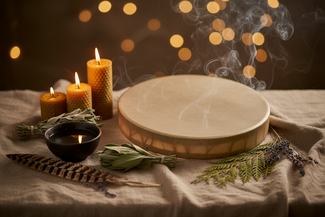
Step into the glow of Sacred Essence candles, where every flame brings warmth, atmosphere and intention to your space. This parent collection brings together candles, tealights and candle holders for ritual, meditation, altar work, sacred ceremonies and everyday moments of calm.
Discover pillar candles, church candles, dinner candles, scented candles, spell candles and tealights alongside decorative candle holders for different settings and practices. Whether you are preparing an altar, creating a peaceful meditation space, marking a ritual or simply bringing softer light and fragrance into your home, there are styles here to suit both spiritual use and everyday ambience.
From simple tealights and classic candle forms to decorative holders and home fragrance, each piece is chosen to help create a sense of focus, warmth and presence. Explore the wider Sacred Essence candle collection for ritual, reflection, mindful spaces and meaningful moments throughout the year.
Candlelight has a way of changing a space almost immediately.
A single flame can soften a room, mark the beginning of meditation, bring focus to an altar or simply create a quieter atmosphere at the end of the day. Across religious, spiritual and domestic traditions, candles have been used for prayer, remembrance, celebration, ritual and everyday warmth.
The Sacred Essence candle collection brings together practical everyday forms with candles chosen for devotional, symbolic and ceremonial use, alongside holders and home-fragrance pieces for creating spaces that feel considered and personal.
Pillar Candles
Pillar candles are freestanding candles with a solid, substantial form.
Their size and steady presence make them well suited to altars, seasonal displays, meditation spaces and longer periods of use.
White and ivory pillars are often chosen for simple devotional or reflective settings, while coloured pillar candles may be selected according to personal symbolism, seasonal themes or ritual intention.
Because pillar candles can generate considerable heat as they burn, always place them on a suitable heat-resistant plate, holder or tray.
Church, Altar & Prayer Candles
Church candles, altar candles and prayer candles are associated with devotional use, remembrance, vigil, contemplation and ceremonial settings.
Their symbolism varies by faith and tradition, but the flame is often connected with themes such as presence, prayer, remembrance, hope and continuity.
Some people use traditional white or ivory altar candles, while others choose coloured candles according to their own spiritual practice.
These candles can also be used outside formal religious settings where a simple, steady flame is preferred for meditation or personal ritual.
Dinner Candles
Dinner candles bring height and movement to a table, altar or seasonal arrangement.
They are often used for shared meals, celebrations and decorative displays, but can also work beautifully within ritual spaces where a taller taper is preferred.
Coloured dinner candles may be chosen according to symbolic associations, seasonal themes or simply to complement the setting.
A stable holder that properly fits the candle base is essential.
Tealights
Tealights are among the most versatile candle formats.
Their compact size makes them useful for meditation spaces, lanterns, votive-style holders, table settings, crystal displays and everyday ambience.
They can be used individually for a subtle glow or grouped together to create a warmer, more immersive atmosphere.
Because tealights often sit within metal cups or small holders, the surface beneath them can become hot. Always use them on a heat-resistant base.
Spell & Ritual Candles
Spell candles are typically smaller coloured candles used within contemporary magical, Pagan, Wiccan or personal ritual practice.
Different colours are often given symbolic meanings. For example, green may be associated with prosperity or growth, pink with affection, black with protection or release, and white with clarity or general-purpose ritual use.
These associations vary between traditions and practitioners.
Spell candles may be used alongside written intentions, herbs, oils or crystals, but there is no single correct method.
For many people, the value lies in the act of creating a focused ritual around a chosen symbol rather than expecting the candle itself to produce a guaranteed outcome.
Candle Colour Meanings
Colour symbolism can add another layer of meaning to ritual candle use.
Common contemporary associations include:
White – clarity, peace, purification or general-purpose ritual
Red – passion, courage or vitality
Pink – affection, friendship or compassion
Green – growth, prosperity or abundance
Blue – calm, communication or reflection
Purple – spirituality, wisdom or contemplation
Yellow – confidence, creativity or success
Orange – motivation, energy or enthusiasm
Black – protection, release or banishing symbolism
These meanings are traditional or contemporary associations rather than fixed rules.
Your own cultural background, spiritual path or personal symbolism may differ.
Scented Candles
Scented candles combine candlelight with fragrance.
They may be used simply to create atmosphere or as part of a meditation, ritual or evening wind-down.
Fragrance families such as sandalwood, frankincense, rose, lavender, patchouli or citrus are often chosen because of their familiar aromatic character and symbolic associations.
The scent itself should remain the primary consideration.
A fragrance that feels pleasant and appropriate for your space is usually more useful than trying to match every candle to a strict spiritual correspondence.
Reed Diffusers
Reed diffusers offer flame-free fragrance and can work well in spaces where a continuous background aroma is preferred.
They are especially useful in hallways, treatment rooms, meditation areas, bedrooms or other settings where open flame may not be practical.
Unlike candles, reed diffusers do not provide ritual flame or changing light, but they can support a consistent aromatic atmosphere.
Citronella Candles
Citronella candles are commonly chosen for outdoor use.
Their fresh citrus-like fragrance is strongly associated with garden settings, outdoor gatherings and summer evenings.
Some people also incorporate citronella into seasonal or personal ritual because of its bright, cleansing symbolic character, but its practical use should remain separate from stronger spiritual claims.
Always use citronella candles according to the individual product instructions and only in appropriate settings.
Candle Holders & Accessories
The right holder is as important as the candle itself.
A good candle holder should be stable, heat-resistant and correctly sized for the candle being used.
Brass holders can add a traditional altar feel.
Glass holders offer simplicity and help protect surrounding surfaces.
Ceramic holders can work well for tealights and smaller candles.
Spike holders are useful for some pillar candles, while taper holders need a snug enough fit to keep dinner candles upright.
Decorative design matters, but stability and heat safety come first.
Choosing the Right Candle Holder
For dinner candles, choose a holder with an opening that fits the candle securely.
For tealights, use a holder designed to contain the metal cup safely.
For pillar candles, choose a broad, stable base that can catch melted wax.
For spell candles, a small ceramic or metal dish can be practical where dripping wax is expected.
For altar use, choose something proportionate to the candle and stable enough not to be knocked easily during ceremony.
Wax Types
Different candles may be made from different waxes, and each behaves slightly differently.
Beeswax is traditionally associated with church, altar and devotional candles and has a naturally warm colour and subtle honey-like aroma.
Soy wax is commonly used for scented candles and container candles.
Coconut wax may be blended with other waxes to influence texture and burn behaviour.
Paraffin and refined mineral waxes remain widely used because they offer reliable structure and consistent performance.
Wax alone does not determine candle quality. Wick choice, fragrance load, candle diameter, formulation and how the candle is burned all affect performance.
Check individual product descriptions for the exact wax composition where provided.
Wick Types
The wick controls how the candle draws wax into the flame.
Cotton wicks are widely used across many candle types.
Wooden wicks may create a broader flame and an audible crackle depending on the design.
Braided and multi-ply wicks are used in some larger candle formats to help maintain an appropriate burn.
A well-matched wick should support an even flame for the candle it was designed for.
Always follow the burn instructions supplied with the individual product.
How to Choose a Candle for Meditation
For meditation, simplicity usually works best.
An unscented tealight or pillar candle provides a visual point of focus without adding much sensory distraction.
If you prefer fragrance, choose something light enough not to dominate the room.
You can also use a candle as part of a simple beginning-and-ending ritual: light it when you begin your practice and extinguish it when you finish.
The flame does not need to “do” anything beyond helping you mark the moment.
How to Choose a Candle for an Altar
Consider proportion, symbolism and safety.
A larger pillar candle may work well as a central altar light.
Smaller spell or taper candles can suit more specific symbolic work.
Tealights are useful where space is limited.
If colour meaning is important to you, choose a shade that fits your personal tradition or intention rather than treating generic correspondence charts as absolute.
Choose a candle that represents the theme you want to reflect on.
Place it in a stable holder and sit somewhere quiet.
Before lighting it, take a moment to name your intention in straightforward language.
Light the candle and spend a few minutes focusing on the flame, breathing naturally and returning your attention to the intention whenever your mind wanders.
When you are finished, extinguish the candle safely.
The ritual can remain symbolic and reflective without needing to promise a particular outcome.
Candles in Seasonal & Spiritual Practice
Candles are often used to mark seasonal change.
Some Pagan and contemporary nature-based traditions use candlelight around Imbolc, Beltane, the solstices, equinoxes, Samhain and Yule.
Other religious traditions use candles within prayer, vigil, remembrance, worship or festivals of light.
The symbolism and practice differ significantly between traditions.
Sacred Essence treats these as distinct cultural and spiritual contexts rather than presenting one universal candle system.
Candles for Remembrance & Reflection
A candle can also be a simple object of remembrance.
Lighting one in memory of someone, during an anniversary or at a meaningful time can create a quiet focal point for reflection.
No elaborate ritual is necessary.
For many people, the act itself is enough.
Scented Candles, Ritual & Everyday Atmosphere
Not every candle needs to be ceremonial.
Some are simply beautiful sources of light and fragrance.
A scented candle can soften the atmosphere during reading, bathing, journalling or an evening at home.
This everyday use belongs naturally beside spiritual practice because both are ultimately about creating spaces that feel more intentional and comfortable.
Explore Candle Departments
The Sacred Essence candle collection includes several distinct departments:
These departments make it easier to browse by format rather than trying to find everything within one long collection.
Candles & Other Sacred Tools
Candles are often combined with other ritual or contemplative objects.
Incense may be used when fragrance and smoke are part of the practice.
Crystals may be placed nearby as symbolic objects.
Anointing oils or aromatic oils may be used within particular traditions.
Altar cloths, offering bowls and devotional objects can help define the space.
These additions are optional rather than necessary.
A candle on its own can be enough.
Frequently Asked Questions
What candle is best for meditation?
An unscented tealight or pillar candle is a simple choice because it provides a steady visual focus without adding strong fragrance.
What candle is best for an altar?
That depends on the altar. Pillar candles suit central placement, taper candles suit traditional holders, and tealights work well in smaller spaces.
What are spell candles?
Spell candles are usually small coloured candles used within contemporary magical, Pagan, Wiccan or personal ritual practice.
Do candle colours have meanings?
Yes, many traditions and contemporary practices associate colours with different themes, but these meanings vary and are not universal rules.
What is the difference between pillar candles and church candles?
Pillar describes a candle shape, while church candle usually refers to a candle sold for devotional, ceremonial or traditional ecclesiastical use. Some church candles are also pillar-shaped.
Are tealights suitable for ritual use?
Yes. Their compact size makes them practical for meditation, altars, candle grids and symbolic offerings.
Can scented candles be used for ritual?
Yes, if the fragrance suits the space and your practice. Some people prefer unscented candles where scent would be distracting.
What is the best holder for a spell candle?
Use a stable, heat-resistant holder or dish sized appropriately for the candle and able to catch any melted wax.
What is the difference between a candle and a reed diffuser?
Candles combine light, heat and sometimes fragrance. Reed diffusers provide continuous fragrance without an open flame.
Do candles have spiritual effects?
Candles carry strong religious, cultural and symbolic associations, but claims about protection, manifestation or energetic effects belong to belief and spiritual practice rather than scientifically established outcomes.
Candle Safety
Never leave a burning candle unattended.
Keep candles away from children, pets, curtains, paper, dried flowers and other flammable materials.
Place every candle on a stable, heat-resistant surface and use an appropriate holder.
Keep candles away from strong draughts.
Trim the wick according to the manufacturer's instructions before lighting.
Do not move a candle while the wax is liquid or the container is hot.
Allow candles and holders to cool before handling.
For container candles, follow the supplied guidance on when to stop burning rather than continuing until all wax has disappeared.
Different candle constructions require different burn practices, so product-specific instructions should always take priority over generic advice.
You can also explore selected candles, tealights, holders and ritual tools in person at Sacred Essence in Coniston.
Seeing candles in person makes it easier to compare size, colour, finish and the type of holder they require.
If you are travelling for a particular candle size, colour, scent or larger quantity, please contact us beforehand so we can confirm availability.
Please Note
Candle symbolism varies between religions, cultures and contemporary spiritual practices.
References to intention, manifestation, protection, cleansing, abundance or other ritual themes describe symbolic or belief-based practices rather than guaranteed outcomes.
Wax type, wick construction, fragrance ingredients, sustainability credentials and burn performance vary by individual product. Please check the relevant product listing for specific materials and care information.
Choosing Candles for Ritual, Meditation & Home
Candlelight has a way of changing a space almost immediately.
A single flame can soften a room, mark the beginning of meditation, bring focus to an altar or simply create a quieter atmosphere at the end of the day. Across religious, spiritual and domestic traditions, candles have been used for prayer, remembrance, celebration, ritual and everyday warmth.
The Sacred Essence candle collection brings together practical everyday forms with candles chosen for devotional, symbolic and ceremonial use, alongside holders and home-fragrance pieces for creating spaces that feel considered and personal.
Pillar Candles
Pillar candles are freestanding candles with a solid, substantial form.
Their size and steady presence make them well suited to altars, seasonal displays, meditation spaces and longer periods of use.
White and ivory pillars are often chosen for simple devotional or reflective settings, while coloured pillar candles may be selected according to personal symbolism, seasonal themes or ritual intention.
Because pillar candles can generate considerable heat as they burn, always place them on a suitable heat-resistant plate, holder or tray.
Church, Altar & Prayer Candles
Church candles, altar candles and prayer candles are associated with devotional use, remembrance, vigil, contemplation and ceremonial settings.
Their symbolism varies by faith and tradition, but the flame is often connected with themes such as presence, prayer, remembrance, hope and continuity.
Some people use traditional white or ivory altar candles, while others choose coloured candles according to their own spiritual practice.
These candles can also be used outside formal religious settings where a simple, steady flame is preferred for meditation or personal ritual.
Dinner Candles
Dinner candles bring height and movement to a table, altar or seasonal arrangement.
They are often used for shared meals, celebrations and decorative displays, but can also work beautifully within ritual spaces where a taller taper is preferred.
Coloured dinner candles may be chosen according to symbolic associations, seasonal themes or simply to complement the setting.
A stable holder that properly fits the candle base is essential.
Tealights
Tealights are among the most versatile candle formats.
Their compact size makes them useful for meditation spaces, lanterns, votive-style holders, table settings, crystal displays and everyday ambience.
They can be used individually for a subtle glow or grouped together to create a warmer, more immersive atmosphere.
Because tealights often sit within metal cups or small holders, the surface beneath them can become hot. Always use them on a heat-resistant base.
Spell & Ritual Candles
Spell candles are typically smaller coloured candles used within contemporary magical, Pagan, Wiccan or personal ritual practice.
Different colours are often given symbolic meanings. For example, green may be associated with prosperity or growth, pink with affection, black with protection or release, and white with clarity or general-purpose ritual use.
These associations vary between traditions and practitioners.
Spell candles may be used alongside written intentions, herbs, oils or crystals, but there is no single correct method.
For many people, the value lies in the act of creating a focused ritual around a chosen symbol rather than expecting the candle itself to produce a guaranteed outcome.
Candle Colour Meanings
Colour symbolism can add another layer of meaning to ritual candle use.
Common contemporary associations include:
White – clarity, peace, purification or general-purpose ritual
Red – passion, courage or vitality
Pink – affection, friendship or compassion
Green – growth, prosperity or abundance
Blue – calm, communication or reflection
Purple – spirituality, wisdom or contemplation
Yellow – confidence, creativity or success
Orange – motivation, energy or enthusiasm
Black – protection, release or banishing symbolism
These meanings are traditional or contemporary associations rather than fixed rules.
Your own cultural background, spiritual path or personal symbolism may differ.
Scented Candles
Scented candles combine candlelight with fragrance.
They may be used simply to create atmosphere or as part of a meditation, ritual or evening wind-down.
Fragrance families such as sandalwood, frankincense, rose, lavender, patchouli or citrus are often chosen because of their familiar aromatic character and symbolic associations.
The scent itself should remain the primary consideration.
A fragrance that feels pleasant and appropriate for your space is usually more useful than trying to match every candle to a strict spiritual correspondence.
Reed Diffusers
Reed diffusers offer flame-free fragrance and can work well in spaces where a continuous background aroma is preferred.
They are especially useful in hallways, treatment rooms, meditation areas, bedrooms or other settings where open flame may not be practical.
Unlike candles, reed diffusers do not provide ritual flame or changing light, but they can support a consistent aromatic atmosphere.
Citronella Candles
Citronella candles are commonly chosen for outdoor use.
Their fresh citrus-like fragrance is strongly associated with garden settings, outdoor gatherings and summer evenings.
Some people also incorporate citronella into seasonal or personal ritual because of its bright, cleansing symbolic character, but its practical use should remain separate from stronger spiritual claims.
Always use citronella candles according to the individual product instructions and only in appropriate settings.
Candle Holders & Accessories
The right holder is as important as the candle itself.
A good candle holder should be stable, heat-resistant and correctly sized for the candle being used.
Brass holders can add a traditional altar feel.
Glass holders offer simplicity and help protect surrounding surfaces.
Ceramic holders can work well for tealights and smaller candles.
Spike holders are useful for some pillar candles, while taper holders need a snug enough fit to keep dinner candles upright.
Decorative design matters, but stability and heat safety come first.
Choosing the Right Candle Holder
For dinner candles, choose a holder with an opening that fits the candle securely.
For tealights, use a holder designed to contain the metal cup safely.
For pillar candles, choose a broad, stable base that can catch melted wax.
For spell candles, a small ceramic or metal dish can be practical where dripping wax is expected.
For altar use, choose something proportionate to the candle and stable enough not to be knocked easily during ceremony.
Wax Types
Different candles may be made from different waxes, and each behaves slightly differently.
Beeswax is traditionally associated with church, altar and devotional candles and has a naturally warm colour and subtle honey-like aroma.
Soy wax is commonly used for scented candles and container candles.
Coconut wax may be blended with other waxes to influence texture and burn behaviour.
Paraffin and refined mineral waxes remain widely used because they offer reliable structure and consistent performance.
Wax alone does not determine candle quality. Wick choice, fragrance load, candle diameter, formulation and how the candle is burned all affect performance.
Check individual product descriptions for the exact wax composition where provided.
Wick Types
The wick controls how the candle draws wax into the flame.
Cotton wicks are widely used across many candle types.
Wooden wicks may create a broader flame and an audible crackle depending on the design.
Braided and multi-ply wicks are used in some larger candle formats to help maintain an appropriate burn.
A well-matched wick should support an even flame for the candle it was designed for.
Always follow the burn instructions supplied with the individual product.
How to Choose a Candle for Meditation
For meditation, simplicity usually works best.
An unscented tealight or pillar candle provides a visual point of focus without adding much sensory distraction.
If you prefer fragrance, choose something light enough not to dominate the room.
You can also use a candle as part of a simple beginning-and-ending ritual: light it when you begin your practice and extinguish it when you finish.
The flame does not need to “do” anything beyond helping you mark the moment.
How to Choose a Candle for an Altar
Consider proportion, symbolism and safety.
A larger pillar candle may work well as a central altar light.
Smaller spell or taper candles can suit more specific symbolic work.
Tealights are useful where space is limited.
If colour meaning is important to you, choose a shade that fits your personal tradition or intention rather than treating generic correspondence charts as absolute.
Choose a candle that represents the theme you want to reflect on.
Place it in a stable holder and sit somewhere quiet.
Before lighting it, take a moment to name your intention in straightforward language.
Light the candle and spend a few minutes focusing on the flame, breathing naturally and returning your attention to the intention whenever your mind wanders.
When you are finished, extinguish the candle safely.
The ritual can remain symbolic and reflective without needing to promise a particular outcome.
Candles in Seasonal & Spiritual Practice
Candles are often used to mark seasonal change.
Some Pagan and contemporary nature-based traditions use candlelight around Imbolc, Beltane, the solstices, equinoxes, Samhain and Yule.
Other religious traditions use candles within prayer, vigil, remembrance, worship or festivals of light.
The symbolism and practice differ significantly between traditions.
Sacred Essence treats these as distinct cultural and spiritual contexts rather than presenting one universal candle system.
Candles for Remembrance & Reflection
A candle can also be a simple object of remembrance.
Lighting one in memory of someone, during an anniversary or at a meaningful time can create a quiet focal point for reflection.
No elaborate ritual is necessary.
For many people, the act itself is enough.
Scented Candles, Ritual & Everyday Atmosphere
Not every candle needs to be ceremonial.
Some are simply beautiful sources of light and fragrance.
A scented candle can soften the atmosphere during reading, bathing, journalling or an evening at home.
This everyday use belongs naturally beside spiritual practice because both are ultimately about creating spaces that feel more intentional and comfortable.
Explore Candle Departments
The Sacred Essence candle collection includes several distinct departments:
These departments make it easier to browse by format rather than trying to find everything within one long collection.
Candles & Other Sacred Tools
Candles are often combined with other ritual or contemplative objects.
Incense may be used when fragrance and smoke are part of the practice.
Crystals may be placed nearby as symbolic objects.
Anointing oils or aromatic oils may be used within particular traditions.
Altar cloths, offering bowls and devotional objects can help define the space.
These additions are optional rather than necessary.
A candle on its own can be enough.
Frequently Asked Questions
What candle is best for meditation?
An unscented tealight or pillar candle is a simple choice because it provides a steady visual focus without adding strong fragrance.
What candle is best for an altar?
That depends on the altar. Pillar candles suit central placement, taper candles suit traditional holders, and tealights work well in smaller spaces.
What are spell candles?
Spell candles are usually small coloured candles used within contemporary magical, Pagan, Wiccan or personal ritual practice.
Do candle colours have meanings?
Yes, many traditions and contemporary practices associate colours with different themes, but these meanings vary and are not universal rules.
What is the difference between pillar candles and church candles?
Pillar describes a candle shape, while church candle usually refers to a candle sold for devotional, ceremonial or traditional ecclesiastical use. Some church candles are also pillar-shaped.
Are tealights suitable for ritual use?
Yes. Their compact size makes them practical for meditation, altars, candle grids and symbolic offerings.
Can scented candles be used for ritual?
Yes, if the fragrance suits the space and your practice. Some people prefer unscented candles where scent would be distracting.
What is the best holder for a spell candle?
Use a stable, heat-resistant holder or dish sized appropriately for the candle and able to catch any melted wax.
What is the difference between a candle and a reed diffuser?
Candles combine light, heat and sometimes fragrance. Reed diffusers provide continuous fragrance without an open flame.
Do candles have spiritual effects?
Candles carry strong religious, cultural and symbolic associations, but claims about protection, manifestation or energetic effects belong to belief and spiritual practice rather than scientifically established outcomes.
Candle Safety
Never leave a burning candle unattended.
Keep candles away from children, pets, curtains, paper, dried flowers and other flammable materials.
Place every candle on a stable, heat-resistant surface and use an appropriate holder.
Keep candles away from strong draughts.
Trim the wick according to the manufacturer's instructions before lighting.
Do not move a candle while the wax is liquid or the container is hot.
Allow candles and holders to cool before handling.
For container candles, follow the supplied guidance on when to stop burning rather than continuing until all wax has disappeared.
Different candle constructions require different burn practices, so product-specific instructions should always take priority over generic advice.
You can also explore selected candles, tealights, holders and ritual tools in person at Sacred Essence in Coniston.
Seeing candles in person makes it easier to compare size, colour, finish and the type of holder they require.
If you are travelling for a particular candle size, colour, scent or larger quantity, please contact us beforehand so we can confirm availability.
Please Note
Candle symbolism varies between religions, cultures and contemporary spiritual practices.
References to intention, manifestation, protection, cleansing, abundance or other ritual themes describe symbolic or belief-based practices rather than guaranteed outcomes.
Wax type, wick construction, fragrance ingredients, sustainability credentials and burn performance vary by individual product. Please check the relevant product listing for specific materials and care information.

Join our community
Sign up for 10% discount off your first order, exclusions apply.*