The Sacred Art of Herbal Smoke & Smudging
There is something deeply elemental about working with aromatic herbs and smoke.
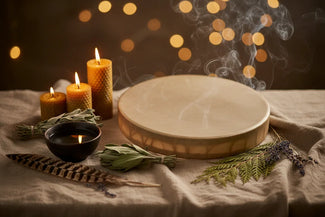
A bundle is lit, the flame is gently extinguished, and the leaves begin to smoulder. Fragrance moves through the air, creating a moment of pause that can become part of prayer, meditation, ceremony or personal ritual.
Smudge sticks, sage bundles and loose botanicals are used today in many different ways. Some practices come from specific living Indigenous traditions, while others belong to contemporary spiritual or personal smoke-cleansing practice.
At Sacred Essence, we encourage both care and context: appreciating the aroma and ritual qualities of the plants while recognising that not every act of burning herbs should automatically be described as traditional “smudging”.
What Is a Smudge Stick?
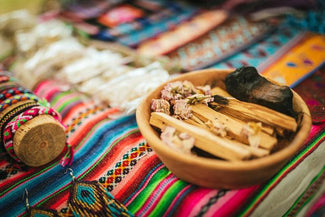
A smudge stick is a bundle of dried aromatic herbs tied together so that one end can be lit and allowed to smoulder.
Depending on the product, bundles may contain sage, cedar, lavender, sweetgrass or other botanicals, either alone or in combination.
Some are small and compact for shorter personal rituals, while larger sage wands or torches provide more material for repeated use.
The exact botanical ingredients matter, because different herbs have different aromas, histories and cultural associations.
Smudging, Smoke Cleansing & Respectful Language
The word “smudging” is widely used in shops and contemporary spiritual practice, but it also refers to specific ceremonial practices within particular Indigenous cultures.
Those traditions are not interchangeable and should not be treated as one universal “Native American” ritual.
If you are creating your own personal practice outside a specific Indigenous tradition, “smoke cleansing”, “ritual burning” or “herbal smoke practice” may be more accurate descriptions.
Using more careful language does not take meaning away from a personal ritual. It simply helps distinguish contemporary practice from living cultural traditions with their own teachings and protocols.
Blue Sage
Blue Sage is valued for its soft herbal fragrance and is commonly used in contemporary ritual and smoke-cleansing practice.
Depending on the actual botanical species and supplier, “Blue Sage” can refer to different plants, so the individual product description should always be checked where botanical identification is important.
Its scent is often gentler and less sharp than California White Sage, which makes it popular with people who prefer a softer herbal aroma.
A softer fragrance does not mean the smoke is safer or suitable for someone with smoke sensitivity.
Contemporary spiritual associations may include blessing, reflection or gentle cleansing, but these should be understood as symbolic or tradition-specific rather than measurable effects.
Desert Sage
Desert Sage generally has a dry, earthy and distinctly herbal fragrance.
It is often chosen by people who enjoy a more rustic botanical character and may be used around meditation, personal ritual or symbolic cleansing.
As with other sage names, “Desert Sage” can be used commercially for more than one plant, so botanical details should come from the individual product listing where available.
Its associations with grounding, protection or renewal belong to spiritual and symbolic practice rather than scientifically established properties.
Sweetgrass
Sweetgrass is distinctive because of its naturally sweet, soft fragrance.
When dried, its aroma is often described as vanilla-like, warm and grassy.
Sweetgrass has cultural significance within particular Indigenous traditions of North America, where its preparation and ceremonial use can carry meanings specific to community and teaching.
Because of this, it is better approached as a culturally meaningful botanical rather than simply another generic “cleansing herb”.
In contemporary personal practice, some people associate sweetgrass with gratitude, blessing or welcoming positive intention.
Cedar & Other Botanical Bundles
Cedar also appears within a wide range of ritual and aromatic traditions.
Its fragrance is woody, fresh and grounding in character, and it may be used in botanical bundles or loose preparations depending on the product.
Lavender, juniper, mugwort and mixed botanical bundles may also appear within the Sacred Essence range.
Each plant has its own scent, cultural history and contemporary symbolism.
Rather than assigning every herb a fixed energetic function, it is often more useful to begin with the actual botanical material, how it smells and the tradition or context in which it is being used.
White Sage & Why It Has Its Own Collection
White Sage, or Salvia apiana, has its own dedicated Sacred Essence collection because of its distinctive botanical identity, popularity and cultural context.
It is native to parts of the south-western United States and northern Mexico and holds ceremonial importance within particular Indigenous traditions.
This Smudge Sticks & Loose Sage department may contain selected White Sage blends, but the dedicated White Sage collection goes deeper into Salvia apiana, White Sage bundles, incense, oils and contemporary ritual use.
Explore the White Sage & California White Sage collection for the wider range.
Smudge Sticks vs Sage Wands
The terms smudge stick, sage bundle, sage wand and sage torch often overlap.
A smudge stick usually refers to a compact tied bundle of dried herbs.
“Sage wand” or “sage torch” may be used for longer or larger bundles, although naming varies between makers.
Decorative additions are not necessarily suitable for burning. Follow the maker’s directions and remove crystals, wrapping or other decorations before lighting where instructed.
The product description should always be checked for exact ingredients and intended use.
How to Use a Smudge Stick Safely
Prepare a stable, heat-resistant bowl or vessel before lighting the bundle.
Light one end briefly and allow a small flame to develop.
Gently extinguish the flame so the herbs begin to smoulder rather than continue burning.
Hold the bundle over the bowl while in use to catch ash or embers.
If moving through a room, keep the smouldering end well away from curtains, paper, dried flowers, fabrics and other flammable materials.
When finished, extinguish the bundle completely and allow it to cool before storing.
Do not assume it has gone out simply because visible smoke has stopped.
Loose Sage & Botanical Burning
Loose sage and other herbs give you more control over how much botanical material you use.
Depending on the product, loose herbs may be burned in a suitable heat-resistant vessel, used with charcoal or incorporated into non-burning altar and offering practice.
Only burn botanical material specifically described as suitable for that purpose.
Some dried flowers and herbs are intended for decoration or offering rather than combustion.
When using charcoal, remember that the disc itself becomes extremely hot and needs a purpose-made burner.
Smudge Bowls & Ritual Vessels
A smudge bowl gives you somewhere safe to catch falling ash and rest a smouldering bundle.
Ceramic, brass and other purpose-made heat-resistant bowls can all work well depending on the design.
Some people also use natural shells in contemporary ritual practice, but natural shell should not automatically be treated as safe for intense heat.
Follow the individual product guidance and use a suitable insulating layer where recommended.
Explore Incense Burners & Holders for bowls, censers and other suitable vessels.
Feather Fans & Smoke Direction
Some practitioners use a feather fan to help direct smoke.
This can add a deliberate, graceful movement to personal ritual, but ceremonial feather use has its own cultural contexts and should not automatically be presented as necessary or “more authentic”.
Your hand is also perfectly sufficient for gently directing smoke.
The important practical considerations are safe handling, airflow and respect for the materials being used.
Choosing a Botanical by Aroma & Tradition
If you are unsure where to begin, choose first by fragrance and context rather than by a long list of promised “benefits”.
Blue Sage may suit you if you prefer a softer herbal aroma.
Desert Sage offers a drier, earthier character.
Sweetgrass has a distinctive naturally sweet scent.
Cedar brings a woody aromatic quality.
Lavender blends may appeal if you enjoy floral notes alongside herbal smoke.
White Sage has its own stronger botanical identity and dedicated collection.
The best choice is the plant whose aroma, history and intended use genuinely fit your practice.
Mixed Botanical Smudge Bundles
Mixed bundles combine two or more botanicals into a single tied form.
Examples may include sage with lavender, cedar or floral materials.
These bundles can create more layered fragrances and may also carry contemporary symbolic themes supplied by the maker.
Because ingredients vary, always check the product page rather than assuming every mixed bundle is suitable for the same use.
Botanical Bundles for Meditation & Personal Ritual
Herbal smoke can become part of a very simple personal practice.
Some people light a small bundle before meditation, journalling or altar work.
Others use a botanical fragrance to mark the beginning or end of a ritual.
The act of preparing the space, lighting the herbs and pausing for a moment can itself create a sense of transition.
There does not need to be a complicated ceremony attached to it.
The meaning can come from the attention you bring to the practice rather than from expecting the plant to create a guaranteed energetic result.
Smudge Sticks as Thoughtful Gifts
Botanical bundles can make thoughtful gifts for people interested in meditation, ritual, incense or natural aromatics.
A simple Blue Sage or Desert Sage bundle may suit someone who enjoys herbal fragrance, while Sweetgrass can appeal to those drawn to softer, naturally sweet aromas.
Mixed botanical bundles can also make attractive gifts where the exact ingredients and cultural context are clearly described.
For culturally significant plants such as White Sage or Sweetgrass, thoughtful gifting includes understanding the plant rather than treating it purely as decorative spirituality.
For sage bundles, smudge sticks and related ritual accessories, explore our Native Indian collection and Sacred Essence range.
Explore the Full Incense Collection
Smudge sticks and loose sage form part of the wider Sacred Essence Incense collection.
You may also wish to explore:
- Incense – the complete collection of sticks, cones, resins, botanicals and burners
- Incense Sticks & Joss Sticks – longer-burning stick formats for everyday fragrance and ritual
- Incense Cones & Dhoop – compact cone and coreless incense formats
- Resin Incense & Charcoal Discs – frankincense, myrrh, copal and loose incense for charcoal use
- Backflow Incense & Burners – waterfall cones and compatible burners
- Incense Burners & Holders – ash catchers, smudge bowls, censers and heat-resistant vessels
- Botanical Herbs & Confetti – loose botanicals for offerings, altar work and products specifically intended for burning
- White Sage – dedicated Salvia apiana bundles, incense and aromatic preparations
- Palo Santo – natural aromatic wood and Palo Santo preparations
- Nag Champa Incense – familiar floral-woody incense in sticks, cones and related formats
Frequently Asked Questions
What is a smudge stick?
A smudge stick is a tied bundle of dried aromatic herbs intended to be lit and allowed to smoulder.
Is a smudge stick the same as a sage bundle?
Often, yes. “Sage bundle”, “sage wand” and “smudge stick” can overlap, although exact ingredients and size vary.
What is the difference between Blue Sage and White Sage?
They are not automatically the same plant. California White Sage is Salvia apiana, while “Blue Sage” may refer to different species depending on the product.
What does Desert Sage smell like?
It is generally dry, earthy and strongly herbal, although exact fragrance varies by botanical species.
What does Sweetgrass smell like?
Sweetgrass is known for a naturally sweet, warm, vanilla-like grassy aroma.
Can I mix different herbs together?
Yes, if each botanical is suitable for burning. Mixed bundles and loose blends are common, but always check the product information.
Can loose sage be burned on charcoal?
Some loose sage and herbal blends are intended for charcoal use. Only burn products specifically described as suitable for burning.
What is the difference between smudging and smoke cleansing?
Smudging can refer to specific sacred Indigenous ceremonies. Smoke cleansing is a broader term for contemporary personal practices involving aromatic smoke.
How often should I use a smudge stick?
There is no required schedule. Use it when it feels meaningful within your personal ritual or aromatic practice, while considering ventilation and smoke exposure.
Do I need a feather to use a smudge stick?
No. A feather fan may be part of some traditions or personal practices, but it is not necessary for safe contemporary smoke cleansing.
Storage & Care
Keep dried botanical bundles in a cool, dry place away from moisture.
Allow any partially burned bundle to cool completely before storing it.
Loose herbs are best kept in sealed containers so they remain dry and retain their aroma.
Avoid storing botanical bundles beside strongly scented products if you want to preserve their individual fragrance.
Related Guides
Useful supporting guides include:
Related Blogs
Visit Sacred Essence in the Lake District
Selected smudge sticks, loose sage, Sweetgrass, Blue Sage, Desert Sage and related ritual tools can also be explored in person at Sacred Essence in Coniston.
Seeing the bundles in person makes it easier to compare their size, fragrance and botanical character.
If you are travelling for a particular herb or larger bundle, please contact us beforehand so we can confirm availability.
Safety & Ventilation
Burn botanical bundles only in a well-ventilated space.
Avoid deliberately inhaling smoke.
Use a stable, heat-resistant bowl or vessel and keep smouldering herbs away from children, pets, birds, curtains, paper and other flammable materials.
Never leave a burning or smouldering bundle unattended.
If you are sensitive to smoke, avoid burning sage or incense. If you are sensitive to fragrance, non-burning oils and sprays may also be unsuitable.
Please Note
Smudging has specific cultural significance within particular Indigenous traditions, and those traditions vary between communities.
Sacred Essence encourages respectful use and careful language around culturally significant plants and practices.
References to cleansing, protection, grounding, blessing, energy or spiritual work describe traditional, contemporary or symbolic practices rather than medical, psychological or scientifically established effects.
Ethical, sustainable or community-based sourcing claims vary between individual products and are identified where applicable rather than assumed across the entire collection.