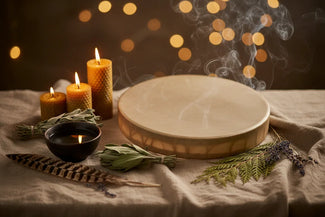
Explore a carefully curated collection of bodhrán drums, frame drums and shamanic drums chosen for rhythm, resonance and ceremonial practice. From natural-hide frame drums to deeper-toned ceremonial styles, this collection brings together instruments suited to meditation, sound healing, Reiki drumming, journeying, ritual and musical exploration.
Across many cultures and spiritual traditions, the drum has long accompanied ceremony, storytelling, movement and communal practice. The steady rhythm of a frame drum or shamanic drum can help create focus and atmosphere, while bodhrán drums bring a rich rhythmic tradition that works equally well for music, gathering and personal practice.
Choose from lighter frame drums suited to beginners and more portable use, alongside deeper-voiced drums for group work, ceremonial settings and expressive rhythm. Whether you are exploring sound healing drums, developing a Reiki drumming practice or simply looking for a resonant hand-played instrument, this collection offers a range of styles for both spiritual and musical use.
Each drum has its own character, tone and feel, offering a different way to work with rhythm, movement and sound. Sacred Essence brings together bodhráns, frame drums and shamanic drums for meditation, ceremony, music and meaningful moments of connection.
Frame drums appear in many musical and ceremonial traditions around the world, but they are not all the same instrument and should not be treated as belonging to one universal lineage.
This collection brings together natural-hide frame drums, shamanic drums, journey drums and bodhrán drums for people exploring rhythm, ceremony, meditation, Reiki drumming, sound work and traditional music.
Some drums are chosen for a slow, steady pulse. Others are suited to lively rhythmic playing, group work or musical accompaniment. Materials, frame depth, hide thickness, diameter and playing technique all influence how a drum feels and sounds.
What Is a Frame Drum?
A frame drum is a drum with a relatively shallow shell compared with the diameter of its playing surface.
The broad head and hand-held format make frame drums highly versatile. Depending on the tradition and construction, they may be played by hand or with a beater.
Frame drums occur across many regions and cultures, from Irish bodhráns to drums associated with ceremonial and shamanic practice.
The shared shape should not obscure their different histories, playing techniques and cultural meanings.
What Is a Shamanic Drum?
“Shamanic drum” is commonly used today for frame drums used within contemporary shamanic practice, journeying, ritual and ceremonial work.
A repeated beat can create a steady rhythmic environment during meditation or journeying practice.
For some practitioners, the drum becomes an important ceremonial object with personal or symbolic meaning.
Shamanic traditions differ widely between regions and communities. Explore the specific origin and construction of each drum where known, rather than treating all shamanic drums as belonging to one tradition.
What Is a Journey Drum?
“Journey drum” is a contemporary descriptive term often used for a frame drum chosen specifically for shamanic journeying, meditation or repetitive ceremonial rhythm.
It is not a separate instrument family in the same way that a bodhrán is.
A journey drum may be a natural-hide frame drum or a synthetic drum such as a Remo Buffalo Drum, depending on the practitioner’s preference.
The defining feature is usually how the drum is used: a steady, repeated pulse that supports focused journeying, meditation or ritual practice.
Shamanic Drumming & Journeying
Repetitive drumming is widely used within contemporary shamanic journeying.
A steady pulse may help maintain focus throughout a meditation, guided journey or ceremonial practice.
Some practitioners use a consistent rhythm for most of the session before changing the pattern or tempo to mark the ending.
The spiritual interpretation of journeying varies between traditions and individuals, so these practices are best understood within their own cultural or contemporary contexts rather than as one universal system.
What Is a Bodhrán?
The bodhrán is a traditional Irish frame drum strongly associated with Irish folk and traditional music.
It is usually played with a small beater commonly called a tipper, although playing techniques vary considerably.
The player may also use the hand behind the drumhead to alter tension and pitch while playing, creating a surprisingly wide range of tones from one drum.
For customers primarily interested in musical rhythm rather than ceremonial practice, the bodhrán can be one of the most versatile instruments in this collection.
Bodhrán Drums for Irish & Celtic Music
Bodhrán drums are widely used in Irish traditional music, sessions, folk ensembles and contemporary Celtic music.
They can move from soft supportive rhythms to fast, articulated patterns depending on playing technique.
Beginners may start with simple pulse patterns before learning more detailed tipper work and hand-pressure techniques.
Because bodhráns vary in diameter, frame depth, head construction and tuning, individual instruments can feel very different to play.
Shamanic Drum vs Bodhrán
Both are frame drums, but their typical playing styles and contexts differ.
A shamanic-style drum is often played with a soft or padded beater and may be chosen for slow repetitive rhythm, ceremony or journeying.
A bodhrán is generally played with a tipper and is strongly associated with Irish musical tradition.
Bodhrán technique usually involves much more active control of rhythm, articulation and head tension.
Some customers enjoy both, but they should not be treated as interchangeable instruments.
Journey Drum vs Shamanic Drum
The terms overlap.
A shamanic drum describes the broader ceremonial and contemporary spiritual use of a frame drum, while “journey drum” usually describes how the drum is being used during repetitive journeying practice.
In practical terms, the same drum may be described as both a shamanic drum and a journey drum.
The important distinction is that “journey drum” is a use-based description rather than a separate historic instrument category.
Natural-Hide Frame Drums
Many drums in this collection use natural hide stretched over a wooden frame.
Natural skin creates an organic playing surface whose response can vary slightly from drum to drum.
The hide may show variations in colour, texture and thickness, particularly on handmade instruments.
These variations are part of the material rather than manufacturing faults.
Natural hide is also more responsive to temperature and humidity than synthetic drumheads.
How Humidity Affects Natural-Skin Drums
Natural-hide drums change with their environment.
High humidity can loosen the drumhead and lower the tone.
Dry or warm conditions can tighten the hide and raise the pitch.
This is normal behaviour for natural skin.
For people who regularly drum outdoors, travel between climates or work in very humid environments, a synthetic drum such as a Remo Buffalo Drum may be a more practical alternative.
Natural Hide vs Synthetic Frame Drums
Natural-hide and synthetic drums each have advantages.
Natural skin offers an organic feel, individual variation and a strong connection with traditional instrument construction.
Synthetic drumheads are generally more stable in changing humidity and require less climate-related adjustment.
A natural-hide frame drum may suit someone drawn to traditional materials and individual tonal character.
A Remo Buffalo Drum may suit someone prioritising vegan construction, weather resistance and consistency.
Neither option is universally better.
Drum Size & Tone
The diameter and construction of a frame drum affect both playing feel and sound.
Smaller drums are generally easier to hold, transport and control.
Larger drums provide a broader playing surface and can offer a deeper or more expansive response, although drumhead material, frame depth and tension also matter.
The largest drum is not necessarily the right drum for every player.
Comfort becomes especially important during longer meditation, journeying or group sessions.
Choosing a Frame Drum
When choosing a frame drum, consider:
whether you want natural hide or synthetic construction
whether the drum is primarily for music, journeying or ceremony
drum diameter and overall weight
hand grip or cross-handle design
whether it is played by hand or with a beater
portability and storage
sensitivity to humidity
the tone and response you personally prefer
For bodhráns, also consider whether the instrument is tunable and what type of tipper playing you want to explore.
Frame Drums for Beginners
Frame drums can be very approachable for beginners.
You do not need complex technique to begin creating a steady rhythm on a shamanic or journey drum.
Start with an even pulse and experiment gradually with volume, strike position and tempo.
Bodhrán playing has a steeper technical learning curve because the player coordinates the tipper with the supporting hand behind the skin, but simple rhythms can still be learned early.
Reiki Drumming
Frame drums are also used within contemporary Reiki drumming.
A practitioner may use a steady rhythmic pattern during meditation or a Reiki session to help structure the experience.
Natural-hide drums and synthetic Buffalo-style drums can both be used depending on personal preference and setting.
Reiki drumming is a contemporary wellbeing and spiritual practice and should not be presented as a medically established treatment.
Frame Drums for Sound Healing
Frame drums are often incorporated into contemporary sound-healing sessions and sound baths.
A drum can provide a rhythmic foundation beneath singing bowls, gongs, rattles, rainsticks or chimes.
A slow pulse creates a very different atmosphere from the sustained tones of a bowl or gong, making drums useful when layering contrasting sounds.
People may experience the rhythm as immersive or grounding, but these descriptions should remain experiential rather than medical claims.
Group Drumming & Drum Circles
Frame drums work well in group settings because a simple shared pulse can be learned quickly.
One player may establish the main rhythm while others add accents or complementary patterns.
Rattles and other percussion can be introduced gradually to add texture.
Listening to the group is just as important as playing loudly.
Good group rhythm depends on space, timing and responsiveness rather than everyone striking at maximum volume.
Drums for Ceremony & Ritual
Drums have accompanied ceremonial practice in many cultures, but their meanings differ greatly.
A drum may mark transitions, support singing, accompany movement or provide repeated rhythm during a ritual.
Some practitioners also develop a personal ceremonial relationship with their drum.
A particular instrument’s documented regional, maker or cultural origin is part of its story, distinct from generic “shamanic” associations.
Natural Materials & Individual Character
Natural-hide drums often have a more visibly individual character than mass-produced synthetic instruments.
Differences in hide markings, frame grain, colour and surface texture can make each drum slightly different.
Handmade or hand-finished drums may also show small construction variations.
These features form part of the instrument’s character and do not necessarily affect its usability.
Painted & Decorated Frame Drums
Some frame drums feature painted, carved or decorative designs.
These may include geometric patterns, animals, natural motifs or culturally inspired artwork.
Explore individual product details for known symbolism and maker context. Decorative imagery alone does not establish a sacred meaning, Indigenous origin or ceremonial provenance.
Cross Handles & Drum Grips
Many shamanic-style frame drums use a cross-handle or cord arrangement behind the drumhead.
This provides a central gripping point while keeping the playing surface unobstructed.
Grip design can make a noticeable difference during longer sessions, particularly with larger drums.
Different makers use different handle constructions, so check individual products for exact details.
Beaters & Tippers
Shamanic and journey drums are commonly played with a padded or soft-headed beater.
This tends to produce a rounder, broader strike.
Bodhráns are typically played with a tipper, producing a more articulated rhythmic sound.
Changing the weight, length or material of the beater can significantly change playing feel and tone.
Always check whether a drum includes a beater or tipper before ordering.
Caring for a Natural-Hide Drum
Natural-hide drums should be stored away from prolonged damp, strong direct heat and rapid temperature changes.
If the hide becomes loose in humid weather, allow the drum to adjust gradually rather than exposing it to extreme heat.
If the hide becomes very tight in dry conditions, avoid forcing or overheating it.
Keep the drum protected during transport and allow it to acclimatise when moving between substantially different environments.
The Remo Buffalo Drum collection is particularly useful if you prefer a synthetic, vegan drumhead or need greater resistance to changes in humidity.
Frequently Asked Questions
What is a frame drum?
A frame drum has a broad drumhead stretched over a relatively shallow frame. Different forms occur in many musical and ceremonial traditions.
What is a shamanic drum?
The term commonly describes frame drums used in contemporary shamanic practice, ceremony and journeying. Their construction and cultural context vary.
What is a journey drum?
Journey drum is a contemporary descriptive term for a frame drum used primarily for repetitive drumming during shamanic journeying, meditation or ceremonial practice.
Is a journey drum different from a shamanic drum?
Usually not in construction. “Journey drum” describes the intended use, while “shamanic drum” is the broader contemporary category.
What is a bodhrán?
A bodhrán is a traditional Irish frame drum usually played with a tipper and widely used in Irish folk and traditional music.
Is a bodhrán the same as a shamanic drum?
No. Both are types of frame drum, but they have different playing traditions, techniques and cultural contexts.
What are natural-hide frame drums made from?
Materials vary by instrument. Individual product pages should be checked for the specific animal hide and frame material.
Are natural-hide drums affected by humidity?
Yes. Natural skin can tighten or loosen as humidity and temperature change.
Can frame drums be used for shamanic journeying?
Yes. Repetitive frame-drum rhythms are widely used within contemporary shamanic journeying practice.
Can frame drums be used for Reiki drumming?
Yes. Both natural-hide and synthetic frame drums are used within contemporary Reiki drumming.
Which frame drum is best for beginners?
A lighter, manageable drum with a comfortable handle is often a good starting point. The right diameter depends on your size, playing style and intended use.
Do frame drums come with beaters?
Many do, but included accessories vary by instrument. Check the individual product listing.
Should I choose natural hide or synthetic?
Choose natural hide if you value traditional material, individual tonal character and organic variation. Choose synthetic if you prioritise vegan construction and greater stability in changing humidity.
Can bodhráns be used outside traditional Irish music?
Yes. They can be used creatively in other musical settings, but their strongest traditional identity remains within Irish music.
Selected frame drums, shamanic drums and bodhráns can also be explored in person at Sacred Essence in Coniston.
Hearing and holding a drum can make a significant difference when choosing because weight, grip, diameter and playing response are difficult to judge from dimensions alone.
If you are travelling for a particular drum or size, please contact us beforehand so we can confirm availability.
Please Note
Frame drums occur across many distinct cultures and musical traditions.
Sacred Essence aims to distinguish between Irish bodhráns, contemporary shamanic and journey drums, and instruments with specific regional or maker traditions rather than presenting them as one universal ceremonial lineage.
References to sound healing, Reiki drumming, grounding, journeying or meditation describe contemporary, traditional or symbolic practices rather than guaranteed medical or psychological effects.
Natural-hide drums vary in colour, texture, tone and response to humidity, so individual variation is expected.
Join our community
Sign up for 10% discount off your first order, exclusions apply.*